Northeast Ohio Regional Library System
1/1/2016
 Everyone creates records in the course of doing their jobs, and in today’s increasingly digital office environment those records are likely to be in electronic formats. Managing electronic records can be challenging—there may be multiple copies in various locations, a lack of appropriate storage, or records may be in difficult formats such as email. Susan Hernandez, Digital Archivist and Systems Librarian at the Cleveland Museum of Art, will provide an overview of electronic records management, discuss strategies for organizing and managing electronic records, and offer ideas for collaborating with information technology professionals.
 Presenter: Susan Hernandez
Susan Hernandez is the Digital Archivist and Systems Librarian at the Cleveland Museum of Art where her duties include training museum staff in electronic records management, creating and updating records schedules, overseeing library and archives databases, systems, web presence, and digitization program, accessioning and processing electronic records, and serving on the development team for the museum’s institutional repository. Susan received her MA in History, Archives, and Museum Studies from Duquesne University and earned her Digital Archives Specialist Certificate from the Society of American Archivists in 2013.
When you receive your confirmation of registration for this archive the link to the archive will be included in the confirmation email.
Location: Online
Via Adobe Connect
5/22/2018
 Some people pay for cable and satellite television, others opt for Internet streaming services. The latter group, often known as cord cutters, is a population quickly growing in popularity as the ease and accessibility of online streaming content is made available. While there people who cancel their cable and jump right into the new territory, you may be surprised to know that you have many patrons in your community that would like to learn about cord cutting before they begin—making this a popular choice for an adult informational program. Pack the house at your library with a Cord Cutting 101 class. This webinar will provide tips and tricks for you to develop an informational and useful program while promoting what the library can offer for the cord cutting population.
In this webinar you will learn:
-
How to be a cord cutter including popular devices and streaming services
-
What trends are shaping the cord cutting market
-
Tips and best practices for hosting a cord cutting informational program of your own
-
FAQ and tech support issues you may come across in your journey
When you receive your confirmation of registration for this archive the link to the archive will be included in the confirmation email.
Location: Online
Via Adobe Connect
7/10/2018
The challenges facing librarians are real, complex and varied. As such, they require new perspectives, new tools and new approaches. With support from the Bill and Melinda Gates Foundation and in partnership with Chicago Public Library and Aarhus Public Library, IDEO created a toolkit for using design thinking to better understand library patrons. Discover how you can use design thinking to uncover solutions to everyday challenges.Presenter: Michelle Frisque, Chief of Technology, Content and Innovation, Chicago Public Library (CPL)
In this role, she ensures that information technology, collections and data metrics support the library’s programs, services, operations and strategies, and provides support and evaluation for the innovation process. Before joining CPL, Michelle was the Head of Information Systems at the Galter Health Sciences Library, Northwestern University. She is a former president of the Library & Information Technology Association (LITA), a division of the American Library Association. She has a Masters of Learning and Organization Change from Northwestern University’s School of Education and Social Policy, and a Masters of Library and Information Sciences from the University of Pittsburgh.
When you receive your confirmation of registration for this archive the link to the archive will be included in the confirmation email.
There are currently 29 spots remaining out of 50
7/18/2018
In this webinar we will:
-
Review sample Equal Employment Opportunity and Anti-Harassment policies.
-
Provide an overview of discrimination and harassment law and prohibitions against retaliation.
-
Provide specific examples of behaviors prohibited by the sample policies and the law.
-
Identify recommended avenues to report discrimination and harassment.
-
Identify expectations for workplace behaviors that go beyond the law.
John Gerak focuses his practice on employment counseling, including employment policies and practices, reductions in force, executive hires/terminations, and issues arising out of mergers and acquisitions. John also has significant experience handling complex employment litigation, including class and collective action litigation and non-compete matters .
Katie Sanz represents a variety of employers in all phases of litigation in both state and federal court and before administrative agencies. She has experience defending employers against claims related to discrimination, retaliation, harassment, breach of contract, wage and hour, and claims brought pursuant to the Family Medical Leave Act. Katie also counsels and advises employers regarding a wide range of employment-related matters.
When you receive your confirmation of registration for this archive the link to the archive will be included in the confirmation email.
Location: Online
Via Adobe Connect
8/1/2018
If It’s Broke Fix It: Handling Leftover Challenges Effectively
All too often, outgoing supervisors leave unresolved challenges “for the next guy” to fix. Then, you arrive! As the new supervisor, you have two choices. You can look the other way, forge ahead with your plans and hope the old issues disappear (although, if they didn’t before, it’s not likely they will now) or you can fix them. The right answer is, of course, to correct the problems, so you have a clear shot at success in your position. But, how do you go about addressing something that might have been brewing for a long time? In this webinar, we’ll consider 5 Simple Steps to Starting with a Clean Slate. Learn how to use expectations, goals, communication, follow-up and follow-through to right the ship and move forward with confidence.
Presenter: Cheryl Kuonen, Director, Mentor Public Library >
When you receive your confirmation of registration for this archive the link to the archive will be included in the confirmation email.
Location: Online
Via Adobe Connect
8/2/2018
Rhonda Johnston, Adult Outreach Coordinator, Reed Memorial Library focuses on connecting historically underserved populations with library resources. She has transformed the storytime for adults with developmental disabilities into a fun and engaging learning session that has opened the door for this patron group to become fully integrated with what the library has to offer. They have seen incredible growth in the patrons. Learning Objectives:
-
Understanding our patrons
-
Ways to be inclusive
-
Inclusive programming
When you receive your confirmation of registration for this archive the link to the archive will be included in the confirmation email.
8/28/2018
In the morning you will hear about the local history room at the Milan - Berlin Library District and it's storied history. James Tolbert, Director is excited to share with you how it came to be, where it has been, and where it is going. The discussion will include an overview of the collection and the changes that have been made recently, funding sources and how to approach them, how to deal with budget limitations, how the digital collection was created, and how the library promotes the collection. There will also be a question and answer session after the discussion.
Learning Objectives:
- How to get started
- Funding
- Budgets
- Digital Collection
- Promotion
We will follow the last presentation with a roundtable discussion.
Presenters:
James Tolbert, Director, Milan - Berlin Library District
James is a native of Fort Wayne, Indiana. He graduated Magna Cum Laude from Taylor University with a Bachelor's in English Studies, and received both an MLS and an MIS from Indiana University.
James began his library career by working his way up in various circulation and clerk positions in the libraries of both universities. After graduating, he worked for the St. Louis Public Library and Ivy Tech Community College for several years before being hired as the Director of the Milan - Berlin Library District in 2014.
James has presented on various topics at ILF and ALA, and served on the OLC conference committee. He is also currently the chair of the Directors’ Panel at CLEVNET.
William C. Barrow, M.A. M.L.S., Head of Special Collections, Michael Schwartz Library, Cleveland State University
A Cleveland native, Bill has been the Head of Special Collections since 1999 and was a co-founder of the Cleveland Memory Project in 2002. He holds Masters degrees in History from Cleveland State and in Library Science from Kent State. Once a Realtor in Arizona, his particular interests include the history of land subdivision and surveying and the maps so created.
Location: Milan-Berlin Library District
19 E. Church St.
Milan, OH 44846
There are currently 23 spots remaining out of 30
9/12/2018
Library websites can be prone to a number of issues that frustrate their users. Many sites use outdated conventions, anecdotal "data" or fail to use standard practices, resulting in poor experiences for patrons, and a loss of credibility for the library as a community institution. In this webinar, learn about common problems found on today's library websites, backed by current research, from a web designer/developer who has been working with library websites for more than two decades. OUTCOMES:
-
Discover issues that commonly cause usability problems for website users
-
Learn about outdated practices that should no longer be used on your library's website, and why
-
Get resources for educating yourself and others about current trends and usability data
When you receive your confirmation of registration for this archive the link to the archive will be included in the confirmation email.
10/10/2018
Emily and Katie will discuss their experience with programming for Millennials, which includes establishing a new program series, developing a brand, and marketing techniques. Attendees will learn about specific programs such as bar trivia, a book club for adults who like to read YA, and plenty of pop culture- and nostalgia-themed programs that have specific appeal to the millennial demographic. Library staff will be empowered to create programming for patrons in their 20s and 30s in their own communities, and leave with ideas for specific programs they can implement on their own.Learning outcomes:
-
Marketing to the 20s/30s demographic
-
New program ideas that appeal to Millennials
-
Understanding of why it’s important to provide timely programs for Millennials and how to communicate this to your Management team
Katie LaMantia is a Collection Development Librarian at Baker & Taylor. She is a former teen advisory board member turned Teen Librarian at the Schaumburg Township District Library in Schaumburg, Illinois. She has a personal and professional appreciation and interest in pop culture and has presented at multiple library conferences about libraries, teens, and 20s and 30s programming. She enjoys writing, traveling, and extreme adventure activities. She is the co-author of A Year of Programs for Millennials and More (ALA Editions, 2015), 50+ Fandom Programs: Planning Festivals and Events for Tweens, Teens, and Adults (ALA Editions, 2017), and Pop Culture-Inspired Programs for Tweens, Teens, and Adults (ALA Editions, 2018).
Emily Vinci the Fiction Manager at the Schaumburg Township District Library in Schaumburg, Illinois. Her professional interests are promoting the acquisition and appreciation of comics and graphic novels in libraries as well as creating programming that targets patrons in their 20s and 30s. She presents frequently about pop culture and millennial-targeted programming and co-authored the books A Year of Programs for Millennials and More (ALA Editions, 2015), 50+ Fandom Programs: Planning Festivals and Events for Tweens, Teens, and Adults (ALA Editions, 2017), and Pop Culture-Inspired Programs for Tweens, Teens, and Adults (ALA Editions, 2018). She is a fanatic about the pop culture of the 70s, 80s, and 90 and loves spending time curating her many collections of pop culture ephemera.
When you receive your confirmation of registration for this archive the link to the archive will be included in the confirmation email.
Location: Online
Via Adobe Connect
1/16/2019
According to some, we're living in a post-truth, alternative-fact-based era. How do you distinguish between fake and fact when looking for information? This session will arm you with tools to distinguish reality from "truthiness" and why it's so important in today's online information environment.Presenter:
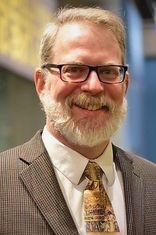 Don Boozer has been manager of the departments of Business, Economics and Labor; Science and Technology; Social Sciences; and Government Documents at Cleveland Public Library since 2015. Don is also an adjunct instructor at Kent State University School of Information, teaching "Information Sources and Reference Services." Previously, Don was coordinator of Ohio's statewide online reference service, KnowItNow24x7; a subject librarian in Literature at Cleveland Public Library; and a reference librarian at Barberton Public Library
When you receive your confirmation of registration for this archive the link to the archive will be included in the confirmation email.
Location: Online
Via Adobe Connect
7/11/2019
 In this session, we’ll cover tech troubleshooting basics: how to approach the device or the person having the issue; first questions to ask; and common issues with websites, mobile devices, and computer programs. We’ll also reframe the technology troubleshooting process in a more familiar context: a reference conversation or customer service interaction.
Learning Objectives:
-
Learn basic strategies for approaching technology troubleshooting for themselves and for their patrons, based on best practices from help desk and other tech industry fields.
-
Get a quick list of frequent issues and how to solve them for a variety of platforms, including the internet and mobile devices.
-
Gain confidence in their own ability to navigate technology troubleshooting.
-
Are able to view tech troubleshooting interactions as another form of customer service, to support an open mindset towards finding solutions.
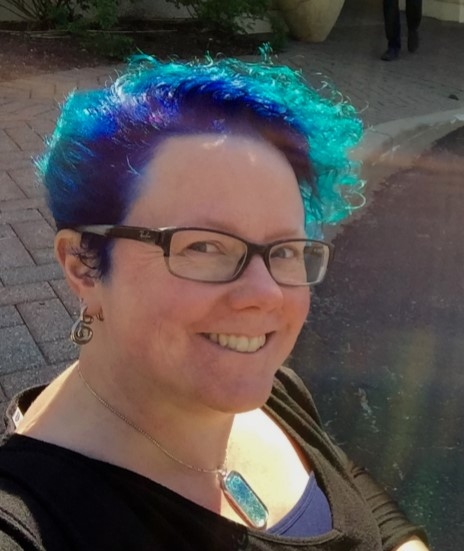 Jennifer Koerber has two decades of experience in libraries, in both public-facing and behind-the-scenes roles. After 17 years at the Boston Public Library, she established her own business providing technology training and consulting services to libraries, and recently completed a contract as Training Manager at Harvard University Library, overseeing staff training for a new ILS platform.
She has written extensively for Library Journal on public library services and technology, and in May 2018, her book Library Services to Immigrants and New Americans: Celebration and Integration was released by Libraries Unlimited. In what remains of her time, she is an avid mobile photographer, crafter, and traveler.
You can find Jennifer online at www.jenniferkoerber.com and www.worksfromthetreehouse.com.
When you receive your confirmation of registration for this archive the link to the archive will be included in the confirmation email.
Location: Online via Adobe Connect
3/25/2020
Do you spend a good part of your job working with graphics, social media or websites? The web is filled with tools vying for your attention, but some of the best lie waiting under the radar. Learn about these online gems, which you can use to improve your workflow or create new content, or share with your friends and colleagues. Discover a plethora of online tools that you probably haven’t heard of but will be glad that (now) you have.
Presenter: Laura Solomon, MCIW, MLS, is the Library Services Manager for the Ohio Public Library Information Network . She has been doing web development and design for more than twenty years, in both public libraries and as an independent consultant. She specializes in developing with Drupal. She is a 2010 Library Journal Mover & Shaker. She’s written three books about social media and content marketing, specifically for libraries, and speaks nationally on both these and technology-related topics. As a former children’s librarian, she enjoys bringing the “fun of technology” to audiences and in giving libraries the tools they need to better serve the virtual customer.
When you receive your confirmation of registration for this archive the link to the archive will be included in the confirmation email.
Location: Online
Via Adobe Connect

1/25/2021 - 1/29/2021
During the pandemic lock-down (followed by the NE Ohio winter) many people noticed a shift in their personal and professional habits: some for the better, some for the worse. Harnessing the better habits and nixing the unwelcome habits requires an understanding of the science of habits, awareness of the foundational habits, and the tools to evaluate your habits. Join Dr. Tamsin Astor, Chief Habit Scientist, International Speaker & Author for a deep dive into habits, so you can create and maintain the right habits for your life!
Learning Objectives:
- Understand the science of habit formation
- Learn about the 5 foundational habits for success
- Learn how to evaluate your habits
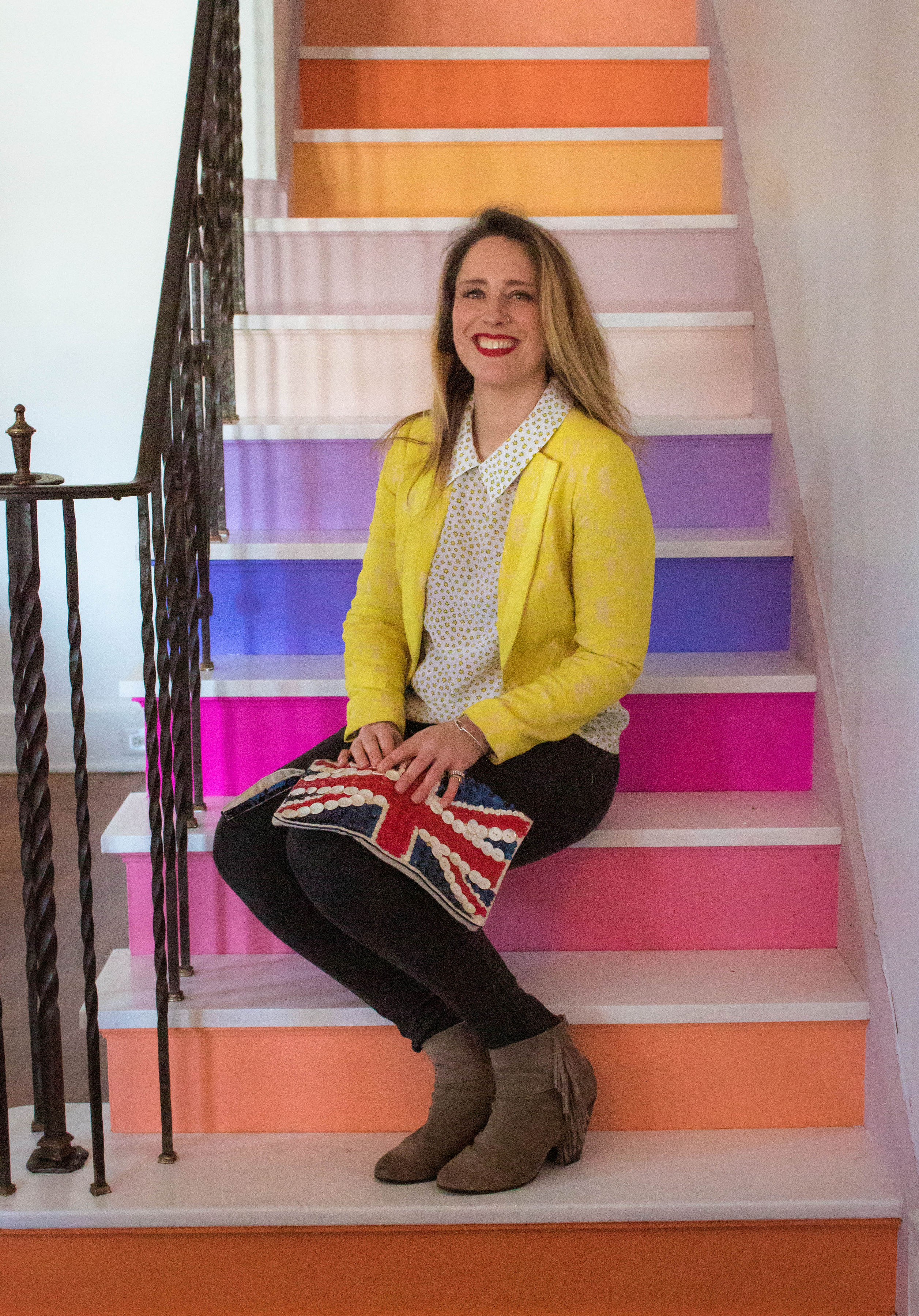 Tamsin Astor, PhD is the founder and Chief Habit Scientist of Yoga Brained Coaching. She is known for giving her clients the tools to shift their mindset, organize their vision, and improve their habits to create an efficient, productive business. We make 35,000 decisions every day, which leads to decision fatigue. Dr. Astor helps her clients reduce the amount of overwhelming decision-making they do by harnessing their goal-achieving machine – AKA – their brains. This also increases their time and energy for fun!
Tamsin Astor holds a PhD in neuroscience and psychology and a post-doctorate in education. She also has certifications in yoga (RYT500, Yoga Ed.), mindset & Ayurveda (Living Ayurveda, Yoga Health Coach). She is an executive coach and author of the book Force of Habit: Unleash Your Power by Developing Great Habits.
6/3/2026
Join your peers to exchange ideas, celebrate successes, and discover new solutions to common challenges.
This meeting will be held through Zoom which is user friendly to all devices. You will receive a link in your confirmation email a reminder 2 hours before the meeting. We hope you will join us. Please send agenda items/questions to Hillary Brown.
Location: Online via Zoom