
PDF version being created. This may take some time, please wait... 
PROGRAM
and
PROCEEDINGS
THE NEBRASKA ACADEMY
OF
SCIENCES
1880-2026

146th Anniversary Year
One Hundred-Thirty-Sixth Annual Meeting
THE NEBRASKA ACADEMY OF SCIENCES, INC.
April 24, 2026
Hybrid Meeting
UNIVERSITY OF NEBRASKA EAST CAMPUS UNION |ONLINE
GENERAL INFORMATION
The Nebraska Academy of Sciences was organized on January 30, 1880. The Academy was reorganized on January 1, 1891 and annual meetings were held thereafter.
AUTHORS ARE INVITED TO SUBMIT MANUSCRIPTS OF THEIR WORK FOR PUBLICATION IN THE TRANSACTIONS OF THE NEBRASKA ACADEMY OF SCIENCES, a technical journal published periodically by the Academy for 56 years. Articles in all areas of science, science education, and history of science are welcomed, including results of original research as well as reviews and syntheses of knowledge.
The Transactions is kept on a digital format and is available to anyone through the Digital Commons at the University of Nebraska–Lincoln. Manuscripts should be submitted via the online submission system at http://digitalcommons.unl.edu/tnas/guidelines.html using the Submit your paper or article link.

Program and Proceedings of the 136th Annual Meeting
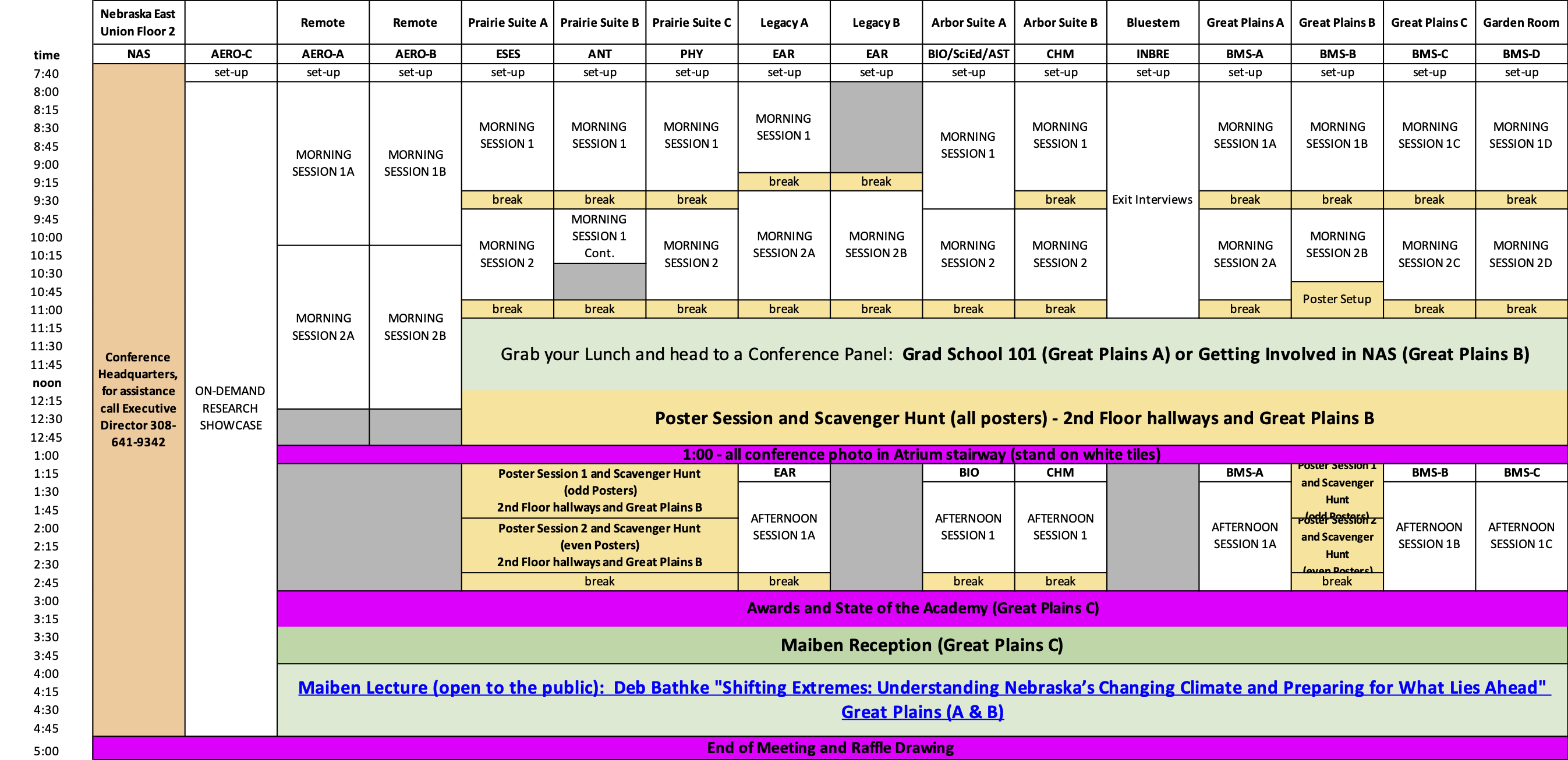
Program Outline |
|
Aeronautics and Space ScienceAnthropologyBiological and Medical SciencesBiology, Science Education and Applied Science and TechnologyBiologyChemistry |
Earth SciencesEcology, Sustainability and Environmental SciencesPhysics and EngineeringGeneral Poster SessionMaiben LectureFriends of Science Awards
|
1. Belcher, William R., LuAnn Wandsnider, Ella N. Axelrod, Finn Kennison, and Alicia J. Lawson. 2025. Military Forensic Archaeology: The Process and Recovery of U.S. Missing‐in‐Action (MIA) Service Personnel. WIREs Forensic Science 7(4):e70017. https://doi.org/10.1002/wfs2.70017.
2. McClary, Daryl C. 2006. A Curtis Commando R5C Transport Plane Crashed into Mount Rainier, Killing 32 U.S. Marines, on December 10, 1946. History Link. https://www.historylink.org/File/7820.
1. Currey, J. D. (2002). Bones: Structure and mechanics. Princeton University Press.
2. Koester, K. J., Ager, J. W., & Ritchie, R. O. (2008). The true toughness of human cortical bone measured with realistically short cracks. Nature Materials, 7(8), 672–677. https://doi.org/10.1038/nmat2221
3. Kimura, T., Ogawa, K., & Kamiya, M. (1977). Fractography of human intact long bone by bending. Zeitschrift For Rechtsmedizin, 79(4). https://doi.org/10.1007/bf00201173
4. Rogers, K. D., & Zioupos, P. (1999). The bone tissue of the rostrum of a Mesoplodon densirostris whale: A mammalian biomineral demonstrating extreme texture. Journal of Materials Science Letters, 18(8), 651–654. https://doi.org/10.1023/a:1006615422214
Session Chair: Dr. Kimberly Carlson
Return to Program Outline
8:00 - EXPLORING A PCR-BASED STRATEGY TO INVESTIGATE FILAMENTATION GENES AND THEIR SPECIES-WIDE EFFECTS
Mollie Nielsen
8:15 - DEVELOPMENT OF A PIPELINE FOR CANDIDA ALBICANS SOLID MEDIA FILAMENTATION IMAGE ANALYSIS
Lucian Hadford
8:30 - DIFFERENTIAL SURVIVAL OF STAPHYLOCOCCUS AUREUS PERSISTERS FOLLOWING MACROPHAGE PHAGOCYTOSIS
Carter Moss
8:45 - ECDYSTEROID-DRIVEN CHITIN BIOSYNTHESIS PROMOTES CUTICLE STABILITY IN FEEDING TICKS
Claire Garman
9:00 - PURIFICATION AND CHARACTERIZATION OF FASCIOLA HEPATICA FATTY ACID BINDING PROTEIN (FH-V) AND VARIOUS HYDROPHOBIC LIGANDS
Frank Kovacs
9:15 - ESTABLISHING WORKFLOW FOR THE ISOLATION AND CHARACTERIZATION OF MOSQUITO-DERIVED EXTRACELLULAR VESICLES
Max Carlson
Filamentation is a key biological process that plays an important role in growth, adaptation, and cellular regulation across many species. Despite its significance, the broader functional roles of genes associated with filamentation remain incompletely understood. This project proposes the background and experimental design for the use of PCR-mediated gene knockout techniques to investigate genes implicated in filamentation and to assess their potential species-wide effects. Target genes will be selectively deleted and verified through PCR analysis. By outlining the experimental approach and rationale, this work aims to establish a framework for studying the genetic control of filamentation and to highlight how targeted gene disruption can be used to investigate gene function at the species level. The project described here was supported by an Institutional Development Award (IDeA) from the National Institute of General Medical Sciences of the National Institutes of Health under Grant # 5P20GM103427.
Session Chair: Dr. Joseph Dolence
Return to Program Outline
8:00 - COMPUTATIONAL DISCOVERY OF HEARTLAND VIRUS ENDONUCLEASE INHIBITORS TARGETING MANGANESE-DEPENDENT CAP-SNATCHING ACTIVITY
Kaiden Aaronson
8:15 - HIV AND ALCOHOL SYNERGIZE TO SPREAD INFLAMMATION AND CELL DEATH IN PARENCHYMAL LIVER CELLS
Lukman Adepoju
8:30 - SYSTEMATIC EVALUATION OF GROWTH MEDIA AND ISOLATION METHODS INFLUENCING OUTER MEMBRANE VESICLE YIELD AND PURITY FROM ESC
Sophia Kolb
8:45 - EXAMINING HOW VAPING IMPACTS THE RESPONSE OF B CELLS TO PEANUT
Joseph Roeder
9:00 - PROLONGED CHANGES OF CULTURE CONDITIONS INDUCES A SHIFT IN MITOCHONDRIAL ENERGETICS OF SQUAMOUS CELL CARCINOMA CELLS
Jinann Shoshara
9:15 - LINEAR QUADRATIC MODEL AND BEYOND, FOR COMBINED THERAPIES AGAINST BRAIN CANCERS
Sara Strom
Our lab aims to develop a biomimetic nonviral oral gene delivery platform by loading OMVs derived from commensal gut bacteria with therapeutic plasmid DNA to create nanocarriers capable of protecting nucleic acids and transfecting gut cells. Previous studies from our lab show that OMVs can be successfully isolated from cultures of our unique collection of 30 human gut commensal E. Coli strains and internalized by macrophages and intestinal epithelial cells. However, reproducible OMV production and purity remained a significant challenge in the previous study. Bacterial culture conditions, media composition, and isolation strategies substantially influence vesicle yield and purity, complicating quantitative characterization and limiting cross-study reproducibility within the extracellular vesicle field. To address this challenge, this study aims to systematically evaluate OMV yield and purity across multiple bacterial growth media and isolation strategies using the laboratory strain Escherichia coli DH5α as a model system. Establishing optimized and standardized production parameters in this strain will inform subsequent translation to commensal gut E. coli strains. This work will establish practical benchmarks to guide the development of bacterial extracellular vesicle platforms for oral gene delivery.
The project described here was supported by an Institutional Development Award (IDeA) from the National Institute of General Medical Sciences of the National Institutes of Health under Grant # 5P20GM103427.
Squamous cell carcinoma (SCC) is an aggressive form of cancer that is amongst the most commonly treated cancers within the United States. While current methods of diagnosing SCC are highly effective, they are invasive and cannot easily monitor metabolic changes within tumors. Our group investigated an all-optical non-invasive method capable of monitoring long-term changes in cellular metabolism of SCC cells. To track the metabolic changes of SCC cells our group utilized Phasor Fluorescence Lifetime Imaging Microscopy (FLIM) to measure levels of free and protein-bound NADH. Given that many tumors proliferate under hypoxia, our group sought to quantify whether a transition to hypoxic conditions lead to a change in metabolic phenotype. Our group imaged SCC cells cultured in hypoxic and atmospheric environments over a two-month period. Protein bound NADH levels of SCC cells were measured in conditions of glucose supplementation or starvation and in the presence or absence of electron transport chain (ETC) inhibitors. Consistent with the Warburg Hypothesis, we observed a decrease in NADH bound-fraction for cells chronically cultured in hypoxic conditions, suggesting less reliance on the ETC. Additionally, our group was interested in the effects of HER2, a growth factor receptor often overexpressed in tumors, on mitochondrial metabolism; therefore, we also measured the effects of HER2 inhibitor AG825 on NADH-linked metabolism. We found in SCC that the fraction of protein-bound NADH was higher in the absence of glucose, decreased in the presence of ETC inhibitors, and decreased when cells were exposed to AG825. Furthermore, at high seeding densities metastatic SCC cells proliferated faster in hypoxic conditions while primary SCC cells did not. Overall, we found NADH-Phasor FLIM to be an effective, non-invasive method of monitoring changes in metabolism over a prolonged period of time.
The project described was supported by an Institutional Development Award (IDeA) from the National Institute of General Medical Sciences of the National Institutes of Health under Grant # 5P20GM103427.
Methods: Clonogenic survival assays were performed on human GBM cell lines U87 and T98G treated with RT alone (0-50 Gy, Faxitron CellRad), lenalidomide alone, and their combination. Survival curves were fitted with LQ models.
Results: Interestingly, many of the survival curves had up to 6 decades on the survival fraction axis, leading to significant deviation of alpha/beta parameters from expected values for the literature. Classic explanation for such deviations exist: LQ model fails beyond about 3 decades of cell killing model’s quadratic component causes it to over-predict the lethality of large radiation doses. We will present both the LQ model results and alternative models such as the universal survival curve model.
Conclusions: Our work demonstrates a noted limitation of the LQ model and provides impetus for exploration of complementary/alternative radiobiological models to better capture experimental results.
Session Chair: Dr. Paul Denton
Return to Program Outline
8:00 - STRUCTURAL ANALYSIS OF CRASSOSTREA GIGAS OAZ-PK RNA VIA SELECTIVE 2'-HYDROXYL ACYLATION ANALYZED BY PRIMER EXTENSION
Daniel Cline
8:15 - PHOTODEPROTECTION OF 1,2,3-TRIAZOLIUM SALTS: IMPACT OF ARENE SIZE, GEOMETRY AND PHOTODEPROTECTION GROUP IDENTITY
Emily Hanneken
8:30 - REGIOISOMER DISTRIBUTIONS IN ANNULATION REACTIONS OF 1,5-DIARYL-1,2,3-TRIAZOLES WITH QUINOLINE AND ISOQUINOLINE SUBUNITS
Kaylen Lathrum
8:45 - RANDOM MUTAGENESIS TO IDENTIFY UNIQUE MUTATIONS AFFECTING TETX8 TETRACYCLINE DESTRUCTASE ACTIVITY
Marisa Dendinger, Scott Riddell
9:00 - ELUTION AND CONCENTRATION S. CEREVISIAE DNA IN SMALL INSERTS USING 3D-PRINTED DEVICES
Jade Salgado, Kristy Kounovsky-Shafer
9:15 - ALR-MEDIATED INTRINSIC RESISTANCE TO D-CYCLOSERINE IS DRIVEN BY PYRIDOXAL PHOSPHATE IN STAPHYLOCOCCUS AUREUS
Anna Sommers
The project described here was supported by an Institutional Development Award (IDeA) from the National Institute of General Medical Sciences of the National Institutes of Health under Grant # 5P20GM103427.
Quaternary ammonium compounds (QACs) are a class of chemicals that can display antiseptic properties due to their combination of hydrophobicity and cationic nature. Previous research has shown that 1,3,4-trisubstituted-1,2,3-triazolium salts display antiseptic properties that vary with substituent identity. The goal of this study was to prepare such triazolium salts with photolabile protecting groups and evaluate how structural and substituent variations impact the relative rates of UV-induced photodeprotection leading to release of 1,5-diaryl-1,2,3-triazoles. Target triazolium salt compounds were synthesized using a base-catalyzed click chemistry approach between azides and alkynes to make 1,5-diaryl-1,2,3-triazoles. To determine how an overall planar geometry might impact photodeprotection rates, fused ring analogs were made from triazole-bridged 1,5-diaryl precursors possessing 2-bromophenyl reactive groups using a Pd-catalyzed annulation reaction. Triazolium salts of both bridged and fused ring analogs with variable phenyl, naphthyl, and phenanthryl subunits were prepared by alkylation at the N3-position with photolabile protecting groups 2-bromoacetophenone, 2-bromo-4-chloroacetophenone, and 2-bromo-1-(4-methoxyphenyl)ethane. Following HNMR and HRMS characterization, the relative rates of photodeprotection were studied in d6-DMSO using a photoreactor with 365 nm LED illumination. The progression of degradation was monitored over time using HNMR to identify the relative photodeprotection half-life for each analog. With the goal of deactivating the antiseptic potency of such triazolium salts upon light exposure, analogs were tested for antiseptic properties both before and after light exposure using minimum inhibitory concentration (MIC) assays. The impact of the aryl substituent ring size, annulation and PPG identity on both photodeprotection rates and antiseptic properties will be presented. The project described here was supported by an Institutional Development Award (IDeA) from the National Institute of General Medical Sciences of the National Institutes of Health under Grant #5P20GM103427.
Session Chair: Dr. Gwen King
Return to Program Outline
8:00 - KLOTHO EFFECTS ON COCHLEAR STRUCTURE AND FUNCTION
Fauzan Siddiqui
8:15 - THE GATEKEEPER OF CHOROID PLEXUS STRUCTURE AND FUNCTION
Elizabeth Lind
8:30 - FDA-APPROVED ANTIDEPRESSANT TRAZODONE POTENTIALLY INCREASES THE RISK OF DYSLIPIDEMIA
Naara Ramirez
8:45 - IMPROVED SPECKLE TRACKING ALGORITHM FOR ESTIMATING FASCIAL LAYER MOVEMENT IN ULTRASOUND
Charleigh Schonlau
9:00 - ASSAY DEVELOPMENT FOR PYRUVATE DEHYDROGENASE KINASE INHIBITOR DISCOVERY
Nathan Lilla
9:15 - INVESTIGATING A POTENTIAL EUKARYOTIC RIBOSWITCH IN OAZ MRNA FROM AGARICUS BISPORUS VIA IN-LINE PROBING
Sarah Fowler
We know that Klotho-deficient mice are deaf, and we know that their principal cells, the hair cells are not at fault for this abnormality. Cochlear Klotho expression only occurs in the stria vascularis. Stria produces endolymph fluid required for the transduction of mechanical hearing signals into electrical activity for communication to the brain. To determine whether we have two secretory tissues with similar effects caused by Klotho-deficiency, we are working to characterize the Klotho-deficient cochlea. This project is investigating age-dependent transporter protein levels and the integrity of the cochlea’s vasculature using 3-week (pre-memory impairment) and 7-week-old (post-cognitive impairment, pre-death) mice with and without Klotho.
This research will employ techniques including immunohistochemistry, microscopy, whole-mount dissection, and quantitative analyses to compare control to Klotho-deficient brains. If the stria is similar to the choroid plexus, we are expecting to see decreased transporter protein expression as early as 3-weeks of age and calcification of blood vessels.
Our data will contribute to understanding how age-related molecular changes in the stria vascularis of the cochlea contribute to age-related hearing loss. By exploring these pathways, we hope to identify therapeutic targets to preserve auditory and cognitive function during aging.
The project described here was supported by an Institutional Development Award (IDeA) from the National Institute of General Medical Sciences of the National Institutes of Health under Grant # 5P20GM103427.
The protein Klotho (KL) is best known for its role in the kidney, where deficiency causes premature aging and shortened lifespan. KL is also expressed in the brain, where it has neuroprotective effects. Across species, KL overexpression extends lifespan, enhances cognition, and delays neurodegenerative disease onset, while KL deficiency in mice causes rapid cognitive impairment. Since KL expression declines with age, our lab investigates its role in the aging brain using a KL-deficient mouse model to better understand the mechanisms underlying healthy brain aging.
Most studies of brain KL function, including previous work from our lab, have focused on neuronal effects. Neurons express low levels of KL and show functional changes when KL expression is altered. However, KL-mediated neuronal effects are highly variable, and KL deficiency also affects other brain cell types that don't express KL themselves, like oligodendrocytes. This suggests that KL's primary brain functions may not be neuron-intrinsic and remain uncharacterized. Choroid plexus epithelial cells reside in all brain ventricles and form the blood-cerebrospinal fluid (CSF) barrier, producing most of the brain's CSF. Choroid plexus cells express the highest levels of KL in the brain, along with the metalloproteinases needed for KL shedding. Once cleaved, shed KL enters the CSF and circulates throughout the brain, where it can affect the brain parenchyma. Both CSF production and barrier integrity decline with age and more prominently with age-related disease, making choroid plexus cells key contributors to brain health and potential therapeutic targets. We are comparing the choroid plexus epithelium of control and KL-deficient mice to determine the role of KL within the choroid plexus and with this, implications for overall brain function. The project described here was supported by an Institutional Development Award (IDeA) from the National Institute of General Medical Sciences of the National Institutes of Health under Grant # 5P20GM103427.
In the field of biomechanics, the quantification of fascial sliding is an up-and-coming research topic due to its potential role in musculoskeletal disorders and myofascial pain. For this study, we focused on three layers of fascia on the quadricep: two layers of deep fascia and one layer of superficial fascia. This research is in collaboration with the Department of Rehabilitation and Sports Medicine at Charles University in Prague, where data collection was conducted. In this study, we developed a custom MATLAB algorithm to accurately measure the movement of fascial layers in an ultrasound scan using speckle tracking to find the maximum lateral displacement during fascial sliding. The method selected for this algorithm, the Sum of Absolute Differences (SAD), was chosen for its potential for real-time analysis of fascia motion. We first started by optimizing the settings of the algorithm that can be changed. This includes frame skip rates of the ultrasound loop, sizes of tracking kernels, and starting positions for tracking. Then, we optimized ultrasound scan settings including types of movement by the subject or ultrasound transducer, gain, transducer frequencies, and the implementation of a pressure sensor for scan collection. The project described here was supported by an Institutional Development Award (IDeA) from the National Institute of General Medical Sciences of the National Institutes of Health under Grant # 5P20GM103427.
The project described here was supported by an Institutional Development Award (IDeA) from the National Institute of General Medical Sciences of the National Institutes of Health under Grant # 5P20GM103427.
Session Chair: Dr. Mary Durham
Return to Session Outline
8:00 - BUILDING GENERATIVE AI APPLICATIONS USING JETSTREAM2
Steven Fernandes
8:15 - THE ILLUSION OF COMPETENCE: PROBING LINGUISTIC FLUENCY AND SYCOPHANCY IN LARGE LANGUAGE MODELS
Shaun Grey-Wilson
8:30 - DEVELOPMENT OF AN AI MODEL FOR DETECTING FLUORESCENCE INTENSITY IN THE CELL LINES
Steven Fernandes
8:45 - IMPROVING STUDENT DETECTION OF TONSILLOLITHS IN PANORAMIC RADIOGRAPHS USING AI
Steven Fernandes, Emma Homburg
9:00 - RETRIEVAL-AUGMENTED GENERATION BASED CLINICAL PHARMACOLOGY CHATBOT
Steven Fernandes
9:15 - THE EVOLUTION OF TECHNOLOGY AND THE CHANGING NATURE OF GENOCIDE IN THE MODERN AGEA
laa Ismail
Session Chair: Dr. Beio
Return to Program Outline
8:00 - REGENERATED SOIL INTENSIFIES NUTRITION DENSITY WITHIN FOOD SYSTEMS
Shelley McCain
8:15 - SEDIMENT METAL CONCENTRATIONS UNDER CROPLAND AND RESTORED PRAIRIE
Chloe Bilen
8:30 - INVESTIGATING THE EFFECTS OF PRESCRIBED BURNING AND MOWING ON RESTORED TALLGRASS PRAIRIE PLANT DIVERSITY
Mariesa Beal
8:45 - BACTERIAL GROWTH ON WRESTLING MATS AND THE EFFECTIVENESS OF MAT CLEANING TECHNIQUES
Shania Wear
9:00 - THE EFFECTS AND REPERCUSSIONS OF SYNTHETIC MELATONIN AND TART CHERRY JUICE ON SLEEP QUALITY AND CIRCADIAN RHYTHMS
Lindsay Cody
9:15 - USE OF GUT MICROBIOTA TO PRODUCE SECONDARY METABOLITES TO AID IN PROINSULIN CONVERSION AND INSULIN SENSITIVITY
Aubree Heinsma
Digestive upset is one of the most frequent reasons dogs are brought to veterinary clinics, yet the underlying causes are not always limited to parasites, infectious disease, or ingestion of foreign objects. In many cases, dogs experience chronic or recurring digestive disturbances linked to gastrointestinal sensitivity, a condition that can be difficult to manage with standard medications and treatments alone. As a result, veterinarians often recommend dietary modifications or supplements to support gut function and health. Pumpkin puree has gained attention as a supplement that could promote nutrient absorption and help regulate the gut microbiota. During this experimental study, the effects of pumpkin puree on the digestive system were studied by analyzing body condition and behaviors, along with conducting fecal and urinary tests. These observations and laboratory tests were conducted prior to supplementation, multiple times throughout the period when pumpkin puree was incorporated into the diet, and after the supplementation phase concluded. The study sought to determine whether pumpkin puree produced consistent improvements in digestive function and overall quality of life. The results of this investigation are intended to contribute to a better understanding of dietary supplements in veterinary care and to evaluate whether pumpkin puree offers a reliable, cost effective alternative to a more expensive pharmaceutical treatment that may not even work. This research may help guide veterinarians and dog owners in choosing practical strategies for managing gastrointestinal sensitivities in companion animals because the most expensive option is not always the most practical and efficient choice for dogs and their gastrointestinal system.
Diabetes mellitus is the most common endocrine disorder seen in dogs and cats. Diabetes mellitus is characterized by hyperglycemia due to decreased insulin production or increased insulin resistance. Treating diabetes mellitus is important in veterinary medicine as diabetes mellitus causes ketoacidosis and seizures in animals and is a difficult disease to manage. Insulin is affected by the conversion from proinsulin into insulin, mutations in the genes involved in insulin production and cell receptor binding, the reproductive cycle, blood acidity, and an altered gut microbiome. Patients with diabetes mellitus have an altered gut microbiome with decreased levels of bacteria from the families Bacteroidetes, Eubacteriacaea, Clostridiacaea, and Firmicutes and increased levels of bacteria from the families Bacteriodota, Enterobacteriacaea, and Staphylococcacaea. Determining the effects of the gut microbiota on insulin can provide a potential treatment to patients with diabetes mellitus through fecal transplants. Bacterial species of Bacillus subtilis, Clostridium sporogenes, and Enterobacter aerogenes were grown together and the produced metabolites examined to analyze and predict the effects of the metabolites on insulin and proinsulin conversion. Bacterial species of Escherichia coli, Staphylococcus epidermis, and Lactobacillus acidophilus were grown together and the produced metabolites were examined. The two cultures of B. subtilis, C. sporogenes, E. aerogenes, E. coli, S. epidermis, and L. acidophilus were combined and the effects of metabolite production were analyzed. Proinsulin was added to all three bacterial cultures to determine the effects of the metabolites on the structure, stability, and conversion into insulin. Analysis of the metabolites and proinsulin was conducted through mass spectrometry, nuclear magnetic resonance, and infrared spectrometry. Altering the gut microbiome through fecal transplants can potentially treat and manage the symptoms of Diabetes Mellitus by aiding in proinsulin conversion, insulin stability, and insulin sensitivity.
Session Chairs: Dr. Mark Hammer
Return to Program Outline
8:00 - REGENERATED SOIL INTENSIFIES NUTRITION DENSITY WITHIN FOOD SYSTEMS
Shelley McCain
8:15 - SEDIMENT METAL CONCENTRATIONS UNDER CROPLAND AND RESTORED PRAIRIE
Chloe Bilen
8:30 - INVESTIGATING THE EFFECTS OF PRESCRIBED BURNING AND MOWING ON RESTORED TALLGRASS PRAIRIE PLANT DIVERSITY
Mariesa Beal
8:45 - A COMPARISON OF LATE SEASON POLLINATOR VISITATION BETWEEN A NATIVE POLLINATOR GARDEN AND POCKET PRAIRIE
Leah McEvoy
9:00 - COMPARISON OF FLOWER STRUCTURE AND POLLINATION OF LIATRIS (BLAZING STAR) AT PRAIRIE AND URBAN SITES
Ella Day
9:15 - LOTIC HABITAT MICROPLASTIC STUDY USING FILTER-FEEDING BLACKFLY LARVAE (DIPTERA: SIMULIIDAE)
Barbara Battaglia
Human, plant, ecological, cultural, psychological, and spiritual health are all interrelated aspects of environmental health. Soil degradation bears negative impacts of plant nutrition density within our ecological systems. Natural ecological systems were designed on top of diverse communities of abundant soil biological dwellers to nourish the planet. However, nutritional deficiencies have resulted from extractive and substandard management practices. Regenerative agriculture practices begin to heal and bring back microbiological communities ensuring more nutrient dense food outcomes. Utilizing soil, weather, plant and nutrient data from NICC's Environmental Monitoring Through Prairie Restoration research will help detail health of plants and edibles through nutrient density testing. Favorable existing soil, plant and weather data paired with nutrient density testing will aid community health outcomes. Offering increased opportunities for nutritional health benifits will rejuvenate nutritional deficiencies.
As the world population continues to grow and the need for productive crop yields intensifies, so does the application of synthetic fertilizers and degradation of land. In turn, this leads to poor soil and water quality. This study assessed if cropland conversion back to tallgrass prairie improves the soil with respect to metal concentrations. To investigate this, sediment samples were collected from Glacier Creek Nature Preserve near Bennington, Nebraska. This site consists of both active cropland and cropland restored to tallgrass prairie >50-years ago on two separate sides of a gently sloping valley. Five soil cores were collected using direct push GeoProbe on both cropland and prairie restoration sides at the ridge top, mid-slope, and valley floor. Soil cores were analyzed for Munsell color, concentrations of calcium, iron, manganese, arsenic, and uranium (X-Ray Fluorescence; XRF), and adsorbed ammonium extracted by 2M KCl. The concentrations of elements measured in the different cores were generally heterogeneous, but we identified some trends. Adsorbed sediment ammonium concentrations decreased with depth at all sites. The highest concentrations were observed in the top 50 cm of sediments from both the prairie and cropland sites (18.20 and 20.95 mg-N/kg). A local peak in the concentrations of ammonium, iron, manganese, and arsenic was identified at a depth of 341m at both sides that corresponds to a change in sediment color from 10YR4/4 to 10YR 5/2 and 10YR5/4. Ongoing sequential extraction analyses will be used to determine the concentrations of metals in different compounds in the sediment. These results will help determine if elemental concentration data can be used to compare land management practices geared toward improving water and soil quality.
Black fly larvae are filter feeders using particle size, adhesion, electrostatics, and shear forces to capture suspended particles for consumption from their benthic environment. This filtering process allows for microplastics present in lotic systems to concentrate in the larval guts, enabling us to use them as a biological indicator of localized microplastic concentrations. This provides a profile for microplastics present in the sampled area. Larvae were collected with minimized exposure to plastics and digested in 30% peroxide to isolate the microplastics from the larval organic matter. Isolated microplastics were characterized via Raman and Infrared spectroscopy then compared to standard references of known plastics to determine microplastic composition in the sampled environment. The Infrared spectroscopy provides a snapshot of all the plastics present in the sample, while the Raman allows identification of individual fragments. We are comparing multiple streams flowing through urban, agriculture, and park landscapes.
Return to Program Outline
ZOOM LINK: https://unomaha.zoom.us/j/98160186024
7:45 ZOOM Session opens for participants to join
8:00 WELCOME
8:05 HIGH-ALTITUDE RADIATION DETECTION, NEBRASKA ENGINEERING TEAM (HARDNET). Stephanie Telles-Vega, Hiromi Nurse, Faisal Yousuf and Derrick A. Nero
8:20 DRONE RUSH: A NASA-FOCUSED DRONE PROGRAM FOR WORKFORCE READINESS. Theodore W. Johnson, Derrick A. Nero, and Lee Turner
8:35 INSPIRING FUTURE SCIENTISTS: MOLECULAR TRAINING FOR WATER QUALITY AND EXTREMOPHILE DETECTION ALIGNED WITH NASA'S MARS EX. Kendra Johnson, Casey Fixico, Qudsia Hussaini, and Md Ezazul Haque
8:50 TRACKING SMOOTH SUMAC (RHUS GLABRA) ENCROACHMENT IN THE NEBRASKA SANDHILLS WITH HISTORIC AERIAL IMAGERY. Lillie Hoffart, Ran Wang, Chris Helzer, and Sabrina E. Russo
9:05 HYDROGEN BIOGEOCHEMISTRY IN THE SHALLOW SUBSURFACE OF EASTERN NEBRASKA. Thomas Brison, Gabby Rizzo, Seunghee Kim, Taeyeon Kim and Karrie Weber
9:20 VR MOON SIMULATION TRAINING FRAMEWORK FOR UNITY. Owen Osmera
9:35 NASA NEBRASKA SPACE GRANT FELLOWSHIP - MINIATURE SAPROPHYTE BASED CLOSED CYCLE MARS LIFE SUPPORT SYSTEM. Sarah Trook
9:50 INVESTIGATION AND APPLICATION OF A NOVEL 2-D PNEUNET MANUFACTURING METHOD WITH A LASER CUTTER. Lauren R. Bertelsen and Ada-Rhodes Wish
Evaluation of program effectiveness employs a mixed-methods framework incorporating pre- and post-assessments, participant reflections, and performance-based metrics to measure gains in technical skills, career awareness, and workforce readiness, as well as key outcomes related to STEM knowledge and exposure, interest in aviation and aerospace careers, technical skill development in drone operations, coding proficiency, and participants’ sense of belonging and confidence.
By integrating NASA-aligned technical content, workforce development strategies, and equity-focused recruitment, Drone Rush positions itself as a replicable model for broadening participation in aerospace education. The initiative demonstrates how targeted grant funding can catalyze sustainable programming, strengthen community partnerships, and contribute to the development of a diverse and future-ready aerospace workforce. The program aligns closely with the goals of NASA’s Aeronautics Research Mission Directorate and STEM Engagement Directorate by providing early exposure to advanced aviation systems, automation, and airspace operations—areas identified as critical for the future aerospace workforce. Through structured instructional modules, mission-based challenges, and mentorship from university students and faculty, participants engage in real-world problem-solving using drone technologies. These experiences are designed to increase STEM literacy, enhance confidence and belonging in technical fields, and strengthen the educational pipeline for careers in aeronautics, advanced air mobility, and UAS integration.
The program also serves as a pilot for future expansion and external funding. Outcomes from this NASA-supported effort will inform subsequent proposals to agencies such as the National Science Foundation, with the long-term goal of developing sustained pre-college aerospace enrichment opportunities and expanded curricular offerings related to UAS, coding, and aerospace applications. Additionally, the project team aims to house the program at the University of Nebraska at Omaha and offer it as a summer camp for Omaha youth, thereby creating a recurring, campus-based pipeline into aviation and aerospace pathways.
Grant funding from the NASA Nebraska Space Grant Higher Education Mini-Grant program served as the primary catalyst for this initiative, supporting curriculum development, student mentorship, instructional materials, and program implementation. To date, the project has received two $3,500 NASA Space Grant awards to support student researcher stipends and supplies associated with program delivery.
Building on our awarded NASA AIHEC project at Nebraska Indian Community College (NICC), we seek supplemental funding to expand the use of molecular biology equipment for hands-on student training. This extension will integrate advanced techniques—DNA/RNA extraction, PCR, and water pollutant testing—into different course works and student-led field studies across Nebraska tribal lands. Students will collect and analyze water samples from areas near agricultural, industrial, and reservation sites to identify extremophiles and environmental pollutants and contaminants like microorganisms, heavy metals, and microplastics, chlorine, etc. These organisms serve as bioindicators of pollution and connect directly to NASA's astrobiology and Mars exploration goals. The project supports NASA's mission to engage underserved communities in real-world STEM research while increasing Indigenous student participation in environmental science and biotechnology. Outcomes include expanded lab experiments that are compatible to different STEM courses like Microbiology, toxicology, and environmental science, organic chemistry, anatomy and physiology, student training in advanced molecular techniques, and scientific presentations at conferences, further enhancing NICC's research capacity and student career readiness.
Pneumatic networks, or pneunets, are a type of soft robotic actuator consisting of connected chambers that, when inflated, move in a predictable way. This actuation can be controlled by altering the shape, size, and configuration of the chambers, or by manipulating the wall thickness and adding strain-limiting layers that constrain actuation.
Pneumatic networks are well known for being highly adaptable to new environments. They can be made to withstand a high degree of deformation, require minimal sensing and control, are resistant to extreme environments, and are relatively low-cost to manufacture. Additionally, the compliance and morphology of soft robotics is well-suited for applications that require small, lightweight robots. This makes them an ideal choice for space exploration robotics.
However, pneumatic networks are quite labor-intensive to manufacture. The most common methods of producing pneumatic networks are molding and 3D-printing. Both methods require significant skill and may take upwards of 30 hours to design and produce a single, simple pneunet. The difficulty of manufacturing increases exponentially with larger and more complex pneunets.
To make pneumatic networks mass-producible, we propose a novel manufacturing method using a commercially available laser cutter to weld layers of polypropylene sheeting together. This method has several advantages over molding and 3D-printing pneunets: it is intuitive, uses cost-effective and widely available equipment, and reduces the time required to manufacture. Soft robotics are widely noted in literature to be unpredictable and difficult to model- reducing the pneumatic network manufacturing to two dimensions significantly reduces this difficulty and makes the resulting behaviors easier to predict. Additionally, because the material used in this work is widely available and easily attainable, each pneumatic network costs in the range of cents. Finally, the novel welding method is exponentially faster than traditional pneumatic network manufacturing methods. The key milestones in this work are to identify laser cutting settings that yield reliably air-tight welds and to characterize the deformation and actuation of the pneumatic networks.
In this work, we have identified methods to produce reliable welds and have discovered an unexpected behavior from the two-dimensional adaptation of a well-researched three-dimensional pneumatic network configuration. This novel manufacturing method enables rapid, cost-effective, and intuitive production of a soft robotic actuator. Easier manufacturing, along with the adaptability and efficiency provided by soft robotics, makes pneumatic networks an ideal choice for space exploration. By pairing the current low risk-tolerance robotic space exploration methodology with highly risk-tolerant pneunet companions, we can push the boundaries of space exploration further than ever before.
ZOOM LINK: https://unomaha.zoom.us/j/99640701676
7:45 ZOOM Session opens for participants to join
8:00 WELCOME
8:05 UNIVERSITY OF NEBRASKA-LINCOLN AEROSPACE LUNABOTICS COMPETITION TEAM. Jacob Zitek, Michael Hayward, Samuel Schuster, Zach McWilliams, Aubrey LeClair, Priyankka Nanrudaiyan, Ella Moody, and Noah Janke
8:20 UNL UAV TEAM 2025/2026. Gael O. Perez Alvarez
8:35 SENIOR DESIGN TEAM 1: PASSIVE CAPTURE ACTIVE RELEASE MECHANISM. Zach Robeson, Tyler Gaspers, Kaleb Van Driel, Andrew McNacamara, and Carl Nelson
8:50 MICROFLUIDIC SYSTEMS FOR RESERVOIR COMPUTING AND HEAT MANAGEMENT. Jacob Clouse, Thomas Ramsey, Samitha Somathilaka, Nicholas Kleinsasser, and Sangjin Ryu
9:05 INTEGRATED VIBRATORY COMPACTION SYSTEMS: ENHANCING LUNAR REGOLITH STABILITY. Ethan L. Uphoff
9:20 CONFLICT AND COLLABORATION IN TTRPG TEAMS: A NATURALISTIC APPROACH TO TEAM RESEARCH. Kayla N. Lacey and William S. Kramer
9:35 IMPLICATIONS FOR TRUST VIOLATIONS AND REPAIR IN REMOTE SETTINGS. Angie N. Benda
9:50 UNL MICRO-G HANDLE (HAUL ASSISTING NOTCHED DUST-RESISTANT LEVERAGE ENHANCER). Cloud Roberts, Dani Williams, Braden Roberts, Noah Lundak, Frederick Wood and Carl Nelson
This project is funded by the NASA Nebraska Space Grant Fellowship for 2025-2026.
Trust is a key process for teams and is amplified when working in environments where technology mediates communication and coordination processes. In remote, time-lagged environments, trust can be broken quickly. Violations of trust can impede mission-critical task progress and disrupt team member relationships. However, there is a dearth of research conducted to understand the nature of trust violations in remotely dispersed teams, their impact, and whether repair strategies currently applied to in-person teams have the same degree of effectiveness in remote teams. A three-part mixed-method research design is being completed to gain deeper insights into how remote teams experience and repair trust when working in virtually distributed teams. Study One was a qualitative online survey with 48 participants who responded to a prompt asking about a time they experienced a trust violation while working remotely. Overwhelmingly, the most common type of violation that occurred was cognitively rooted—related to the task the team was working on. Most often, the violation was due to incomplete work or missing meetings. Strategies that improved trust after these violations included apologies, making up the work, and admitting the error. Study Two is an extension of the initial insights from Study One and involves semi-structured interviews with individuals who work in remote teams. Interview data will be collected and qualitatively coded to complete a content analysis by indicating how the violation occurred, what type of violation it was, and which repair strategies were most successful. The goal of Study Two is to inform a realistic and evidence-grounded approach for creating a manipulation of trust to be conducted in a controlled lab experiment. In Study Three, participants will complete an online task together over Zoom, during which a confederate will purposefully breach the team’s trust to determine what strategies the team enacts to begin repairing trust. Overall, the progression of these studies seeks to gather real-world evidence of how trust violations occur, rather than drawing on inferences from in-person trust repair literature. At the conclusion of this research, I will add to the theoretical understanding of trust breaches in remote teams and provide practical solutions that teams—including space teams—can utilize when communication between teammates is mediated through technology. Particularly in spaceflight teams, message transmission can take longer; thus, if trust violations occur, having applicable strategies can help lessen the negative effects of trust breaches, allowing mission-critical work to be completed while maintaining safety as a top priority.
This study evaluates an additive-manufactured (3D-printed) prototype compactor featuring a specialized internal housing for a vibration motor encased within the compactor's core. By applying high-frequency oscillations directly to the regolith interface, the system induces a liquefaction-like state in the top layer of soil, allowing particles to reorient into a more densely packed configuration during transit. The experimental phase compares this active vibratory system against standard compactor designs through a series of controlled passes over a lunar regolith simulant test bed.
Compaction efficiency is quantified by analyzing changes in sinkage depth and soil density across multiple duty cycles. Preliminary findings will be discussed. This work provides a critical technical foundation for the development of autonomous, dual-purpose rovers. By enabling exploration vehicles to double as infrastructure-leveling tools, mission costs can be reduced while simultaneously increasing the safety and longevity of lunar outposts.
Acknowledgments: This research is supported by the NASA Nebraska Space Grant and is conducted as part of a technical study for Cislune.
Keywords: In-Situ Resource Utilization (ISRU), Lunar Regolith, Soil Compaction, Additive Manufacturing, Space Robotics.
Presentation YouTube Link
The world as we know is changing and changing fast. For the National Aeronautics and Space Administration to keep the nation at the forefront of critical technologies, public universities must continue to provide unique sources of innovation and skill development opportunities critical to our nation. The priority to develop interest in propulsion remains a key driver in these efforts, paving the way for the next generation of innovative engineers. To become a key player in this critical field, the University of Nebraska-Lincoln is undergoing the development effort of its first liquid bipropellant rocket engine. With the power of off shelf propellants and local industry, the UNL Aerospace Club RPG group is laying the groundwork to design, fabricate, and build a functional pressure-fed ethanol and nitrous propulsion system. The goal is to bring advanced propulsion to the talents of Nebraska’s College of Engineering and gain recognition in the International Rocket Engineering Competition.
Our team proposes a pressure-fed bipropellant Liquid Rocket Motor. In collaboration with UNL’s Rocket Propellant Group, the team has designed, simulated, and is testing a system specifically built for the University of Nebraska—Lincoln’s Aerospace Club Competitions. This effort further develops capabilities to support NASA’s future propulsion initiatives and paves the way for future propulsion programs at the University of Nebraska. The overarching goal is to develop advanced propulsion capability, interest, and required know-how at the University of Nebraska-Lincoln, creating a novel research avenue for the University.
Building on this foundation, we extend the system in two directions: higher-dimensional image recognition and integrated thermal characterization. We transition from low-resolution symbolic inputs to 24×24 pixel RGB images derived from the MNIST dataset, temporally encoded into controlled dye injection sequences. This enables evaluation of the reservoir’s capacity to process structured visual data and extract discriminative features from visually similar digit classes. Ongoing experiments optimize sampling intervals, detection region placement, and injection timing to preserve class separability while maintaining a compact readout layer. In parallel, we investigate the thermal behavior of the platform. Because the working medium is fluid, the same microchannel infrastructure used for signal encoding inherently transports heat. We conduct controlled thermal tests to quantify temperature rise under sustained operation and compare channel geometries and material integrations for enhanced heat spreading. By jointly evaluating classification performance and thermal dissipation, this work advances microfluidic reservoir systems as multifunctional hardware modules capable of augmenting electronic processors—reducing workload while mitigating thermal constraints—within hybrid computing architectures.
Compact Tool Docking System for NASA Spacewalks: This project presents PCAR (Passive Capture, Active Release), a compact mechanical docking system developed for the NASA Micro-g NExT Challenge by a team at the University of Nebraska-Lincoln. The objective was to redesign the current docking mechanism to improve efficiency, reliability, and safety during NASA’s EVA (extra-vehicular activity, or spacewalk) missions. This docking project focuses on the Pistol Grip Tool (PGT), which is the drill used when moving around the space station. NASA’s existing docking mechanisms required two hands and multiple actions, and high finger dexterity, which astronaut gloves do not provide. The current dock also needs higher visibility than the current astronaut visor can provide, making the process of docking the PGT a tedious process during an eight-hour mission.
The PCAR enables the astronaut to passively capture the PGT tool with one hand without a direct line of sight. Most importantly, the release mechanism has two deliberate translational actions, satisfying NASA’s single-fault-tolerance requirement. The mechanism consists of a machined aluminum T-channel, pipe chamber, clamp assembly, and a spring-loaded angle block. During the docking phase, the male fitting attached to the PGT is guided down through the T-channel into the chamber. As the male component enters the pipe chamber, the angle block retracts and then re-engages to lock the male component into its holding location. To release, the tool must be pushed inward towards the spring to retract the angle block before translating upwards and out of the guide channel.
Engineering validation included hand calculations, shear and bending stress analysis, and finite element analysis (FEA), confirming a safety factor greater than 2.0 under normal loading. The spring selection followed an optimized calculation using Hooke’s law to ensure the actuation forces remained below the 10-lbf translational requirement. The final design meets all the minimum design constraints while going above and beyond by reaching the preferred constraints of under 3.5-in cubed volume and a weight under 2 lbs. The tool achieves the compliance required for NASA’s Neutral Buoyancy Laboratory and meets the safety standards used by NASA and its astronauts.PCAR delivers a manufacturable, durable, and astronaut-ease-centered solution that improves EVA efficiency while maintaining strict adherence to the operational and building requirements.
1 - Department of Engineering, University of Nebraska-Lincoln, Lincoln, NE.
Our UAV organization is a multidisciplinary student-led engineering club focused on the design, development, and deployment of autonomous unmanned aerial systems. The club provides students with hands-on experience across the full UAV development lifecycle, integrating electrical, mechanical, software, and systems engineering to solve real-world aerospace challenges. Through collaborative, project-based learning, members gain practical skills that complement classroom instruction and prepare them for careers in aerospace, robotics, and autonomous systems.A central effort of the team is participation in the AUVSI SUAS Competition, which emphasizes fully autonomous flight, real-time perception, mission execution, and robust systems integration. Preparing for this competition requires the development of complete autonomy stacks, including flight control, onboard computation, sensor fusion, navigation, object detection, obstacle avoidance, and telemetry. Students work extensively with modern UAV hardware and software architectures that closely resemble those used in industry and government aerospace programs.To support skill development across experience levels, the club maintains a structured onboarding pathway through a DIY drone kit program. New members gain foundational experience in airframe assembly, soldering, wiring, debugging, and repair, while advanced members progress to competition-focused system design and optimization. This structure ensures accessibility for beginners while enabling deep technical growth for experienced participants. The team also pursues advanced work in embedded systems and PCB design, where students develop custom flight computers, sensor interface boards, and power distribution systems. These projects expose members to industry-standard workflows, including schematic capture, layout, fabrication, bring-up, and validation. In parallel, the club explores Software Defined Radio (SDR) concepts to study resilient and efficient communication links for autonomous and long-range UAV operations.Mechanical design efforts focus on custom airframes, payload integration, and sensor mounting solutions using CAD and rapid prototyping tools. Designs are optimized for weight, vibration isolation, modularity, and field serviceability. Additionally, members engage with aviation regulations and safety practices, including FAA Part 107 knowledge, to ensure responsible and compliant UAV operations.Through competition, research, and collaborative design, the organization cultivates technical excellence, systems thinking, and leadership, providing students with meaningful, applied experience aligned with the mission-driven engineering principles valued by NASA.
Building upon the success of our group’s past telesurgery demonstration aboard the ISS, we conducted a simulated-latency experiment to further investigate the feasibility of telesurgery in low-Earth orbit. A miniature surgical robot (“SpaceMIRA”) was controlled by surgeons to complete simulated surgical tasks through a live network connection using computer-generated latency. The experiment was designed to isolate the effects of motion scaling and latency on telesurgery performance, while accounting for surgeons’ ability to learn and adapt. For the testing procedure, six surgeons were instructed to follow a specific sequence of cutting rubber bands (tissue simulant) on the robot’s task board. The rubber bands were prepared in the exact same way for each trial. This sequence was performed three times by each surgeon, once with no latency and no motion scaling, once with no latency and 4:1 motion scaling, and once with latency set to 800 ms and 4:1 motion scaling. The impacts of latency, motion scaling, and repeated trials (experience) on the surgeon users will be discussed; results will be interpreted within an Earth-to-space telesurgery context.
Liquid Crystal Elastomers (LCEs) are a class of responsive materials that undergo significant deformation when heated above its nematic transition temperature (TNI). This deformation is fully reversible when cooled to its original temperature which holds its potential use in robotics and aerospace fields alongside other responsive or shape memory materials. In this work, LCE ribbons with NdFeB magnetic heads are suspended in a temperature-controlled, viscous medium and subjected to an oscillating, rotating magnetic field to study aggregation behaviors. When heated, these ribbons curl into a helical formation and when simultaneously induced with a rotating magnetic field, have been shown to interlock during collisions and form stable aggregations. This project builds off previous work by studying the ribbons in an oscillating magnetic field instead of a field rotating at constant speed. The goal of this work was to develop strategies to drive structure formation from individual, active units in the form of aggregations formed from LCE ribbons. These strategies will help lay the ground work for developing task-capable soft robotic collective assemblies. The ability to assemble on command into a stable solid structure and to exert mechanical action on the resulting structure holds promise for many useful applications, such as injectable biomedical devices that self-assemble inside the human body. Such technologies are valuable for supporting the well-being of individuals on prolonged missions, such as those on the International Space Station and the planned Artemis Space Camp.
Microphysiological systems (MPS) use biological cells in 2D and 3D to develop organoids on tissue chips, which are used for comparative studies investigating the effects of drugs and other therapies under development. The development of MPS for terrestrial medicine and space exploration has been a shared interest among NASA, the NIH, and the FDA. In fact, NASA currently develops 3D chips on the ISS to advance capabilities necessary for human-led space exploration. We generated 3D spheroids using simulated microgravity in the rotary cell culture system (RCCS) developed by NASA and have used these as tissue models for testing the effects of radiotherapy (RT) in combination with epigenetic therapy (ET) and radioimmunotherapy (RIT), among several other promising modalities for brain cancers, especially glioblastoma, which currently lacks effective treatment. Following these combination treatments, we measure the morphologic changes, migration, and clonogenic survival of brain cancer cells and neuronal cells. Furthermore, using an in-house developed Unsupervised Machine Learning (UML) code in MATLAB, we extract therapeutic signatures from clustered multi-modal morphologic images. Our UML results show that within 24 hours of 3D spheroid treatment, 95% of RIT spheroids clustered together, distinct from 100% of immunotherapy-only spheroids. In 48 hours, UML clustering of calcein-based viability imaging showed that RT alone produced 80% cell death, immunotherapy alone maintained 73% high viability. The RIT combination resulted in 40% cell death and 60% intermediate damaged state—indicating a surprising state of transient immunotherapy-induced radioprotection rather than radiosensitization, at least in this our proof-of-concept setup. These findings demonstrate the utility of AI (here UML) and MPS for providing cellular and tissue level insights for current and future clinical trials involving combinations of RT, ET and RIT for brain cancers, in view of improved treatment outcomes and personalized therapeutics.
Funding Information: NASA Nebraska Space Grant (Federal Award #80NSSC25M7128)
Project Title: Microgravity for 3D Microphysiological Systems in Cancer Therapeutics
Glioblastoma is an aggressive form of brain cancer known to be treatment-resistant. Prognosis for glioblastoma is poor, with an average survival expectancy of 8 months without treatment, and 12-15 months with treatments including surgery, radiation therapy, and chemotherapy. This study builds upon previous research done on the combination of radiation therapy and a new treatment modality, immunotherapy, particularly observing the effects on cell migration in treatment-resistant glioblastoma cultures. Due to the urgent need for glioblastoma treatments, clinical trials using combination therapies involving immunotherapies are underway. To help obtain therapeutic signatures for these combination therapies, we are investigating radioimmunotherapy where immunotherapies have previously been successful, such as in melanoma with Pembrolizumab. Therapeutic signatures will be extracted from the experimentation of radioimmunotherapy on melanoma to allow analysis of the effects of combination therapies on glioblastoma. A Rotary Cell Culture System (RCCS) is used to create 3D spheroids of B16F10 melanoma, U87, and T98G cancer cell lines. One to two days after cell culturing, morphological changes are quantified using fluorescence microscopy, observing changes at the cellular and molecular levels. Seven days after culturing, an Electric Cell-Substrate Impedance Sensing (ECIS) device is utilized to observe physiological changes and migration of cancer cells. Lower levels of observed cell migration are associated with greater effectiveness in cancer treatment. Clonogenic assays are performed 14 – 21 days after culturing to measure the survival of the cell lines under different treatments. To analyze these experiments, Unsupervised Machine Learning, part of AI, is used to cluster results and evaluate treatment success against glioblastoma. Preliminary results will be presented.
The College of Saint Mary (CSM) Elementary Outreach program is in its 15th year of operation. This program provides hands-on activities and interactive learning in math and science topics to elementary students (grades K-5) in the Omaha area. This service is provided by CSM students who work in groups to teach lessons according to Nebraska state science standards, as well as incorporating a fun, hands-on activity. So far, over 5000 students have been served in the Omaha area by this program. This program has been found to promote a growing career path, interest in STEM subjects, and a chance to spark new interests in elementary students. Many area elementary schools don’t have the supplies or time to do these kinds of activities, so this program gives students a chance to explore science in a fun, creative way—and sometimes even take their projects home to keep learning! This year, we have served over 1300 students across 11 different elementary schools in the Omaha area. More than 500 of these students qualified for free or reduced lunch according to Nebraska Department of Education data. This project is funded by the NASA Nebraska Space Grant.
Presentation YouTube Link
Introduction
Dynamic touch allows individuals to perceive physical properties of objects, such as length and heaviness, through movement-dependent mechanical interactions between the body and the object [1]. During object wielding, exploratory movements generate patterns of force and deformation in muscles and tendons while invariant object properties, such as the inertia tensor, provide information about mass distribution.
Stochastic resonance (SR) refers to the phenomenon whereby low-level noise enhances the detectability of weak sensory signals [2]. Although SR has been shown to improve several sensorimotor behaviors, its role in haptic perception during object manipulation remains unclear. This study investigates whether vibrotactile noise applied during object wielding improves perceptual accuracy and whether different noise structures influence perception.
Methods
Healthy young adults performed haptic perception tasks while blindfolded and seated with the arm supported to isolate wrist rotation. Two paradigms were tested: a heaviness perception task, in which rods with varying masses were wielded, and a length perception task, in which rod length was manipulated by altering the position of a fixed mass.
Participants completed trials under five vibration conditions: no noise pink noise (90% and 130% threshold), and white noise (90% and 130% threshold) delivered via a vibrotactile actuator on the upper arm. Upper-limb and object kinematics were recorded using motion capture.
Perceptual accuracy was quantified as absolute percent error, and linear mixed-effects models examined the effects of experiment and vibration condition.
Results
At the current stage of data collection, the linear mixed-effects model revealed no significant main effects or interactions. There was no main effect of experiment (χ²(1) = 0.277, p = 0.599), no main effect of condition (χ²(4) = 1.626, p = 0.804), and no experiment × condition interaction (χ²(4) = 0.966, p = 0.915). Pairwise comparisons similarly revealed no significant differences between experiments within conditions.
Despite the lack of statistical significance, model predictions suggest emerging trends. Length perception generally produced larger absolute percent error values than heaviness perception. The largest difference occurred in the white noise (90%) condition, whereas pink noise (90%) produced the lowest error during heaviness perception.
Discussion and Conclusion
Although the dataset is not yet complete and statistical significance has not been achieved, the observed trends provide preliminary support for the proposed role of stochastic resonance in haptic perception. In particular, the reduction in absolute percent error observed in the pink noise (90% threshold) condition suggests that structured subthreshold noise may enhance perceptual sensitivity during object wielding. This pattern is consistent with theoretical accounts of stochastic resonance, which propose that weak noise can enhance the detectability of sensory signals by facilitating threshold crossings in sensory systems.
References
[1] Pagano et al. Journal of Applied Biomechanics, 14: 331-359, 1998.
[2] Gerber et al. Journal of Human Movement Science, 90, 103119, 2023.
Acknowledgements
This research was supported by an UNO GRACA to AG, and NASA Nebraska Space Grant FY23, FY24, and FY26 Fellowships to AG.
The search for life beyond Earth depends on our ability to identify biosignatures – chemical, structural, or isotopic traces indicative of biological activity. Carbonate minerals are particularly significant in this context because of their long-term stability and documented presence on Mars. Orbital and rover missions, including Mars Reconnaissance Orbiter, Spirit, Curiosity, and Perseverance, have identified carbonate-bearing terrains in ancient aqueous environments such as Nili Fossae and Jezero Crater. Interpreting these deposits requires a mechanistic understanding of how biological processes may modify carbonate substrates and how such modifications can be distinguished from abiotic alteration. Previous work in the Weber Lab has demonstrated that calcium carbonate (CaCO₃) can serve as an inorganic carbon source for a hydrogenotrophic methanogenic enrichment culture under moderately alkaline conditions, with growth accompanied by measurable dissolution of solid-phase carbonate (Fiore et. al., 2025). This observation raises a fundamental question: can methanogen-driven carbonate utilization generate diagnostic mineralogical or isotopic biosignatures?
This research tests the hypothesis that hydrogenotrophic methanogenesis produces alteration textures and carbon isotopic fractionation patterns that are distinguishable from abiotic dissolution under comparable geochemical conditions. By coupling mineralogical characterization with δ¹³C analyses of carbonate and methane, this study seeks to establish whether biologically mediated carbonate dissolution leaves detectable and interpretable signatures at the mineral-microbe interface. This work directly supports NASA Exobiology priorities by advancing understanding of how biosignatures form, persist, and may be misinterpreted under non-Earth conditions. Developing a controlled framework for identifying biologically driven carbonate alteration improves our ability to evaluate potential biosignatures in carbonate-bearing environments on Mars and other ocean worlds, strengthening interpretation strategies for current and future planetary missions.
NASA manages an annual budget exceeding $20 billion, yet consistently faces major challenges in delivering mega‑projects on time and within budget due to technical complexity, funding uncertainty, and a shifting operational environment. These challenges parallel those seen in U.S. civil infrastructure - especially transportation - where agencies confront significant investment gaps and pressure to “do more with less.” Improving cost and schedule performance has been repeatedly identified as a top national priority, including by USDOT. This project directly supports NASA’s Mission Support Directorate by generating a clear, research‑informed understanding of how NASA currently approaches project control, particularly under uncertain or constrained funding conditions. Through a systematic and critical review of NASA documentation, project‑management scholarship, and relevant guidance from organizations such as PMI, the research will identify strengths, gaps, and opportunities to enhance practices for risk management, project delivery, and performance oversight. The results will produce actionable insights and a synthesized knowledge base that strengthens NASA’s ability to manage complex programs in a resource‑constrained environment. By aligning lessons from both aerospace and civil‑infrastructure sectors, the project also enhances Nebraska’s research capacity and contributes to improving national project‑management effectiveness across mission‑critical government systems.
In recent years, there has been a sustained increase in remote work and a reliance on technology in the workplace. This increase in remote work arrangements has also prompted a change in the needs of the workforce. As the needs of employees and the workplace context change, organizations need to change with it. Recent research has shown that employees have a strong desire to be engaged at work and to feel connected and fulfilled in their organizations. Employees and potential talent are looking at organizations based on whether the organization meets their needs, that is, flexibility, work-life balance, and programs that promote engagement and professional development. In order to stay competitive and to attract and retain top talent, organizations will need to be creative in ways they can meet the needs of the workforce. Organizations will need to reevaluate how they engage and support remote employees. The removal of a physical office space also removes the opportunity for employees to establish informal relationships, especially with employees from other departments, and to feel connected to their organization. In this study, we propose that employees will find adopted virtualized Employee Resource Groups (ERGs) desirable to mitigate the drawbacks of remote work arrangements by providing them with virtual spaces to foster informal connections and collaborate with their colleagues. More specifically, we investigate whether ERGs will be a preferred solution to fostering engagement, innovation, and connectedness for remote employees. Participants were presented with a case study detailing engagement challenges in a remote organization, followed by two proposed engagement plans: one focused on company-led virtual social programs and another centered on ERGs with executive sponsorship and strategic alignment. Additionally, we investigate potential individual characteristics employees may have that impact how they prefer to be engaged in the workplace in a remote setting. In this study we aim to offer a deeper understanding of how employees choose to engage in remote settings and how ERGs can be appealing to serve as vehicles for innovation, cross-departmental collaboration, and employee development in the absence of in-person contact.
Additive manufacturing technologies have become increasingly critical as NASA prepares for long‑duration missions through Artemis and future exploration to Mars. In‑space 3D printing enables astronauts to produce tools, medical devices, and replacement parts on demand, reducing launch mass and increasing mission adaptability. Ensuring the reliability and safety of these printed components is essential. However, current mechanical testing standards were developed for traditionally manufactured devices and are not fully validated for additively manufactured components, particularly those produced in microgravity. The lack of tailored standards presents safety and reliability risks for devices manufactured in space. The purpose of this project was to evaluate existing mechanical testing standards relevant to additive manufacturing and determine their applicability to in‑space 3D printed devices. This project included two primary aims. The first aim was to complete a structured literature review of mechanical testing standards used in additive manufacturing. Preliminary review findings suggest recurring gaps in how traditional standards address anisotropy, manufacturing parameters, and environmental factors that uniquely affect additively manufactured materials. The second aim was to conduct preliminary mechanical testing of 3D printed materials. Tensile properties, including ultimate tensile strength and modulus of elasticity, were measured following ASTM D638 standards. Compressive strength and compressive modulus were evaluated using ASTM D695 protocols. Polylactic acid (PLA) and thermoplastic polyurethane (TPU) specimens were produced and tested according to these standards. This work directly supports NASA’s goals to safeguard astronaut health and enable sustainable, autonomous in‑space manufacturing. The outcomes will inform future research efforts and contribute to the development of safer, more reliable 3D printed devices for long‑duration missions. This project was funded by the NASA Nebraska Space Grant.
Many features of walking gait are inherently connected. For example, it is difficult to increase the distances of steps without influencing the time at which a step takes. Two features of gait that are rarely analyzed together are the propulsive and temporal features of a step. In this project we provide a mechanistic analysis of how propulsion and stance times are inherently connected through the trailing limb angle (TLA). Eight healthy subjects walked on a treadmill while receiving haptic feedback instructing increases to stance time. Propulsive features, such as the TLA, peak propulsion, and propulsive impulse, were compared to the changes in stance time. Subject responses were then compared to a geometric model based on a rimless wheel to provide mechanistic evidence of how stance time is linked with propulsion. When following the feedback, subjects increased their stance times, up to 0.23 seconds (p<0.001). Steps with larger stance times also demonstrated larger TLA and propulsive impulse (up to 8.1° and 2.89 %BW*sec increases, respectively). The TLA values from the geometric model were not significantly different than the real TLA values (p=0.461) and had an average margin of error of 0.48° on average. With TLA being directly related to propulsion, this study provides a mechanistic framework on how stance time instructions can lead to expected outcomes of propulsion. Due to this model being strictly geometric, it may be present during bipedal walking gait at any gravitational intensity.
Spaceflight presents a challenging environment for medical care. With prospective long-term human missions on the Moon, Mars, and more, considerations are needed to address medical emergencies during space travel where rapid reentry to Earth may not be possible. Miniature robotic telesurgery serves as a promising technology that could address the need for surgical care in space. Although ground-to-space telesurgery has been demonstrated, development of best practices for zero-gravity equipment and robot placement are needed to preserve a sterile environment. To address these deficiencies in medical capabilities in weightlessness, this work outlines the design of the spaceflight version of a “mayo-stand,” which is used to make instruments readily available to surgical staff. This consists of developing and fabricating restraints for instruments and supplies, a fixturing device for a surgical robot, and pre- and postsurgery protocols that non-medical crew members can execute if needed to support a procedure. Following CAD development, rapid prototyping, and a design verification process, fabrication is being performed through the use of NASA-safe, surgically-representative materials. Testing will be conducted in a clinically representative environment in Virtual Incision’s mock operating room to assess the prototype’s general performance and success in restraining instruments under a variety of conditions. Results will be collected to determine future design and protocol changes in the aims of serving as the basis for future usability studies and the investigation of the hardware’s performance in microgravity during a parabolic flight. An experimental approach tailored to appendectomy and cholecystectomy procedures was selected for the project’s focus given the operations’ status as the most commonly occurring surgical emergencies. While customized for these two procedures, the overall work functions as a viable and innovative concept for general zero-gravity surgical operations and future applications.
This work is supported by the NASA Nebraska Space Grant.
Presentation YouTube Link
In spacecraft environments, the lack of gravity limits the manipulation of objects by a robot due to the lack of weight-based friction, creating a need for compatible and controllable adhesion mechanisms. Active suction cups (ASCs), inspired by octopus suckers, can provide reliable and tunable adhesion in microgravity environments. However, current ASCs are limited by the requirement of vacuum and pneumatic pressure sources.
In this talk, I will present an electrically actuated ASC enabled by electroosmotic pump (EOP). EOPs take advantage of an electrical double layer that forms at the interface of a porous membrane and a dielectric working fluid to create fluid flow. Compared to traditional pneumatic systems, EOPs rely on entirely closed-loop fluidic systems that enable untethered operation. The adhesion strength can be tuned by changing the operating voltage. The ASCs also allow for repeatable and reliable adhesion, which is demonstrated through cyclic testing and attachment in various environments and on diverse substrates.
The EOP-ASCs created here are demonstrated in two applications by integrating into a wearable suction glove and a robotic arm end effector for pick-and-place operations. When integrated into robots, they can enhance astronauts' capabilities by providing grasping assistance for simple tasks, such as cargo retrieval. By eliminating pneumatic tethers, this voltage-operated system introduces a compact, lightweight, and energy-efficient adhesion mechanism well suited for robots deployed in spacecraft interiors and future planetary habitats.
Additive manufacturing (AM) has demonstrated significant potential in medical device fabrication; however, current applications largely focus on either small-scale instruments or large structural components, leaving a gap in the production of mid-sized medical devices. This research project investigates the optimization of AM technologies and materials for the development of a medium-scale, antimicrobial lower-limb prosthetic liner with potential applications in space exploration. The project has two primary objectives: (1) to identify and adapt AM methods capable of producing medical devices at a scale suitable for prosthetic liners, and (2) to evaluate and select materials that balance mechanical durability and antimicrobial effectiveness.
A comprehensive review of existing AM technologies was conducted to identify systems capable of reliably producing mid-scale medical devices. Fabrication is being performed using a Bambu X1E fused deposition modeling printer, selected for its precision, repeatability, and enclosed printing environment. Material evaluation focuses on thermoplastic polyurethane and copper-embedded thermoplastic polyurethane filaments, chosen for their flexibility, durability, and potential antimicrobial properties. These materials are being assessed for printability, structural integrity, and suitability for prolonged skin contact.
A full-scale prototype prosthetic liner approximately 45 cm in height and 20 cm in width has been designed and fabricated. Functional, mechanical, and antimicrobial testing is planned for the near future, with iterative refinements to be made based on test results and expert feedback from prosthetists.
Conventional fused deposition modeling (FDM) produces parts with interlayer bonding strengths 10–25% lower than intralayer properties, an inherent anisotropy that constrains design choices and limits material selection. This limitation is particularly significant for compliant mechanisms — frictionless, flexible joints used in space applications such as mirror positioning systems, satellite deployment mechanisms, and lunar surface equipment — which require thin, extrusion-aligned geometries for optimal fatigue life and stiffness performance. This project addresses these limitations through the development and experimental validation of a six-degree-of-freedom (6DOF) additive manufacturing (AM) system capable of non-planar-to-vertical (NPTV) extrusion, enabling full local control over layer orientation throughout a single build, including deposition in the vertical direction. The 6DOF system integrates a robotic arm with precision extrusion hardware to achieve complete, locally tunable control over extrusion direction. This capability is being exploited to enable local optimization of mechanical properties — specifically strength and stiffness — within a single printed part. By aligning the extrusion direction with principal stress directions in compliant flexure geometries, NPTV printing is anticipated to substantially improve fatigue resistance and expand the achievable stiffness design space relative to conventional planar FDM. The experimental approach includes demonstration and characterization of NPTV extrusion capability, mechanical testing of printed flexures across a range of layer orientations, and development of computational models predicting optimal extrusion orientations for prescribed mechanical requirements. These efforts are expected to yield an engineering design map relating local layer orientation to achievable flexure properties, providing practical design guidelines for 6DOF AM applications. This work directly advances NASA-identified critical technology development priorities in additive manufacturing (TX12.4.7) and sustainable in-space manufacturing (TX12.4.4), and supports NASA's On-orbit Servicing, Assembly, and Manufacturing (OSAM) program. Broader strength-stiffness tunability is anticipated to enable greater feedstock flexibility, reduce non-remanufacturable components requiring resupply, and improve compatibility with circular manufacturing workflows — capabilities essential for long-duration missions to the Moon and Mars. To the authors' knowledge, this effort also represents a first demonstration of NPTV FDM extrusion in the published literature. This research is supported by the NASA Nebraska Space Grant Fellowship, administered by the Nebraska Space Grant Consortium at the University of Nebraska–Omaha. The author would also like to express gratitude for the mentorship and support of Dr. Carl Nelson, Professor of Mechanical Engineering at the University of Nebraska-Lincoln.
The University of Nebraska-Lincoln High Altitude eXperimental Payloads (AXP) student team specializes in conducting important science in space and the upper atmosphere. The team takes on a new project every year, building on the accumulated knowledge and experience. Our team has made significant contributions to the scientific community in Nebraska as well as national scale. Past projects include Big Red Satellite; the first cube satellite developed in Nebraska and launched into space. This project was done in partnership with the National Renewable Energy Laboratory (NREL). The purpose of the mission was to test the efficiency and lifetime of perovskite solar panels in space for aerospace applications. As a successor to this mission, our team created a scientific high altitude balloon payload through NASA’s High Altitude Student Platform continuing research on the longevity of perovskite solar cells.
UNL-AXP’s recent research has been in the study of broadband dielectric spectroscopy (BDS) and measuring the degradation of electrical components in space. The experiment uses broadband dielectric spectroscopy to non-destructively track molecular-scale degradation and shielding properties of FEP-coating stacks in real time. The team hopes to observe how atomic oxygen interacts with fluoropolymer films containing organic coating in low Earth orbit. Atomic oxygen is rare and expensive to produce in large quantities down on earth, but prevalent in low Earth orbit. The scientific payload the team has been building will be flown 170km into space onboard a Terrier-Improved Malemute sounding rocket with NASA’s RockSat program. At the start of the experiment window, the rocket’s skirt will be ejected providing the payloads with exposure to space. During this time, the team’s experiment payload will be in contact with expected levels of atomic oxygen and will use BDS to measure the interactions in real time. UNL-AXP intends to build on the merits of this research and apply it to providing electrochemical shielding for microcircuitry in space, with the hopes of enabling the integration of AI technology for orbital hardware.
Funding is provided by the UNL Engineering Student Advisory Board and the Nebraska CubeSat Foundation.
Presentation YouTube Link
The University of Nebraska-Lincoln requires all senior mechanical engineering students to complete a capstone project in collaboration with an industry partner and a faculty member. Each team is tasked with solving a real-world engineering problem defined by the client, working under faculty guidance to develop a validated, professional solution. The team is partnered with NASA’s Jet Propulsion Laboratory (JPL) and Virtual Incision (VI) to advance sustainable crop production technologies for long-duration space missions. The team consists of six undergraduate mechanical engineering students of various backgrounds; one undergraduate electrical engineering student; Dr. Shane Farritor, David B. and Nancy K. Lederer Professor of Engineering and founder of VI; and Ryan Mccormick, an engineer at JPL. Per the capstone requirements in May, the team will present a poster at a symposium covering the finished product, showing proof that the team was successful. The team’s project focused on redesigning the end effector of VI’s MIRA, a surgical robot, to enable delicate teleoperated plant handling and autonomous plant anomaly detection through a computer vision system in microgravity environments. The primary objective was to develop a modified gripper capable of manipulating and cutting plants without causing visible or structural damage. The design utilizes MIRA’s surgical precision and compact build to maximize mobility in Ohalo III and features a coated gripper with a compliant polymer interface to minimize damage. In parallel, the team developed a computer vision system integrating an Arducam 12MP 477P Motorized camera with Pan/Tilt servo actuators.
The University of Nebraska-Lincoln Husker Rocketry team is a student-led undergraduate team that competes at the International Rocket Engineering Competition (IREC) each year. This is the largest collegiate rocketry competition in the world, with around 180 international universities, for which our team designs and builds a rocket and payload. Each fall our team learns how to design and simulate a rocket airframe, perform aerodynamics calculations, make CAD parts and assemblies in Solidworks, and research composite applications in high-powered rocketry. Members also learn programming, PCB design, soldering, and other mechanical, electrical, and computer engineering skills. In the spring, our team begins the fabrication, assembly, and testing part of the design process, where the designs are brought to life and tested in the form of both ground tests and test launches. Members of the team also gain the opportunity to earn their individual high-powered rocketry licences through building and launching their own certification rockets. At the IREC competition, the rocket is scored based on the quality of the report, the complete design process, the build quality, and how well the launch went. The team’s payload this year will be a live video that transmits the launch to our ground station and a suite of environmental sensors that transmit their respective data throughout the launch to that same ground station. For this year’s payload, the Payload team is researching different atmospheric sensors and learned to CAD both the cubesat payload bay and parts to construct the rotators for the ground station. The Programming team designs PCBs, codes in Rust, and fits the payload sensor boards into a cubesat form factor that works together in any configuration. The Airframe team fabricates the body of the rocket by doing composite layups for most of the structural components, while the rest of the components are bought from reputable sellers. The Avionics team manages the autonomous operation of the rocket mid-flight and the recovery of the rocket after launch, which are controlled by a triple-redundant avionics system, which also records valuable flight data to be analyzed post-flight. The Social Media team is producing a 2–4 minute awards video and a 30-second pre-launch feature for the competition. Simultaneously, the Marketing team has expanded outreach to nearly 200 local, national, and international companies, securing a record number of sponsors and strengthening the team’s social media presence across platforms.
Presentation YouTube Link
DBF is a student-led design team focused on developing aircraft tailored to a new mission each year. The team competes annually at a competition hosted by the American Institute of Aeronautics and Astronautics in which over 100 Universities world wide come to compete. The competition consists of four main components: ground mission and missions 1-3. The purpose of the ground mission is to time how fast mission-specific components can be loaded inside the aircraft. Mission 1 is a flight with no mission-specific components, while Mission 2 is typically a specialized mission with some form of weighted payload. Finally, the third mission typically includes a special component that must be activated in the air during flight. This year, the 2026 DBF missions are to carry passengers (rubber ducks) and cargo (hockey pucks), as well as deploy a banner mid-flight. The club is structured into 5 sub-teams: Aerodynamics, Aerostructures, Special Systems, Electrical, and Systems Engineering. During the first semester of the academic term, each of the sub-teams was given tasks to accomplish. Aerodynamics calculated how to achieve optimal mission scoring and determined design constraints, which were then provided to Aerostructures. Aerostructures then designed the aircraft while also teaching new members of the club how to utilize software like SolidWorks and Adobe. Special Systems also taught new members how to use SolidWorks and created initial prototypes for the rubber duck holder. This resulted in approximately 9 designs being made. Electrical worked with Aerodynamics to select a motor with enough of the desired power output, and assisted Special Systems when designing the release mechanism for the banner. Finally, the Systems Engineering team worked closely with the Team Lead to maintain the budget, contact potential sponsors, and keep the team on schedule.
So far this year, the UNL DBF team has designed an aircraft capable of carrying 30 ducks and 10 hockey pucks as well as a banner with dimensions of 67” x 11”. The team has designed and built 11 prototypes for the second mission, as well as 2 prototypes for the 3rd mission. The aerostructures team constructed a prototype wing to stress test it.
Session Chairs: Dr. Adam Davis
Return to Program Outline
8:00 - ROLE OF ELECTROMAGNETIC FIELDS AND POTENTIALS IN QUANTUM PHYSICS
Sajid Raihan Akash
8:15 - FABRICATION OF MICRO-NANO-STRUCTURED LUNAR DUST-REPELLENT SURFACES BY FEMTOSECOND LASER SURFACE PROCESSING
Rahul Ambittankulambu Rajan
8:30 - ASSEMBLING AND DISASSEMBLING SOLIDS USING COLLECTIVE ACTION
Asaf Dana
8:45 - PREDICTING THE ATMOSPHERIC COMPOSITION OF EXOPLANETS WITH NEURAL NETWORKS
Trey Pepper
9:00 - PHOTOMETRIC ANALYSIS AND OBSERVING GP ANDROMEDAE
David Beadle
9:15 - CATCHING ELECTRONS IN THE ACT: SPEEDING UP SIMULATIONS FOR ULTRAFAST PHYSICS
Khang Luong
9:30 - DEVELOPMENT TOWARDS A MOT FOR SINGLE-LASER COOLING OF RUBIDIUM-87 ATOMS
Ashton Vukson
Electric and magnetic fields tell us how charged particles move. Since the nineteenth century, this understanding has shaped technologies such as radio, radar, and satellite communication, and explains natural phenomena like the aurora borealis. In classical physics, electromagnetic potentials are introduced primarily as mathematical tools used to calculate these fields. However, in the 1950s, Aharonov and Bohm demonstrated that the potentials possess direct physical significance in quantum mechanics. Even in regions where electric and magnetic fields vanish, the potentials can alter the quantum phase of a particle’s wavefunction, provided the fields are confined to an inaccessible enclosed region. Our recent theoretical developments suggest that this confinement condition may not be fundamental. By extending the geometric interpretation of quantum phase, we explore how electromagnetic potentials can produce measurable effects even when the particles does not need to enclose a region containing electromagnetic fields. These results point toward a deeper understanding of gauge structure, phase, and the role of spacetime geometry in quantum mechanics.
Lunar dust remains a critical challenge for surface operations on the Moon due to its abrasive morphology, broad particle size distribution, and strong electrostatic adhesion. This project evaluates a passive dust mitigation strategy based on self-organized laser functionalization via femtosecond laser processing combined with low-surface-energy coatings. Quasiperiodic micro–nano hierarchical structures were fabricated on Al 6061 using varying laser fluences, followed by initiated chemical vapor deposition of polytetrafluoroethylene (PTFE, Teflon) to reduce surface energy. Wettability measurements confirmed a transition from superhydrophilic laser-processed surfaces to superhydrophobic behavior after coating. Dust mitigation performance was assessed using LHS-1 lunar simulant (median size ~51 µm). In tap and vibration tests (~100 Hz), dust adhesion was characterized by laser scanning confocal microscopy and scanning electron microscopy. Quantitative image analysis was performed using ImageJ to calculate the percentage dust coverage on the sample surface. Contrary to expectations, Teflon-coated laser-processed surfaces retained 60–70% dust coverage after the tap test, whereas uncoated FLSP surfaces showed less than 10% coverage. Surface voltage measurements indicate that electrostatic charging of the PTFE layer likely increased adhesion. These results demonstrate that self-organized micro- and nano-scale surface morphology alone can significantly reduce dust retention, while certain low-energy coatings may introduce electrostatic effects that counteract passive mitigation.
In astronomy observing a star's variation in brightness over time is one of the best ways to uncover its internal behavior. For this project we are focusing on intrinsic variable stars, specifically Delta Scuti stars. These stars are incredible targets for asteroseismology, which is the study of a star's internal structure based on how it pulses. These stars swell up and shrink down like a beating heart constantly shifting in size and temperature. This "heartbeat" is driven by the κ-mechanism: as the opacity (κ) of the star's outer layers naturally fluctuates and changes how much light the atmosphere absorbs.
To investigate this in action my research focuses on the Delta Scuti variable GP Andromedae (GP And). We use the 14-inch telescope at the Hastings College Sachtleben Observatory to accurately measure the period of its luminous variations. To complement our local observations, we are also using data collected from the Astronomical Observatory of the Jagiellonian University in Poland, collecting using the Skynet robotic telescope network. This data is especially valuable because it includes measurements across three distinct photometric filters (B, V, and R). Analyzing the different filter bands allows us to track exactly how the star's surface temperature varies over time.
By extracting pulsation data from the calibrated images, we can plot detailed light curves. From there we can find key physical properties of GP And, including its density and mass. Ultimately, this photometric procedure does more than just confirm the star's variable nature. It provides essential data that contributes to our broader understanding of stellar evolution.
Despite our significant advancement in diffraction analysis methods, standard models–specifically the Independent Atom Model (IAM)[2]–fails to account for molecules undergo ionization. Accurate descriptions of ionized states typically require sophisticated ab initio (first-principle) theory, which is computationally expensive and often prohibitive for real-time experimental analysis. This work addresses this critical gap by developing a "Modified IAM" that incorporates ionized atomic form factors to capture charge localization within a molecule.
In this presentation, I will provide an overview of the GUED experimental framework and the theoretical limitations of standard diffraction models regarding ionized systems. I will then explain why rigorous ab initio theory is necessary for these complex systems, alongside the severe computational costs it introduces. Next, I will detail our computational approach, which modifies the IAM to resolve electronic reorganization at a fraction of the computational cost of traditional quantum mechanical methods. Finally, I will present comparative results between our model and ab initio benchmarks, demonstrating that the Modified IAM effectively reveals charge localization sites. I will conclude by outlining our next steps for validating this model across a broader range of complex molecular targets.
References
[1] M. Centurion, T. Wolf, and J. Yang, “Ultrafast imaging of molecules with electron diffraction”, Annual Review of Physical Chemistry 73, 21–42 (2022).
[2] J. C. Williamson and A. H. Zewail, “Ultrafast electron diffraction. 4. molecular structures and coherent dynamics”, The Journal of Physical Chemistry 98, 2766–2781 (1994).
Acknowledgement
This work is supported by the University of Nebraska-Lincoln Undergraduate Creative Activities and Research Experience (UCARE) program (application #56031) and by the US Department of Energy, Office of Science, Basic Energy Sciences under award no. DE-SC0014170.
Our objective is to create a 3-dimensional magneto-optical trap, which will be used in a laser cooling experiment for 87Rb. This trap will be constructed from a vacuum cell, a pair of Anti-Helmholtz coils, and an “optical molasses” produced from three orthogonal pairs of counterpropagating laser beams, each with about 20 mW of optical power. The vacuum cell is held at a state of ultra-high vacuum via an ion pump. The optical portion of the trap originates entirely from a single 780 nm laser, tuned to the 5S1/2F = 2 → 5P3/2F’ = 3 cooling transition. Repumping light will be provided by using an electro-optic modulator to frequency modulate our cooling light to create sideband frequencies at the 5S1/2F = 1 → 5P3/2F’ = 2 repump transition. We are aiming for a 87Rb vapor cloud at a temperature of about 150 μK. This will provide us with a cold atom reservoir, with which we can perform further atomic physics experiments on our atoms.
Session Chair: Irina Filina
Return to Program Outline
8:15 AM SEAMOUNT DISTRIBUTION AND RIDGE SEGMENTATION ALONG THE EXTINCT AEGIR SPREADING CENTER
Md Abdullah
8:30 AM P-WAVE TRAVEL TIME TOMOGRAPHY OF THE VORING PLATEAU AND VORING SPUR, NORTH ATLANTIC
Anika Nawar
8:45 AM REFINING THE OPENING OF THE TYRRHENIAN BASIN USING INTEGRATED GEOPHYSICAL MODELLING
Tochukwu Onyebum
9:00 AM THE SOUTHERN DAKOTA BATHOLITH: AN ANOMALOUS CRUSTAL BLOCK IN SOUTHERN SOUTH DAKOTA AND NORTHERNMOST NEBRASKA
David Becker
9:15 AM A RECONNAISSANCE GEOLOGY OF ADAMS COUNTY, NEBRASKA
Robert Evander
Technology has played a central role in modernization and industrialization of genocide. Throughout history, technology has not merely facilitated violence but has reshaped its scale, speed, organization, and psychological execution. From the railway networks and gas chambers that operationalized the Holocaust to contemporary uses of artificial intelligence, surveillance systems, and data analytics in mass violence, technological infrastructure has enabled new forms of bureaucratized and distanced killing.
Drawing on interdisciplinary literature, this paper examines how technological mediation transforms both the practice and experience of genocide. It comparatively analyzes the embodied violence of the 1994 genocide, often characterized by the use of machetes and direct interpersonal killing, with technologically mediated forms of mass violence in the twentieth and twenty-first centuries. Particular attention is given to how advanced technologies may create cognitive and emotional distance for perpetrators, potentially altering moral perception, responsibility, and psychological impact.
Beyond questions of efficiency and scale, the paper interrogates the normative implications of technological “advancement.” Is technology neutral, or does it embed particular logics that make mass violence more administratively feasible? What role should international law play in regulating emerging technologies, such as Artificial Negligence, digital surveillance, and algorithmic targeting, that may increase genocidal capacity? Finally, the paper considers the question of accountability: to what extent are engineers, designers, and technical experts implicated in the development and deployment of genocidal tools?
By situating genocide within the broader trajectory of technological modernity, this study contributes to debates on violence, responsibility, and governance in an era of rapidly accelerating technological change.
1. Koester, K. J., Ager, J. W., & Ritchie, R. O. (2008a). The true toughness of human cortical bone measured with realistically short cracks. Nature Materials, 7(8), 672–677. https://doi.org/10.1038/nmat2221
2. Reilly, D. T., & Burstein, A. H. (1975). The elastic and ultimate properties of compact bone tissue. Journal of Biomechanics, 8(6), 393–405. https://doi.org/10.1016/0021-9290(75)90075-5
3. Rickman, J. M., & Shackel, J. (2019a). Crack propagation through Sandwich Bones due to low-velocity projectile impact. International Journal of Legal Medicine, 133(5), 1443–1459. https://doi.org/10.1007/s00414-019-02086-1
4. Olszta, M. J., Cheng, X., Jee, S. S., Kumar, R., Kim, Y.-Y., Kaufman, M. J., Douglas, E. P., & Gower, L. B. (2007a). Bone structure and Formation: A new perspective. Materials Science and Engineering: R: Reports, 58(3–5), 77–116. https://doi.org/10.1016/j.mser.2007.05.001
Forensic taphonomy examines the postmortem processes that affect human remains and provides critical context for medicolegal death investigation, including estimation of the postmortem interval (PMI) and interpretation of depositional environments (Haglund & Sorg, 1997; Wescott, 2018). Although decomposition research has expanded in recent decades, experimental forensic taphonomic studies remain unevenly distributed across environments (Miles et al., 2020; Varlet et al., 2020). Tallgrass prairie ecosystems and loess-derived soils of the Central Great Plains, including southeastern Nebraska, are particularly underrepresented, requiring practitioners to rely on models developed in ecologically different regions and potentially introducing interpretive uncertainty (Weisensee & Atwell, 2024). This research examines southeastern Nebraska as a distinct environmental context for forensic taphonomic study through synthesis of ecological, pedological, and geomorphological literature. Preliminary results indicate that seasonal soil moisture variability, loess-derived soil structure, and vegetation-driven root dynamics create heterogeneous decomposition environments that may influence both surface and subsurface decomposition trajectories over relatively short spatial scales. In particular, variation in drainage, oxygen availability, and root activity appears to structure localized decomposition processes in ways not captured by existing regionally external models. In addition to environmental considerations, this work emphasizes the ethical responsibilities associated with conducting forensic research on contemporary landscapes, particularly in regions with histories of Indigenous stewardship. By integrating environmental analysis with ethical considerations, this poster identifies southeastern Nebraska as both a scientifically valuable and ethically grounded setting for future forensic taphonomic research, with implications for medicolegal practice and the development of regionally specific decomposition datasets.
Butchery has been a major part of food processing globally for the last two million years. This presentation focuses specifically on dog butchery, which despite being observed ethnographically and historically in various parts of the world, has not been examined in great depth124. This project will ultimately combine ethnographic and archaeological analysis in order to build a model that can be used for archaeological materials. For the purpose of this research, a case study regarding a modern assemblage of dog bones, butchered at a restaurant in Quang Binh province, Vietnam, were analyzed for the presence of butchery marks (scrapes, scrape lines, cuts, chops, saws, and shears)3. This presentation will provide the results from a sample of dog remains (141 bone fragments) from one provenience that have been analyzed thus far. This assemblage presents ribs (n=16), femora (n=8), ulnae (n=8), radii (n=6), and tibiae (n=4) as the most frequent bones exhibiting cut marks. These results possibly indicate that these elements are often used as sources of meat or that they require butchery to access other sought-after elements, such as internal organs. This assemblage also contains juvenile remains, as well as comparable elements of different sizes, suggesting various breeds and ages of dogs were used for butchery. This project is ongoing and the results presented here are preliminary. The overall goal of this research is to provide a framework and comparative dataset for future ethnoarchaeological dog butchery studies, specifically those recovered in the Great Plains region.
1Callahan, Ruth. 1997. Domestication of Dogs and Their Use in the Great Plains. Nebraska Anthropologist 14: 1997-1999.
2Ensminger, John. 2012. The Dogs of the Great Plains, Electronic document, The Dogs of the Great Plains Nations, accessed October 20, 2025.
3Landon, David. 1996. Feeding Colonial Boston: A Zooarchaeological Study. Historical Archaeology 30(1):1-153.
4Milburn, Olivia. 2011. Confucius and His Dog: Perspectives on Animal Ownership in Early Chinese Ritual and Philosophical. BIBLID 29(4):289-315.
This paper examines the question: What factors explain the rise of the Alternative für Deutschland (AfD), particularly in eastern Germany? Drawing on scholarship on right-wing populism (Mudde 2007; Norris and Inglehart 2019), post-reunification political development, and regional political culture, it argue that the AfD’s rise is best understood as the product of unresolved reunification-era inequalities combined with discursive strategies that frame eastern Germans as culturally and politically marginalized. Using qualitative analysis of AfD party platforms and campaign messaging, the study compares the party’s rhetoric and policy positions with those of other conservative parties in the Bundestag to identify how the AfD differentiates itself within Germany’s right-wing spectrum. Preliminary findings indicate that AfD discourse places greater emphasis on cultural marginalization and political exclusion in eastern Germany than on purely economic grievance, distinguishing it from mainstream conservative parties. This discourse analysis is complemented by secondary analysis of electoral data from Germany’s 2025 federal election, which shows disproportionately strong AfD support in eastern regions and among voters expressing low trust in federal institutions. By integrating structural explanations of economic disparity and political disaffection with identity-based narratives rooted in Cold War legacies, the paper contributes to ongoing debates about whether economic grievance or cultural backlash better explains contemporary right-wing mobilization in Germany.
How do digital repression strategies, such as automated censorship, data harvesting, and algorithmic propaganda, reconfigure citizen–state relations and entrench authoritarian rule? Focusing on China and Iran, I argue that digital technologies do not create repression anew but instead intensify, scale, and normalize existing structures of authoritarian power. By embedding surveillance and information control within everyday digital infrastructures, regimes reshape how citizens access information, express dissent, and understand their relationship to the state.Drawing on qualitative literature review and comparative analysis, the study synthesizes scholarly research, human rights reports, legal cases, and cross-national indices such as Freedom House’s Freedom on the Net. It also engages secondary analyses of major social media platforms, including X (Twitter), Facebook, TikTok, and Xiaohongshu (小红书), to examine how platform governance and state influence intersect to discipline political discourse. This comparative analysis identifies three mechanisms through which digital repression transforms political life: (1) behavioral modification driven by constant and normalized surveillance, (2) scaled coercion enabled by automated censorship and data‑driven targeting, and (3) erosion of public trust as digital spaces become sites of manipulation and monitoring. By foregrounding power and lived experience, the paper contends that digital repression transforms the social contract itself, narrowing civic space and redefining citizenship under digitally mediated authoritarianism.
Session Chair: Dr. Kimberly Carlson
Return to Program Outline
9:45 - ELUCIDATING HOW VAPING IMPACTS THE RESPONSE OF MACROPHAGES AND T CELLS TO PEANUT
Maddie Wocicki
10:00 - FUNCTIONAL ANALYSIS OF CHITINASE-MEDIATED CUTICLE REMODELING IN FEEDING TICKS
Samuel Aden
10:15 - THE EFFECTS OF CENTRIFUGATION ON THE COMPRESSIVE STRENGTH OF GLASS HYBRID
Dylan Thom
10:30 - BACTERIAL GROWTH IN THE PRESENCE OF GLMS RIBOSWITCH ANALOGS
Alessandra Kakish
10:45 - INVESTIGATION OF A PUTATIVE RIBOSWITCH IN CRASSOSTREA GIGAS OAZ RNA
Steven Nguyen
Antibiotics are becoming more ineffective as bacteria adapt to drugs that were devised to kill them, threating public health systems. However, researchers have identified riboswitches, non-coding segments of mRNA that affect the expression of downstream genes, as a new target for antibacterial agents, one of which is the highly extensive glmS riboswitch.
The glmS riboswitch controls the gene expression of fructose-6-phosphate amidotransferase, which synthesizes glucosamine-6-phosphate (GlcN6P) in bacterial cells. GlcN6P is a precursor in bacterial cell wall biosynthesis, and therefore, its synthesis is essential. The glmS riboswitch is also a catalytic ribozyme, which self-cleaves upon binding to GlcN6P. This cleavage degrades the mRNA, inhibiting glmS gene expression and preventing bacterial cell wall synthesis. Because the glmS riboswitch can control cell viability, it’s a potential target for new antibiotics.
This project focuses on identifying analogs with similar resemblance to GlcN6P that can affect the riboswitch as an agonist or antagonist. To determine whether GlcN6P ligand analogs can inhibit bacterial growth, assays are performed to monitor Bacillus subtilis and Staphylococcus aureus growth in the presence or absence of potential GlcN6P analogs. Preliminary data suggests that L-serine decreases bacterial growth at concentrations of ~31.3 mM for B. sub and 62.5 mM for S. aur. Optimization of RT-PCR is also being conducted to verify whether the glmS gene and glmS riboswitch RNAs are downregulated. Future studies will verify that the analogs are decreasing growth via interaction with the glmS riboswitch and will investigate the effects of L-serine on mutant strains of B. sub and S. aur.
The project described here was supported by an Institutional Development Award (IDeA) from the National Institute of General Medical Sciences of the National Institutes of Health under Grant # 5P20GM103427.
The project described here was supported by an Institutional Development Award (IDeA) from the National Institute of General Medical Sciences of the National Institutes of Health under Grant # 5P20GM103427
Session Chair: Dr. Joseph Dolence
Return to Program Outline
9:45 - VAPING ALTERS ILC2 RESPONSES TO PEANUT
Gracie Woods
10:00 - QUANTIFYING HER2 PROTEIN EXPRESSION IN PRIMARY AND METASTATIC HNSCC CELLS BASED ON CULTURE CONDITIONS
Alex Chen
10:15 - THREE-DIMENSIONAL CELLULAR METABOLIC ANALYSIS OF SPHEROID TUMOR CULTURES USING NADH-PHASOR FLUORESCENCE LIFETIME IMAGING
Aidan O'Mara
10:30 - EVALUATION OF ZERUMBONE AS A GLI-1 PATHWAY INHIBITOR IN TRIPLE-NEGATIVE BREAST CANCER
Piper Ryschon
10:45 - MICROFLUIDIC VESSEL-ON-A-CHIP MODEL DEMONSTRATES CHEMOTHERAPY-INDUCED LYMPHATIC DEGENERATION
Gabe Wiegrefe
The current clinical biopsy techniques for diagnosing cancer are effective, but invasive and lack longitudinal capabilities. These methods do not allow for prolonged analysis when the tissue is taken outside of the patient. All-optical, non-invasive imaging techniques can negate these obstacles by analyzing the cancer cells while still in the body. Our lab has focused on the development of an all-optical, non-invasive method for measuring cellular metabolism. This is done using NADH-phasor Fluorescence Lifetime Imaging Microscopy (FLIM), measuring the fraction of the total NADH fluorescence lifetime that is protein-bound. This quantification gives insight into the shift from aerobic to anaerobic metabolism that is often seen in cancer cells. Using NADH phasor-FLIM, we have found that reducing the oxygenation of cells cultured as monolayers can lead to a more glycolytic phenotype. We suspect that culturing cancer cells in three dimensions may lead to similar changes. Therefore, we prepared and performed NADH-phasor FLIM imaging of three-dimensional cultures of tumor spheroids. This model simulates the oxygenation gradient and cell signaling found within tumors in vivo. Culturing tumor spheroids was done using hydrogel-coated petri dishes to encourage cell-cell adhesion and prevent adherence to the dish. We are currently analyzing a squamous cell carcinoma (SCC) cell line and a human breast cancer (SK-BR-3) cell line in aggregate form, which will parallel our group’s previous monolayer analysis of these cell lines. Findings from these studies will give insight into the validity of our monolayer methods and a better understanding of tumor physiology.
Triple-negative breast cancer (TNBC) is a highly aggressive breast cancer subtype associated with poor clinical outcomes. Unlike other forms of breast cancer, TNBC lacks overexpression of estrogen receptor (ER), progesterone receptor (PR), and human epidermal growth factor receptor 2 (HER2), eliminating the possibility of receptor-targeted therapies and limiting treatment options primarily to chemotherapy. The absence of these established molecular targets highlights the need to identify alternative pathways driving TNBC progression. Increasing evidence suggests that aberrant activation of the Sonic Hedgehog (Shh)/Gli-1 signaling pathway may contribute to tumor growth and survival in TNBC. This study investigates the potential of zerumbone, a naturally occurring sesquiterpene compound, to function as a Gli-1 pathway inhibitor in TNBC cells. In the Hedgehog-Gli (Hh-Gli) pathway, activation of Smo via Ptch modulates the initiation of transcription factors Gli-1/2/3. Gli-1 is a constitutively expressed activator of SHh target genes that is normally dormant in mature tissue cells. Gli-1 in TNBC cells is significantly upregulated causing tumor aggressiveness. Zerumbone has been shown to inhibit Gli-1 and Gli-2 transcription downstream of Smo without the presence of cyclopamine. Cyclopamine is a well-characterized Smo inhibitor that prevents the activation of Gli-1/2/3 transcription factors via antagonistic binding. However, treatment production using cyclopamine has been slow due to its lack of solubility in water. To evaluate zerumbone’s inhibitory effects, zerumbone was compared to cyclopamine. The HBT-132 TNBC cell line was cultured and treated with either zerumbone or cyclopamine. Apoptotic activity was assessed using propidium iodide (PI) staining to quantify cell death. Annexin V/PI dual staining was performed to distinguish early and late apoptosis and evaluate cell cycle arrest. By comparing the biological effects of zerumbone to those of cyclopamine, this study aims to determine whether zerumbone can serve as a functional Gli-1 inhibitor and a potential therapeutic candidate for targeting aberrant Hedgehog signaling in TNBC. The project described here was supported by an Institutional Development Award (IDeA) from the National Institute of General Medical Sciences of the National Institutes of Health under Grant # 5P20GM103427.
The project described here was supported by an Institutional Development Award (IDeA) from the National Institute of General Medical Sciences of the National Institutes of Health under Grant # 5P20GM103427.
Session Chair: Dr. Paul Denton
Return to Program Outline
9:45 - THE PHYSIOLOGICAL IMPORTANCE OF TARGET CELL TLR9 AGONISM EXPOSURE ON NK CELL CYTOTOXICITY
Rafael Azpeitia
10:00 - DUAL ENHANCEMENT OF HUMAN NK CELL CYTOTOXICITY VIA TLR9 ACTIVATION AND ADAM17 INHIBITION
Victor Rivero
10:15 - G. UROLITHINFACIENS AND L. TAIWANENSIS REDUCE ADIPOSITY IN MICE WITHOUT ALTERING INFLAMMATORY OR LIPID GENE EXPRESSION
Elizabeth Andersen
10:30 - RADIATION ENHANCES LONG NON-CODING RNA-DEPENDENT PROINFLAMMATORY GENE TRANSCRIPTION IN LPS- STIMULATED MICROGLIAL CELLS
Charles Ternent
10:45 - SHEDDING LIGHT ON LONG NON-CODING RNA GENE REGULATION IN MICROGLIAL ANTIVIRAL ACTIVITY
Hannah Pflum
The Denton Immunobiology lab investigates the two distinct mechanisms by which human natural killer (NK) cells eliminate target cells: direct killing and antibody-dependent cell-mediated cytotoxicity (ADCC). We measure ADCC using CD20-positive target cells (Daudi and Raji) and anti-CD20 as the antibody bridge linking CD20 to CD16 on NK cells. Conversely, we measure direct killing using CD20-negative target cells (K562), which cannot undergo ADCC. Additionally, K562 cells lack inhibitory ligands HLA-ABC, thereby promoting direct killing. Our lab investigates both cytotoxic mechanisms from the same human donor in a single tube using a Natural Killer cell Simultaneous ADCC and Direct Killing Assay (NK-SADKA), which limits human-to-human variability and conserves PBMCs. A typical NK-SADKA measures the effects of Toll-like receptor 9 (TLR9) agonism on NK cell activity in isolation. However, in clinical immunotherapy settings, both effector and target cells are exposed to treatment. To better model this physiological environment, we propose investigating whether pre-incubating both NK cells and target cells with TLR9 agonist would enhance NK cell cytotoxicity within our NK-SADKA. If enhanced cytotoxicity is observed, it could result from changes in the expression levels of key ligands known to interact with NK cells. We can measure the surface expression with flow cytometry using fluorophore-conjugated antibodies that bind to specific target cell receptors. This strategy would assess the physiological relevance of TLR9 agonism in NK cell interaction. No definitive conclusions or data will be presented. The project described was supported in part by an Institutional Development Award (IDeA) from the NIGMS of the National Institutes of Health under Grant # 5P20GM103427.
Exposure to radiation is a consequence of space travel and has been shown to increase inflammation in the brain. Radiation exposure can activate microglia, the immune cells of the brain, and increase inflammatory signaling. Sustained neuroinflammation in the brain can induce neuronal cell death, which can increase susceptibility to severe headaches, impair cognitive brain function, and increase the risk of neurodegenerative disease. Whether radiation exposure increases microglial immune responses has not been fully investigated. This work examines whether mechanisms of microglial gene regulation are affected by radiation. Long non-coding RNAs (lncRNAs) are important regulators of gene transcription, and we have identified novel lncRNAs that regulate microglial responses to bacterial cues. Our previous work demonstrated that microglia upregulate the lncRNA Nostrill when exposed to bacterial cues like LPS. Nostrill upregulates iNos gene transcription to produce nitric oxide. High levels of nitric oxide can induce neurotoxicity. Silencing Nostrill expression in microglia reduced neurotoxicity. The hypothesis being tested is that radiation exposure will prime microglia, upregulate Nostrill, and increase proinflammatory responses upon activation by bacterial cues. LPS which is a component of gram-negative bacterial membrane is being used to simulate bacterial infection post irradiation. To examine the hypothesis, microglia were exposed to 10 Gy of radiation incubated for 24 hours and then exposed to LPS. Gene expression was evaluated for 48 hours post irradiation using RT-qPCR. The RT-qPCR shows that radiation alone increased Nostrill by ~3-fold (p=0.004, N=3) and iNos ~4-fold (p=0.03, N=3) compared to the controls. Radiation prior to LPS exposure increased Nostrill expression by ~1.3-fold (p=0.003, N=3) and iNos ~2-fold (p=0.0004, N=3) compared to microglia cells only exposed to LPS. To determine whether Nostrill is necessary for the increased iNos transcription seen in radiation exposed and LPS stimulated microglia, Nostrill will be silenced in microglia. iNos expression, nitric oxide production, and neuronal viability will be assessed. We expect that silencing Nostrill in the irradiated microglia will reduce iNos transcription, decrease, nitric oxide production and improve neuronal viability in a microglia co-culture. Future studies will explore other inflammation markers and genes upregulated by radiation and how Nostrill could influence them. This aims to define Nostrill as a key molecular mediator of radiation-induced neuroinflammation and a potential therapeutic target for protecting the brain during space travel and other radiation exposures.
This publication was made possible by the NASA Nebraska Space Grant (Federal Award #80NSSC25M7128)
Neurodegenerative disease risk is associated with prior viral infection. Microglia play an essential role in the innate immune response of the central nervous system. Proper microglial responses aid in viral clearance while dysregulated responses lead to neurotoxicity. Microglial protein expression reflects their phenotype and functional state. TMEM119 is a microglial specific marker expressed by homeostatic microglia, whereas CD206 is expressed by anti-inflammatory microglia. Changes in the expression of microglial proteins indicate whether microglia are acting as surveillance, proinflammatory, or recovery immune cells during viral challenge. Long non-coding RNAs (lncRNAs) can regulate gene transcription and protein expression. Differential lncRNA expression is seen in microglial-associated neurodegenerative disease states like multiple sclerosis (MS). Our lab has shown that lncRNA iNOS Transcriptional Regulatory Intergenic LncRNA Locus (Nostrill) regulates microglial antiviral immune responses. Here, I hypothesize that Nostrill regulates microglial polarization and promotes a proinflammatory phenotype early in viral-induced demyelination. To investigate this hypothesis, mouse and cellular models were used. The Theiler’s Murine Encephalomyelitis Virus Induced Demyelinating Disease (TMEV-IDD) mouse model was used to analyze gene transcription in mice strains resistant and susceptible to neurodegenerative disease similar to progressive multiple sclerosis in humans. At the onset of demyelinating, neurodegenerative disease in TMEV-susceptible mice, the transcription of Nostrill, and microglial functional markers was investigated using RT-qPCR. TMEV-susceptible mice express the lncRNA Nostrill in microglia. TMEV-IDD mice demonstrate differential TMEM119 and CD206 transcription. Nostrill silencing in TMEV-infected mouse microglial cell lines showed that silencing Nostrill decreased TMEM119 expression ~2fold and increased CD206 ~3 fold compared to controls (N=4, p=0.0013). Silencing Nostrill increased TMEV viral load ~3fold compared to controls (N=4, p=0.03). These data suggest that increased TMEM119 transcription and decreased CD206 transcription following TMEV-infection requires lncRNA Nostrill expression in microglia to limit viral infection. Future studies will further evaluate the mechanism by which Nostrill regulates TMEM119 and CD206 transcription.
This project was made possible by grants from the National Institute for AIDS and Infectious Disease (NIAID) (1 R15 AI156879) and by an Institutional Development Award (IDeA) from the National Institute of General Medical Sciences of the National Institutes of Health under Grant # 5P20GM103427.
Session Chair: Dr. Gwen King
Return to Program Outline
9:45 - VITAMIN E SUPPLEMENTATION AND STRESS VULNERABILITY: INSIGHTS FROM A ZEBRAFISH MODEL
Areem Zahid
10:00 - NATURAL STIMULANTS AID THE EFFECTS OF SLEEP DEPRIVATION IN MICE AND HUMANS
Lorien DeMasters, Mary Keithly
10:15 - N-ACETYLCYSTEINE AMIDE REDUCES STRESS BEHAVIOR IN ZEBRAFISH (DANIO RERIO)
Cherylynn Gibson
10:30 - EFFECT OF FOOD INSECURITY ON ANXIETY-LIKE BEHAVIOR IN JUVENILE MICE
Harrison Kuta
10:45 - WITHDRAWAL SEVERITY AND DURATION AFTER TREATMENT WITH MORPHINE ALONE OR MORPHINE/KETAMINE MIXTURES IN RATS
Jakob Schmit
Opioids are a gold-standard treatment for moderate to severe pain. However, opioids can cause addiction and withdrawal symptoms. Safer medications for treating pain are needed. One approach is drug mixtures (opioid/non-opioid), such as morphine and ketamine. Our laboratory found that small doses of morphine with small doses of ketamine in a mixture treat pain as well as large doses of either drug alone. The current study determined withdrawal severity after opioid dependence was engendered by twice daily injections of either morphine alone or a morphine/ketamine mixture for 19 days in adult male and female Sprague-Dawley rats. Naltrexone was administered to precipitate opioid withdrawal; withdrawal symptoms were observed and recorded for 5 days. Results showed that withdrawal severity and duration were similar for rats receiving morphine alone and rats receiving the morphine/ketamine mixture. Additionally, with respect to sex difference, in males, but not females, receiving the morphine/ketamine mixture, body weight recovered more rapidly compared to rats receiving morphine alone. Overall, ketamine is more effective at relieving pain when administered in combination with morphine, but also produces no additional adverse effects compared to morphine alone. Future experiments should compare other adverse effects, such as the abuse liability, of a morphine/ketamine mixture.
Session Chairs: Dr. Mary Durham
Return to Program Outline
9:45 - NON-CONTACT KNEE INJURY PREVENTION IN COLLEGIATE FEMALE BASKETBALL PLAYERS
Emma Hanke
10:00 - ASSESSING ANTICARIOGENIC PROPERTIES OF ALTERNATIVE NON-FLUORIDATED TOOTHPASTES ON ORAL LACTOBACILLI SPECIES
Taya Berry
10:15 - INVESTIGATING PHAGE THERAPY AGAINST A STAPHYLOCOCCUS EPIDERMIDIS ISOLATE THAT IS SUSCEPTIBLE TO BACTERIAL INFECTION
Faith Molina, Calla Wittland
10:30 - IMPACT OF SUNSCREEN POLLUTANTS ON THE DEVELOPMENT OF LYTECHINUS VARIEGATUS
Christina Lillenas, Chesney Anderson
10:45 - CHARACTERIZATION OF THE CELL WALL OF A HIGHLY BACTERIOPHAGE SUSCEPTIBLE STAPHYLOCOCCUS EPIDERMIDIS ISOLATE, 100G
Jenna Sweeny
References
Chia, L. (n.d.). Non-Contact Anterior Cruciate Ligament Injury Epidemiology in Team-Ball Sports: A Systematic Review with Meta-analysis by Sex, Age, Sport, Participation Level, and Exposure Type. Sports medicine, 52(10), 2447-2467.
Nuhmani, S. (2021). The FIFA 11+ does not alter performance in amateur female basketball players—a randomized control trial. Journal of Complementary and Integrative Medicine, 18(2), 379-383.
Spindler, K. (2026, January 8). ACL Injuries in Female Athletes: Understanding the Higher Risks and Lower Return-to-Play Rates. Consult QD. Retrieved March 5, 2026, from https://consultqd.clevelandclinic.org/acl-injuries-in-female-athletes-understanding-the-higher-risks-and-lower-return-to-play-rates
Taghizadeh, K. (2023). The Effects of FIFA 11+ Kids Prevention Program on Kinematic Risk Factors for ACL Injury in Preadolescent Female Soccer Players: A Randomized Controlled Trial. Children (Basel, Switzerland), 10(7), 1206.
Dental caries, caused primarily by Streptococcus mutans and Lactobacilli species, remain a major oral health concern. While fluoride toothpaste is recognized as the standard for caries prevention, there is growing interest in non-fluoridated alternatives. This study evaluates the anticariogenic effects of two commercially available alternative non-fluoridated toothpastes on oral Lactobacilli species. Agar disc diffusion assays were performed using S. mutans, L. gasseri, L. casei, L. fermentum, L. acidophilus, and a multispecies biofilm from the mixture of the previously stated bacteria. Zones of inhibition were measured after exposure to Crest 3-D White Advanced, Boka Fluoride Free, Nano Hydroxyapatite, MSDRWIKEY SP-6 Probiotic toothpaste, and saline as the control. Further testing involving an artificial mouth model using bovine teeth inoculated in the multispecies biofilm is in progress to more closely mimic clinical conditions. Standardized brushing protocols will be used with each toothpaste, and post procedure PXRF and SEM analyses will be analyzed to determine chemical and structural changes in the enamel. Based on in-vitro testing, Crest provided the largest zones of inhibition overall whereas saline showed no activity. SP-6 showed moderate inhibition, and Boka had selective inhibition against specific species. Findings from this study suggest that anticariogenic efficacy varies substantially across oral products, and that not all fluoride free toothpastes will provide the same protection against cariogenic bacteria.
As antibiotic-resistant bacteria become more prevalent in clinical practice, interest in alternative treatments, like bacteriophage therapy has also risen. Bacteriophages are viruses that specifically infect and kill bacteria. Previous research has demonstrated that phage therapy may be a good contender in clinical settings. Methicillin-resistant Staphylococcus aureus (MRSA), is a serious threat in clinical settings. This bacteria is highly antibiotic-resistant, often to multiple classes of drugs, which makes treating serious cases challenging. According to the CDC 2 in 100 people carry MRSA, though this number can be higher in specific populations. MRSA is known to cause severe complications in hospitals such as pneumonia, surgical site infections, sepsis, and death.
The objective of this research is in two parts. The first objective was to isolate bacteriophages that have the ability of infecting different Staphylococcus species. Bacteriophages were first isolated using plaque assays on Staphylococcus epidermidis 100G, an isolate known to be highly susceptible to a variety of phages. These phages all produced clear plaques, which indicates a lytic replication cycle. Lysates were collected from web plates of individual phages. Following collection and purification of lysates, spot tests were performed on three bacterial strains, Staphylococcus epidermidis 100G, Staphylococcus epidermidis XXXX, and Staphylococcus aureus XXXX. The spot tests were used to determine whether the isolated bacteriophages have a potential for cross species infectivity in the three different Staphylococcus species.
The second objective of this study is conducted using an in vivo phage therapy Galleria melonella larvae model. We used this model to observe the effects of bacteriophages and Staphylococcus species in an infection setting. We injected the worms with bacteriophages, as well as all three Staphylococcus species. Worm survival was monitored over 72 hours to assess the therapeutic efficacy of phage treatment. We anticipate increased survival rates in phage and antibiotic-treated worms compared to untreated infected controls as well as the individual treatments by themselves.
Lytechinus variegatus or the variegated sea urchin is a type of sea urchin that is commonly found in shallow, tropical waters. Lytechinus variegatus can be found in sandy, reef beds and sea grass, covered in algae and debris to protect itself from the UV rays and predators. Sea urchins play a crucial role in the ocean, particularly in coral reef ecosystems. Sea urchins follow an omnivore diet and feed off of algae and phytoplankton. In coral reef ecosystems, sea urchins feed on unwanted algae, allowing coral reefs to continue growing, healing, and thriving. Without the presence of sea urchins in coral reef communities, algae can build up and negatively affect the growth and success of coral reefs. Sunscreen serves as a tool to protect humans from damaging UV rays and can be introduced to the Earth ecosystem via swimming in oceans. Most sunscreens containing oxybenzone and octinoxate can be detrimental to coral reef ecosystems; however, there are sunscreens on the market labeled as reef safe sunscreens that intend to be less harmful to coral reef ecosystems. The sunscreens that contain oxybenzone and octinoxate are believed to cause bleaching of coral reefs, promoting the marketing of “reef safe” sunscreen that replaces the oxybenzone and octinoxate with minerals like titanium oxide and zinc oxide. In this experiment, we tested the effects of sunscreen as an ocean pollutant on the development of sea urchin embryos. The sunscreens that were tested were Equate Sport Broad Spectrum Sunscreen Lotion SPF 50, Coppertone WaterBabies SPF 50 Baby Sunscreen Lotion, and Blue Lizard Sensitive Mineral SPF 50 Sunscreen Lotion. Blue Lizard Sensitive Mineral SPF 50 is considered to be “reef safe” as it contains 10% zinc oxide and 8% titanium oxide rather than oxybenzone and octinoxate. Each lotion was mixed with sea water and freshly harvested sea urchin eggs and sperm were mixed together to start fertilization. The urchins were observed at several time points for 3 days. The results showed that the presence of sunscreen as a pollutant in sea water led to abnormalities in development in water contaminated with Equate Sport or Coppertone Waterbabies. The presence of Blue Lizard sunscreen inhibited fertilization and prevented sea urchin development.
With antibiotic resistance on the rise amongst evolving bacteria, an isolate of Staphylococcus epidermidis (named 100G) has been found to be susceptible to many different antibiotics (including penicillin, ampicillin, streptomycin, erythromycin, cephalexin and tetracycline). Interestingly, this isolate is also susceptible to a large number of bacteriophages, and can be infected by all phages that our lab has isolated. Characterizing bacterial susceptibility to antibiotics and bacteriophages is essential for optimizing interventions in infections and addressing the threat of antibiotic resistance. A deeper understanding of the factors that contribute to both antibiotic and bacteriophage susceptibility is essential to identify novel alternative therapies. This study explores the cell wall integrity of Staphylococcus epidermidis 100G which we hypothesize is a major contributing factor to its higher than average susceptibility to antibiotics and bacteriophage infection.. To explore this, Triton X-100 Autolysis Assay was performed to determine if the bacterial cell wall was easily broken down by comparable autolysin activity. A lysozyme sensitivity assay was performed to determine if lysozyme broke down the cell wall quicker than other strains of Staphylococcus epidermidis, which indicates the amount of peptidoglycan present in the isolate’s cell wall compared to wild type. Finally, a Fluorescent D Amino Acid (FDAA) assay was completed which allows us to visualize the thickness of the cell wall compared to other strains of Staphylococcus epidermidis. In this presentation, we will share our progress on this topic and its importance to current research.
Session Chair: Dr. Beio
Return to Program Outline
9:45 - INVESTIGATING THE MECHANISM OF MELATONIN AND CAFFEINE IN THE BODY
Aliyah Rothstein
10:00 - ASSESSING THE IMPACT OF ALPHAFOLD3-DERIVED STRUCTURES ON MOLECULAR DOCKING ACCURACY
Hadiza Elhadji Oumarou Harouna
10:15 - STERICALLY DIRECTED REGIOSPECIFIC PREPARATION OF ORTHOGONALLY PROTECTED 4-BENZYL-L-HISTIDINE FOR PEPTIDE SYNTHESIS
Martin Hulce
10:30 - STRUCTURAL AND DYNAMIC ANALYSIS BETWEEN PROTEINS INVOLVED IN GENE-SILENCING THROUGH LANGEVINBASED MOLECULAR DYNAMICS SI
Ryan Ward
10:45 - MATERIAL COMPOSITION ANALYSIS OF SINTERED METAL-DOPED SILICA NANOPARTICLES FOR STAINED GLASS ADDITIVE MANUFACTURING
Mariah Varguez
Caffeine is a central nervous system (CNS) stimulant that primarily binds to the A1 and A2A adenosine receptors leading to an increase in energy and alertness due to the inhibition of adenosine. Caffeine causes an increase in heart rate as well as an increase in anxiety which can lead to a decrease in sleep. Caffeine keeps the brain active and indirectly allows neurotransmitters such as dopamine, norepinephrine, and serotonin to continue to fire. Melatonin, a naturally occurring molecule, commonly found in the brain, is also a synthetically created molecule that is often taken as a sleeping aid. It is highly active in decreasing body temperature, inducing drowsiness, and regulating a person’s circadian rhythm. Melatonin and caffeine have contradicting effects and are not recommended to take together. However, there are no known direct interactions between the two. It is known that melatonin is metabolized much faster than caffeine, even though they are metabolized by the same enzyme. The opposing effect of the two molecules is significant because it can interfere with the circadian rhythm. The effects of caffeine will outlast those of melatonin due to the difference in their rates of metabolism. In addition, caffeine hinders the ability of melatonin to induce sleepiness because it is an antagonist to adenosine, which plays a pivotal role in regulating sleep. Determining how the molecular structures of caffeine and melatonin affect binding within the body and what receptors they bind to is important for understanding how they take effect within the body. Programs like Avogadro2 and the ORCA Quantum Chemistry Simulation Package are used to investigate the structures of the two molecules. Properties like orbitals and frequencies can be calculated for the individual molecules, and the temperature for which those properties are calculated can be adjusted to account for how they act at body temperature and within hot and cold solutions.
References
M. D. Hanwell, D. E. Curtis, D. C. Lonie, T. Vandermeersch, E. Zurek, and G. R.
Hutchison, Avogadro: An Advanced Semantic Chemical Editor, Visualization, and Analysis Platform, J. Chem. Inf., 4 (17), (2012)
Neese, F. The ORCA program system Wiley Interdiscip. Rev.: Comput. Mol. Sci., 2012, 2, 1, 73–
78 (DOI: 10.1002/wcms.81)
Neese, F. Software update: the ORCA program system -- Version 5.0 Wiley Interdiscip. Rev.:
Comput. Mol. Sci., 2022, 12, 1, e1606 (DOI: 10.1002/wcms.1606)
The project described here was supported by an Institutional Development Award (IDeA) from the National Institute of General Medical Sciences of the National Institutes of Health under Grant # 5P20GM103427
We investigated diatoms and other siliceous microfossil assemblages from concretions in the Mariambo Group on Vega and Humps islands using archived collections from the University of Washington Burke Museum (UWBM) and the Polar Rock Repository (PRR; Ohio State University). The Cape Lamb area of Vega Island exposes Campanian strata in the Herbert Sound Member (Snow Hill Island Formation) and the overlying ~330 m-thick Cape Lamb Member (upper Campanian to lower Maastrichtian). We analyzed 22 concretions from Vega Island and two from Humps Island (including one sample with exceptional preservation of siliceous microfossils), as well as four concretions from the PRR collections from Vega Island. The UWBM material was collected from a section equivalent to the British Antarctic Survey’s DJ.83 section.
Recent Sr-isotope ages indicate the Cape Lamb Member spans ~4.2 Myr (73.4-69.3 Ma), placing the studied Vega Island assemblages in the late Campanian. Diatom preservation and abundance vary stratigraphically, with the best-preserved and most abundant intervals at ~2.2m, 13m, 68m, and 109 m stratigraphic height. These abundance changes might reflect the late Campanian transgression-regression cycles.
Humps Island assemblages are consistent with a late Campanian age, although these samples are from float, which introduces stratigraphic uncertainty within the ~200 m Campanian—Maastrichtian section. These preliminary results demonstrate the potential for museum concretion collections to refine southern high-latitude Campanian diatom biostratigraphy and provide paleoenvironmental context complementary to the region’s extensive macrofossil record.
Using UV reactive resin thin-section samples collected from previous workers, node types are identified and recorded on different magnification scales (2.5 mm, 1 mm, and 500 μm). These data are then entered into a spreadsheet with topology parameters such as the total number of branches, average connections per branch, and dimensionless intensity per branches, for analysis.
After initial analysis we expect to find a difference in topology between the scales used in this project and the outcrop scale. Preliminary data has been collected and showed an overall increase in the number of visible nodes on higher magnification levels, as well as an increased prevalence of “V,” “X,” and especially “Y” nodes with these higher levels of magnification. These collected data will provide a better understanding of carbonate fracture networks, because most of the previous research done on topology has focused on siliciclastics. They will therefore also contribute to the reliability of human-initiated storage of carbon dioxide in carbonates.
This project analyzes IODP cores drilled in Costa Rica (Expeditions 334, 344) and Cascadia (Expeditions 311, 328) for fault architecture and damage. We analyzed downhole log and ship-based datasets from these expeditions, such as magnetic susceptibility, to assess variability in the cores before logging. We logged core from Cascadia and Costa Rica and collected samples for thin-section petrography, as well as additional samples for mineralogy analysis. Slip plane and clay mineralogy analysis will be used to determine the extent of damage and the relationship between slip, creep, and physical and mineralogical characteristics of a fault zone.
Preliminary results suggest that there is a correlation between variability in ship-based measurements and fault location and style. We will further present results from the core logging, where we expect to find wide damage zones relative to the width of the fault core which is characterized by microstructures formed under a ductile constant slip regime. This research will improve awareness and preparedness for major seismic events along these fault margins by better understanding the behavior of locked faults. More accurate safety measures can be taken, allowing for increased public safety when seismic events occur on these margins. Given that the Cascadia margin shares characteristics with the Japan Trench, and events similar to the 2011 Tohoku-Oki event may be possible, this study also represents an increase in knowledge pertinent to hazard planning in the region.
Funding for this project provided by Nebraska EPSCoR Undergraduate Research Experience program, the Nebraska Research Initiative, and the UNK Office of Undergraduate Research and Creativity Activity Undergraduate Research Fellowship (URF) program.
Partial funding for this project was provided by the Nebraska Research Initiative.
The olive ridley sea turtle (Lepidochleys olivacea) is known for its high reproductive potential and annual mast nestings, making them ideal candidates for studying possible indicators of reptilian fertility. Anti-Müllerian hormone (AMH) plays a crucial role in sex determination and has proven useful as an indicator of ovarian reserve and fertility in mammals. This study aims to determine if AMH can be used as a non-invasive way to assess reproductive health for female olive ridley sea turtles. This study uses blood samples during the mating period and ultrasound images for characterization of the reproductive tract to determine if AMH is detectable and, if so, if it is variable according to ovarian status.
| 11:00: Wyatt Walters |
Session Chairs: Dr. Adam Davis
Return to Program Outline
9:45 INCORPORATING DETECTOR RESPONSE EFFECTS INTO STARLIGHT SIMULATIONS OF ULTRA-PERIPHERAL COLLISIONS
Limesha De
10: 00 COMPARING OPTICAL REDOX RATIO AND PHASOR-BASED FLIM FOR METABOLIC IMAGING OF SQUAMOUS CELL CARCINOMA
Jessica Forbes
10:15 AI POWERED SEARCH FOR NEW PHYSICS IN ULTRAPERIPHERAL RELATIVISTIC COLLISIONS OF HEAVY IONS
Brianna Kinkaid
10:30 ENHANCING THE STARLIGHT MONTE CARLO GENERATOR: INTEGRATING DETECTOR INTERACTIONS FOR ULTRA-PERIPHERAL COLLISIONS
James Novak
10:45 DESIGN AND EVALUATION OF A CLINICAL WORKFLOW TO QUANTIFY TRANSLATIONAL MAGNETIC FORCES IN MRIS FOR ABANDONED EPICARDIAL
Ian Peyton
11:00 LASERS TO ATOMS
Wyatt Walters
This work was partially funded by a grant from the US Department of Energy Office of Science.
The project described was supported by an Institutional Development Award (IDeA) from the National Institute of General Medical Sciences of the National Institutes of Health under Grant # 5P20GM103427.
This work is partially supported by a grant from the US Department of Energy Office of Science.
Retained epicardial pacing leads pose a possible safety issue with patients needing an MRI. Manufacturers label their leads as MRI conditional leaving doctors with little guidance on if their patients can be safely imaged in an MRI. One possible danger of imaging these patients is the mechanical forces induced in paramagnetic objects due to the strong magnetic field of an MRI. Our group created MRI safe fixtures following ANSI guidelines [1]. Using these fixtures, we have created a workflow that allows us to quantify the B0 field and its gradient at any point on the patient couch. We have created another workflow designed to measure the translational force on an object in the field. With the use of these fixtures and our workflow, we mapped both the magnetic field and the magnetic gradient of a 3 Tesla Siemens MAGNETOM MRI system at CHI Bergan Mercy Hospital. Using this map and the other fixture, we measured the ratio of the forces of magnetism and gravity on grade 1 annealed titanium as well as an epicardial lead. Our outcomes show that we have created an effective workflow for measuring the translational forces on objects in an MRI field.
1. Astm f2052-21 standard test method for measurement of magnetically induced displacement force on medical devices in the magnetic resonance environment, 2021. ASTM International.
The development of reliable quantum communication networks depends on our ability to faithfully transfer quantum information between matter-based qubits and light-based qubits. One problem is that all qubits decohere and in that way lose their quantum information. To understand decoherence, we study diffraction. We study single- and double-slit diffraction for photons emitted from rubidium atoms. Conservation of momentum sets up entanglement between photons and atoms, destroying the capability of the photons to produce an interference pattern. By studying how coherence is preserved—or lost, particularly when varying the background gas pressure in a rubidium vapor cell, we aim to understand the relation between decoherence and entanglement.
ZOOM LINK: https://unomaha.zoom.us/j/98160186024
10:20 EVALUATING A COMPACT 3D PRINTER FOR IMPROVING SPACE TRAVEL AND HOME HEALTHCARE. Kendall E. Martin, and Jorge Zuniga
10:35 DESIGN, PROTOTYPING, AND TESTING OF A DUST PROTECTION SYSTEM FOR LUNAR DOCKING APPLICATIONS. Simon J. Thengvall and Carl A. Nelson
10:50 RESEARCH OF VARIABLE ELECTROMAGNETIC DRIVE AND THE POSSIBILITY OF PROPELLANT-FREE SPACE PROPULSION. Reid A. Sherman
11:05 AGENTIC AI-BASED FORECASTING FOR ENHANCED SPACE MISSION SAFETY. Nicholas Bloor
11:20 AERORAG: OFFLINE RETRIEVAL-AUGMENTED GENERATION APPLICATION FOR AEROSPACE DOCUMENTATION USING LLAMA 4. Dean Magara and Steven Fernandes
11:35 TESTING THE RADIATION-DRIVEN ACCRETION DISK WIND MODEL IN QUASARS WITH BAL VARIABILITY. Yukiko M. Hughes and Jack R. Gabel
11:50 NITROUS OXIDE-INDUCED CHANGES IN "INERT" FLUOROPOLYMERS USED IN AEROSPACE PROPULSION. Grant Meyer
12:05 1. AI/ML FOR MICROGRAVITY FLOW BOILING: GENERATIVE MODELING OF TWO-PHASE FLOW PATTERNS. V.S. Devahdhanush and Arkadeep Paul
12:15 2. PREDICTING THERMAL AND INTERFACIAL CHARACTERISTICS OF MICROGRAVITY FLOW BOILING ON THE INTERNATIONAL SPACE STATION. V.S. Devahdhanush and Arkadeep Paul
Grant Funding: NASA Nebraska Space Grant
Propellant-free propulsion is fascinating because it challenges what we think we know about physics, and if it were ever proven feasible, it could completely change deep-space exploration. The biggest challenge is that we are still far from a flight-ready system that could be used on today’s spacecraft.
Under the NASA Nebraska Space Grant Student Fellowship at the University of Nebraska–Lincoln, in collaboration with Quantum Electro Dynamics, I am researching the Variable Electromagnetic (VEM) drive concept. The VEM drive is an RF-driven electromagnetic system that is designed to produce a directional “pulling” force without expelling reaction mass. My goal is not to assume the effect is real, but to develop a credible, repeatable experimental method to test for force produced by the VEM.
I connected with David Pares of Quantum Electro Dynamics LLC, the inventor of this technology, and he granted me permission to validate his experiments under license. This presentation focuses on the experiments that are showing the most promise so far. I will explain the VEM prototype at a functional level, describe the prototype iterations I have tested, outline how I measure and define “success” in the lab, share preliminary results, and discuss the next steps in my research plan.
Early testing shows a repeatable directional “pulling” force that can be observed under specific RF power conditions. During the presentation, I will share video evidence along with time-aligned datasets that show when RF power is applied and how the system responds. While the observed motion is repeatable in the lab and encouraging, I am not presenting it as a definitive propulsion demonstration. The key question remains: under what conditions does a measurable, directionally consistent force signal appear, and what additional controls are required to distinguish true momentum transfer from experimental artifacts?
Within the limits of a student laboratory, this work aims to build a replicable experimental method for evaluating electromagnetic propulsion claims. Furthering this research is the hope of myself and all those who study experimental propulsion for the future of space travel. My final paper will focus on repeatability, measurement confidence, and the experimental controls needed to interpret the VEM system’s observed behavior.
Broad absorption line (BAL) quasars offer valuable insight into the dynamics of quasar outflows and the structure of active galactic nuclei. This project analyzes multi-epoch Sloan Digital Sky Survey (SDSS) spectra of the 27 BAL quasars identified by Hemler et al. (2019) to test the predictions of the Murray & Chiang radiation-driven accretion disk wind model. To support this analysis, we developed a Python-based pipeline to automate data retrieval, analysis, and visualization of quasar spectra. Currently, we are working on a normalization algorithm to numerically measure the BAL absorption features, enabling us to characterize BAL variability over time. Preliminary results reveal measurable BAL variability in several quasars. Ongoing work will extend these methods across the full sample to better analyze radiative acceleration and disk-wind geometry and their roles in quasar feedback and galaxy evolution.
Return to Program Outline
ZOOM LINK: https://unomaha.zoom.us/j/99640701676
10:20 ASSISTIVE VS RESISTIVE ANKLE EXOSKELETON TORQUE EFFECTS ON GAIT. Jania D Williams, Farah Fallah Tafti, and Sara A. Myers
10:35 ANALYSIS AND COMPARISON OF ANTIMICROBIAL ADDITIVE MANUFACTURING METHODS FOR IN-SPACE MEDICAL MANUFACTURING. Dominic G. Koperski, Isabella Arrayales, Liliana Delgado, and Jorge Zuniga
10:50 IMPACTS OF GROUP III MUSCLE AFFERENT STIMULATION DURING PROLONGED SITTING IN MILD HYPERCAPNIC CONDITIONS IN OLDER ADULTS. Andres Benitez-Albiter, Matthew Jones, Michael F. Allen, Cody P. Anderson, Muhammet Enes Erol, and Gwenael Layec
11:05 NEURON-BASED THERAPEUTIC SIGNATURE EXTRACTION FOR RADIOIMMUNOTHERAPY AGAINST BRAIN CANCER. Michael McDanald, Ellie Cannon, Angela Kantor, Ameya Joshi, Pralhad Itani, Isaac Amoah, and Andrew Ekpenyong
11:20 INTEGRATION OF EXCITATION-EMISSION SPECTROSCOPY WITH NEURAL NETWORKS FOR THE IDENTIFICATION OF PATHOGENIC BACTERIA. Cody Schappert, Marat Sadykov, and Denis Svechkarev
11:35 ADVANCED LAPAROSCOPIC SURGICAL SIMULATOR. Victoria Nelson
11:50 DEEP LEARNING ENABLED MULSEMEDIA COMMUNICATION IN 6G WIRELESS SYSTEMS. Aayam Adhikari and Hongzhi Guo
12:05 LIQUID METAL EMULSION INKS FOR IN-SPACE ADDITIVE MANUFACTURING OF SOFT AND STRETCHABLE ELECTRONICS. Spencer Pak, Matthew R. Jamison, Cadre J. Francis, Ravi Tutika, Stephen A. Morin, and Eric J. Markvicka
In this study, excitation-emission spectra of the dye 2-(4’-dimethylamino)-3-hydroxyflavone (DMAF) were recorded upon interaction with four representative bacteria: Gram-negative Staphylococcus aureus and Bacillus subtilis and Gram-positive Klebsiella pneumoniae and Escherichia coli. Four independent source datasets were collected under the same experimental procedure and were systematically combined at multiple scales (100, 200, and 400 total training data points) to examine the effects of dataset size and diversity on model performance.
Six convolutional neural networks of varying complexity were trained for both Gram-status and species-level classification. Across all six architectures, testing accuracy improved consistently as dataset size and heterogeneity increased. Models trained on data from multiple source datasets demonstrated patterns of reduced overfitting when compared to models trained on data from only one source. Collectively, these observations demonstrate that multidimensional spectral data can be effectively processed by adapted image classification neural networks and that quantity and diversity of training data play a significant role in model performance and resilience, especially with limited training data.
Introduction: Upon returning to Earth following spaceflight, astronauts often experience reductions in bone density and muscle volume that impair gait and increase fall risk. Wearable robotic exoskeletons may help mitigate these deficits by providing targeted mechanical assistance or resistance during walking. This study investigated the use of a bilateral robotic ankle exoskeleton to examine how assistive and resistive ankle torques influence gait characteristics and joint biomechanics. Understanding these biomechanical responses may inform future rehabilitation strategies aimed at maintaining or restoring gait performance after spaceflight. We hypothesized that joint kinematics and spatiotemporal characteristics would differ between assistive and resistive conditions due to the distinct biomechanical demands imposed by each mode.
Methods: Four healthy young participants (22.4 ± 1.65 years) walked on a treadmill at a self-selected speed while wearing a bilateral robotic ankle exoskeleton. Each participant completed three 15-minute walking conditions: (1) baseline with the exoskeleton worn in transparent mode (0 Nm), (2) assistive torque at 0.18 Nm/kg, and (3) resistive torque at 0.18 Nm/kg. Joint kinematics and spatiotemporal parameters were collected from the dominant limb during each condition. Step length was evaluated across the entire gait cycle, while peak plantarflexion (PF) angle was measured during late stance (50–65% of the gait cycle). A one-way repeated measures ANOVA was used to evaluate the effect of condition on all outcome measures. Descriptive statistics were also used to identify trends across conditions.
Results: No statistically significant differences were observed across conditions, likely due to the small sample size. However, descriptive trends relative to the baseline condition were observed. Peak PF angle decreased during both assistive (6.59%) and resistive (15.03%) conditions, with the lowest PF values occurring during resistance. A similar pattern was observed for step length, which decreased relative to baseline during assistive (41.73%) and resistive (36.87%) walking, while the difference between assistive and resistive conditions was minimal.
Discussion: The application of external ankle torques likely altered normal push-off mechanics during late stance, contributing to reductions in peak PF angle. Because plantarflexion during push-off plays an important role in forward propulsion, changes in ankle moment or timing may have influenced propulsion mechanics across powered conditions. The reduction in step length may similarly reflect altered push-off mechanics or user adaptation to the exoskeleton. In the resistive condition, opposition to plantarflexion likely reduced propulsive impulse. In the assistive condition, participants may have adopted a more conservative gait pattern while adapting to powered assistance, which can also result in shorter steps.
Future Work: Future studies should include larger sample sizes and incorporate joint kinetics and muscle activity measurements, particularly from the soleus, to better characterize changes in propulsion and muscular demand during assistive and resistive exoskeleton walking.
Session Chair: Drs. Beio and Charles Murrieta
Return to Program Outline
Session Chair: Drs. Filina and Charles Murrieta
Return to Program Outline
The results show that the winter storm types produce varying levels of winter weather hazards across the north-central US. AC lows produce relatively light SWE amounts across the Northern Plains. Despite their lighter SWE amounts, the strong winds accompanying these systems frequently generate BLSN events, although the events tend to be less severe than those associated with other winter storm types. CO lows, by contrast, produce a broad SWE footprint across the Central Plains and Upper Midwest and the heaviest snow events. These systems generate less frequent BLSN events than AC lows and at more southern latitudes, yet with higher severity and spatial extent. WY-MT lows produce SWE amounts across the Northern Plains and Upper Midwest that are generally lighter than CO lows, though heavier than AC lows. BLSN is mostly confined to the Dakotas and has lower severity levels than CO lows yet higher severity levels than AC lows. Long-term trend analyses reveal shifts in the SWE and BLSN behavior in the winter storm types over the 45-year period. In AC lows, there are downtrends in SWE amounts and BLSN frequency and severity across portions of the Northern Plains. In CO lows, there is an uptrend in SWE amounts and BLSN frequency and severity across the Northern Plains, while there is a downtrend in SWE amounts and BLSN severity across the Central Plains and Midwest, with little change in BLSN frequency. WY-MT lows feature the largest shifts in SWE amounts and BLSN, with a downtrend in SWE amounts across the Northern Plains and an uptrend in BLSN frequency. The findings from this study can be used to inform weather forecasters, transportation agencies, and ecosystem scientists of evolving winter weather hazards and trends under changing climatic conditions.
Our analog model series were (a) a series of three experiments collecting data on how erosion depth alters deformation, and (b) a series of three experiments investigating how the balance of initial unit thickness and constant erosion depth alters deformation. We compressed all models to 4cm, eroded the designated 4cm and compressed a further 4cm. We photographed the models at regular intervals, measured wedge height, taper, and assessed thrust movement at each increment of shortening.
Preliminary results indicate that there is a delicate balance between erosion depth and initial layer thickness. We observed cases where the typical foreland-breaking thrust sequence was essentially unaffected, and cases where the erosion depth was such that the hinterland-most thrust was reactivated. The collected data will lead to an increased understanding of hinterland earthquake hazard in fold-thrust belts at active margins, which are both deforming and undergoing erosion, and experience regular earthquake activity.
Session Chair: Dr. Mary Durham and Dr. Charles Murrieta
Return to Program Outline
Session Chair: Dr. Charles Murrieta
Return to Program Outline
Experimental Design: A library of temsavir prodrugs were synthesized, characterized then formulated into surfactant stabilized aqueous nanosuspensions. Cellular drug uptake, retention, and cytotoxicity were determined in human monocyte derived macrophages. Pharmacokinetics studies were determined in Sprague Dawley (SD) rats and BALB/c mice administered a single intramuscular injection at a dose of 100 mg/kg. Drug levels were quantified by LC-MS/MS.
Data and Results: A single dose of the lead prodrug nanoformulation, NM1TMR, in BALB/c mice and SD rats maintained plasma temsavir concentrations well above the reported oral Ctrough levels (478 ng/mL) for three weeks (Figure 1, see poster). NM1TMR demonstrated a prolonged apparent half-life, consistent with slow drug absorption and release from primary and secondary depots.
Conclusion: A single dose of NM1TMR in mice and rats sustains TMR concentrations above the target therapeutic levels for up to three weeks. This promising data demonstrates the potential of a long acting TMR formulation through rational prodrug design.
Characterized by high mechanical anisotropy and long-range ordering, liquid crystal elastomers (LCEs) are loosely crosslinked polymers that can be programmed to self-assemble into complex aligned surfaces. Recent work has shown that photoaligned LCE-coated slides can impose well-defined orientational order and topological defect structures on adherent fibroblast monolayers, suggesting a route to encoding tissue architecture directly into the substrate. Similar to fibroblasts, vascular endothelial cells are sensitive to the tissue mechanical environment, and mechanical cues play an important role in determining endothelial and arterial functions. In this study, we investigated the extent to which the programmable anisotropic mechanical properties of LCEs can be leveraged to induce the elongation and organization of human umbilical vein endothelial cells (HUVECs) similar to that found under normal arterial conditions. Thin LCE films with varying stiffness and degrees of long-range order, e.g., monodomain (cm-scale) and polydomain (individual micrometers), were fabricated and seeded with HUVECs to systematically identify conditions promoting positive phenotypic expression and orientational ordering. We detail our current workflow for LCE film fabrication (including photoalignment, polymerization, and post-processing), surface preparation protocols tailored for endothelial attachment, and HUVEC culture and seeding conditions, as well as an imaging and analysis pipeline. Under the present conditions, HUVECs attached, spread, and formed confluent monolayers on the LCE films, indicating that these substrates are biocompatible without extensive biochemical modification. However, we did not yet observe statistically significant alignment of HUVEC cell bodies or nuclei with the underlying director patterns, even for relatively simple, uniform director fields. These preliminary results suggest that endothelial cells may require different effective stiffness, anchoring strength, or surface chemistries to exhibit robust contact guidance on LCEs, or that LCE-based cues alone may be insufficient and endothelial alignment may emerge only when multiple stimuli—such as substrate anisotropy, physiologically relevant shear flow, and specific extracellular matrix coatings—are combined. Ongoing work is focused on systematically tuning LCE formulation (and thus modulus), as well as integrating controlled flow, to map out the parameter space in which LCE topology can meaningfully bias HUVEC orientation. Overall, this study aims to determine the extent to which LCE platforms can be used to program endothelial architecture and influence phenotype. We gratefully acknowledge support from the NSF (Grant#CMMI-1944131).
In response to the SARS-CoV-2 pandemic, the significance of point-of-care testing (POCT) devices became increasingly evident to healthcare professionals due to their low cost and ability to improve access to healthcare. Microfluidic methods are widely utilized in the development of POCT devices, given that they can miniaturize laboratory-scale processes while saving costs and allowing portability. Additionally, integration with a complementary metal oxide semiconductor (CMOS) sensor enables compact detection of fluorescent signals from a sample. The objective of this project is to utilize microfluidics and 3D printing with a novel filter-free CMOS optical sensor developed at Toyohashi University of Technology to achieve a working portable POCT device through a summer research abroad program supported by the International Research Experiences for Students (IRES) program of the National Science Foundation (NSF). The previous cohort tested various platform designs, optimized 3D printing resins and conditions, and performed preliminary CMOS sensor characterization using Texas Red and FITC fluorescent dyes. Our cohort improved the design of the platform and microfluidic device for better layouts of the components and optical environment for the CMOS sensor. Additionally, functional testing of the CMOS sensor was conducted for sensor validation to ensure an operational range of 450 - 1000 nm. Device performance was evaluated using 365 nm UV excitation of Texas Red fluorescent dye at concentrations ranging from 0.001 to 1.000 µg/mL (0.16 - 160 µM). A limit of detection was found to be 2.45 ± 0.56 µM for Texas Red under single-day testing. Statistical significance was found using ANOVA and Coefficient of Variation (COV) testing, which demonstrated p < 0.001 and COV below 5% between multiple days. In conclusion, the developed POCT device could record micromolar concentrations in relation to fluorescent dyes with high accuracy. Future devices could focus on self-flowing and multitesting capabilities of microfluidic devices to expand functionality.
Chitin is a critical structural polysaccharide in insects, forming integral components of the cuticle (exoskeleton), peritrophic matrix (PM), trachea, and eggshell. To accommodate growth, insects periodically undergo molting (ecdysis), during which the old cuticle is degraded by chitinases and replaced with a newly synthesized one. Remarkably, the newly deposited cuticular chitin is protected from degradation despite the abundant presence of chitinases in the procuticle. This protection is mediated by Knickkopf (Knk), a chitin-binding protein that prevents premature degradation of the new cuticle, although the underlying mechanism remains poorly understood. In this study, we demonstrate that chitin deacetylases (CDAs) in Tribolium castaneum are essential for maintaining normal chitin levels within the molting cuticle. Knockdown of TcCDA genes results in severe molting defects and significant loss of chitin in the developing new procuticle. Furthermore, our data show that TcCDA depletion leads to mislocalization of Knk protein from the procuticle to the assembly zone, impairing its protective function and compromising cuticle integrity. These findings uncover a previously unrecognized role for CDAs in regulating Knk localization and highlight their critical function in maintaining cuticular chitin during molting, thereby ensuring proper cuticle formation and structural stability.
Session Chair: Dr. Charles Murrieta
Return to Program Outline
The persistence and visibility of bloodstains on various substrates have significant implications for crime scene reconstruction, cleaning efficiency, and the detection of attempted concealment. This study evaluates how bloodstain visibility changes before and after cleaning across a range of household materials, including light carpet, dark carpet, shag carpet, coir, wiry rubber mat and a rubber mat. Standardised blood deposits were applied to each substrate and documented under normal lighting conditions, followed by a controlled cleaning procedure using commercially available detergent, bleach, Tide pen, and soap using warm and cold water. Post-cleaning visibility was assessed with normal lighting conditions and forensic enhancement using blue light with an orange filter. The first results found were from the Tide pen cleaning procedure. The redness was visibly removed, but traces of a substance remained. After observing under a blue light orange filter, the remnants appeared darker and showed signs of alterations to the material. The materials that did not show any signs of blood or remains were the coir mat, dark carpet, and light carpet. The results of the detergent, bleach, and cold and hot water wash with soap were all the same. There was no sign of blood to the naked eye and no dark spots under a blue light orange filter.
The gut microbiome plays an important role in host physiology, yet most microbiome studies focus primarily on bacterial communities. In contrast, the gut virome remains poorly characterized, particularly in nonhuman primates. Viruses, including bacteriophages, can influence microbial community structure and dynamics, so therefore understanding virome composition is important for interpreting gut ecosystem responses to perturbations such as antibiotic exposure. In this study, we characterized the gut virome of common marmosets (Callithrix jacchus) using metagenomic shotgun sequencing data generated from a previous experiment in which gut dysbiosis was induced in 16 marmosets through administration of an antibiotic cocktail. Fecal samples were collected across multiple time points spanning pre-treatment, treatment, and post-treatment phases. Viral sequences were identified and analyzed using a bioinformatics pipeline implemented on high-performance computing resources. Our analysis revealed differences in virome diversity and taxonomic composition between antibiotic-treated and control marmosets, including shifts in viral classes such as Megaviricetes and Pokkesviricetes. Characterization of viral communities in control animals also provides information on the gut virome of marmosets, a system that remains largely unexplored. These results provide preliminary data suggesting that antibiotic-mediated disruption of bacterial communities may also influence viral community structure and highlight potential relationships between the gut virome and bacterial microbiome dynamics. Together, this study expands current understanding of gut ecosystem responses to antibiotic perturbation and provides one of the first descriptions of gut virome composition in common marmosets under both normal and dysbiotic conditions.
This work was supported by the University of Nebraska at Omaha, Fund for Undergraduate Scholarly Experiences (FUSE) grant (Application ID: 58321).
The genome of RSchmailzl consists of a 46,506 bp linear double-stranded DNA molecule with 59.9% G+C content and 10-base 3' sticky overhangs (CGGTAGGCTT). Initial bioinformatics analysis using PECAAN auto-annotation suggests the presence of 70 protein-coding genes and an absence of tRNA/tmRNA genes. To refine this genome, a rigorous manual annotation pipeline is currently underway involving gene calling, testing coding potential and positional verification using Starterator, GeneMark, Glimmer, and NCBI BLAST, followed by functional annotation and assignment using Phamerator, HHpred, and AlphaFold.
As a member of Cluster CT, RSchmailzl is expected to exhibit high synteny with phages such as Horseradish and Yummy, characterized by a distinctive "split" Lysin A cassette where glycosyl hydrolase and L-Ala-D-Glu peptidase functions are encoded by separate, adjacent genes. By comparing the final annotated features of RSchmailzl to its cluster-mates, this study aims to identify unique "orpham" genes and minor tail protein variations. Supported by the HHMI's (Howard Hughes Medical Institute) SEA-PHAGES (Science Education Alliance – Phage Hunters Advancing Genomics and Evolutionary Sciences) program, this research contributes to the expanding map of Nebraska's viral ecology and provides insight into the modular evolution of Gordonia phages.
Pseudomonas aeruginosa is an opportunistic, nosocomial pathogen with multiple intrinsic mechanisms for developing resistance to antibiotics. Known for causing ventilator-associated pneumonia in patients with cystic fibrosis and life-threatening necrotizing fasciitis in immunocompromised patients, it is estimated that 559,000 deaths annually are associated with this virulent bacterium. The Rowen Lab at The University of Nebraska at Omaha discovered that overexpression of the gene PA5189 alters resistance to several antibiotics. Predicted to encode a LysR-type helix-turn-helix transcription factor, PA5189 may regulate genes involved in adaptive metabolism. This project therefore aims to define the regulatory role of PA5189 and its corresponding PA5188–5185 operon in P. aeruginosa.
To investigate this role, mutant strains were constructed via transposon mutagenesis to knock out or overexpress PA5189. Mutations were confirmed by polymerase chain reaction. Antibiotic susceptibility to five classes of antibiotics was evaluated using minimum inhibitory concentration assays alongside Kirby-Bauer disk diffusion tests. Virulence-associated phenotypes were assessed by quantifying pyocyanin production through chloroform extraction, and biofilm formation assays are scheduled for subsequent analysis. Growth curves were also generated to evaluate alterations in growth rate, lag time, and overall proliferation.
Preliminary results reveal significant differences in antibiotic susceptibility and virulence phenotypes among the PA5189 mutant strains. Notably, overexpression of the PA5189 transcription factor alters resistance, whereas loss of PA5189 appears to have little effect. Additionally, overexpression mutants exhibit slower growth rates and increased pyocyanin production compared to wild type. To further characterize the role of PA5189, RNA sequencing (RNA-seq) data are being analyzed to identify metabolic pathways associated with the observed phenotypic changes and resistance mechanisms. Genes with significantly altered expression will be validated using qRT-PCR, elucidating the role of this transcription factor in P. aeruginosa’s regulatory network.
In this study, we generated and analyzed 60 Gigabases of long-read DNA sequence data from E. coli strain MVAST 0096. We constructed a BLAST-searchable database from this genomic data to identify homologs of known resistance genes and performed a detailed analysis of the antimicrobial determinants found. Furthermore, the chromosome was assembled by mapping reads to the reference genome E. coli MG1655 assembly ASM584v2 to facilitate a high-resolution analysis of the core genome. Numerous unassembled reads remained following assembly, which are presumed to be plasmid DNA. Such extrachromosomal elements are central to the horizontal transfer and rapid global dissemination of antimicrobial resistance. These findings provide a genomic framework for understanding the resistance potential of strain MVAST 0096.
Thiazole synthase 4 (Thi4) is a metalloenzyme involved in the biosynthesis of thiazole, a key precursor of the thiamine diphosphate (TDP) cofactor. Thi4 enzymes exist in two mechanistic classes: suicidal single-turnover variants that donate an active-site cysteine as the sulfur source, and true catalytic forms that utilize inorganic sulfur sources under anaerobic or microaerobic conditions. Our long-term goal is to engineer oxygen-tolerant, catalytic Thi4 variants for plant bioengineering applications. In this study, we structurally characterized in this study, we Saccharicrinis fermentans Thi4 (SfThi4), a catalytically active enzyme selectively evolved for enhanced oxygen tolerance using continuous directed evolution. High-resolution X-ray crystallography and cryo-electron microscopy (cryo-EM) revealed an unusual ligand at the active site, representing a stabilized off-pathway intermediate. At pH 4.5, a 1.3 Å X-ray structure captured a germinal diol within the active site. A comparable ligand was also observed in the cryo-EM structure solved at 2.9 Å resolution at pH 7.5, indicating that the intermediate is stabilized across varying physiological conditions. We further determined the structures of the D168G SfThi4 mutant that was selected during our directed evolution campaign at 1.4 Å (X-ray) and 2.84 Å (cryo-EM) resolution. This mutant retained the same off-pathway ligand at the active site. Structural overlays revealed minimal deviation between wild-type and mutant forms, with RMSDs of 0.0871 Å (X-ray) and 0.3051 Å (cryo-EM), suggesting no structurally significant difference between the wild-type and the mutant. To probe the dynamic behavior of the mutation, we performed 1 μs classical molecular dynamics simulations on monomeric crystal structures of both the wild-type and D168G variant. While no significant differences were observed in global metrics such as RMSD, radius of gyration, or solvent-accessible surface area (SASA), the D168G mutation induced localized perturbations within the active site. Collectively, these structural and dynamic insights establish a foundation for understanding the mechanisms underlying catalytic Thi4 function and provide a rationale for how mutations, such as D168G, improve Thi4 function in model organisms grown in aerobic conditions. The results will guide future engineering efforts toward more robust Thi4 enzymes for biotechnological applications.
Session Chair: Dr. Charles Murrieta
Return to Program Outline
Historically, Honors courses combined specialized General Studies classes with research projects within a student’s major. This structure was designed to broaden academic experiences beyond standard requirements and to foster intellectual curiosity. To expand the range of Honors offerings, WSC introduced Honors Contracts, allowing students to collaborate with faculty to create an Honors section within any existing course. In Organic Chemistry, this approach has provided students with opportunities to conduct advanced experiments on instrumentation such as NMR, GC/MS, and UV/Vis spectroscopy. Students will discuss their experiences with this model, including how Honors coursework is planned and the specific experiments and methodologies they completed for Organic Chemistry.
Funding Source: NSF
This study examines how participation in the course influences teachers’ pedagogical beliefs, epistemological orientations, and affective experiences. Final reflections from 56 participants (2016–2019) were collected for qualitative analysis. Using a maximum variation sampling approach to capture diversity in teaching context (discipline, grade level, school setting, and years of experience), six reflections were initially analyzed inductively to identify emergent themes. Eight major themes were identified: Productive Struggle & Affective Discomfort, Perspective Shift, Social Learning, Self-Efficacy, Epistemological Shift, Classroom Transfer, Big-Picture Thinking, and Lasting Impact. A codebook was developed and refined through independent coding and reconciliation to ensure analytic consistency.
Preliminary findings suggest that Classroom Transfer is the most prevalent theme, indicating that participants actively translated field-based experiences into envisioned instructional practice. Reflections also reveal meaningful epistemological shifts and affective transformations, including increased comfort with uncertainty, deeper appreciation for collaborative knowledge-building, and enhanced confidence in facilitating inquiry. Ongoing analysis of the full data set, along with follow-up interviews, will further examine the lasting impact of the course on teachers’ instructional practices and professional identities.
Session Chair: Dr. Charles Murrieta
Return to Program Outline
Session Chairs: Dr. Lynne Dieckman
Return to Program Outline
1:30 - BIOPHYSICAL CHARACTERIZATION OF AN INTERACTION BETWEEN GENE SILENCING
Stephanie Limaye
1:45 - ESTABLISHMENT OF A HIGH-THROUGHPUT IMAGE ANALYSIS METHOD TO DEVELOP A LIBRARY OF CHEMOTACTIC RESPONSES OF B. SUBTILIS
Morgan Mahoney
2:00 - EVALUATING BIMANE-CGH AS A SITE-SPECIFIC PROBE FOR THE ACTIVE SITE OF MYCOBACTERIUM TUBERCULOSIS EGTD
Bryan Benitez
2:15 - STRUCTURAL INSIGHTS INTO A PCNA MUTANT PROTEIN: UNDERSTANDING THE PCNA-CAF-1 INTERACTION DURING NUCLEOSOME ASSEMBLY
Eva Doescher
2:30 - PROTOCOL DEVELOPMENT FOR THE EXPRESSION AND PURIFICATION OF DTPT
Andrew Sheppard
2:45 - PHAGE REACTIONS WITH ANTIBIOTICS
Lilith Umberger
3:00 - TEMPERATURE-DEPENDENT EFFECTS ON HOST CELL GROWTH AND WEST NILE VIRUS REPLICATION ACROSS VARIOUS CELL LINES
Ashley Texel
The project described here was supported by an Institutional Development Award (IDeA) from the National Institute of General Medical Sciences of the National Institutes of Health under Grant # 5P20GM103427.
Mycobacterium tuberculosis relies on ergothioneine (EGT), a low-molecular-weight thiol, to maintain redox balance and resist oxidative stress and anti-tubercular drugs. EGT biosynthesis begins with EgtD, an AdoMet-dependent methyltransferase that trimethylates L-histidine to form hercynine, making EgtD a promising therapeutic target. This study evaluated the binding potential of a synthetic bimane-CGH probe designed to mimic substrate interactions and occupy the EgtD active site, with a fluorescent bimane tag for detection in structural assays. EgtD was expressed in E. coli, purified via cobalt affinity and size-exclusion chromatography, and co-crystallized with bimane-CGH. X-ray diffraction data were collected to 2.0 Å resolution, and the structure was solved and refined. Results revealed partial binding of bimane-CGH within the EgtD active site, with well-defined density for the histidine and glycine residues but uncertainty in the bimane position, possibly due to dynamic movement around the cysteine sulfur. These findings suggest the need for modified probe designs to achieve stable binding and inform future structure-based inhibitor development against M. tuberculosis EgtD.
The project described here was supported by an Institutional Development Award (IDeA) from the National Institute of General Medical Sciences of the National Institutes of Health under Grant # 5P20GM103427.
Session Chairs: Dr. Annemarie Shibata
Return to Program Outline
1:30 - THE EFFECTS OF PRONATION AND SUPINATION OF THE SUBTALAR JOINT ON TIBIAL ROTATION AND KNEE STRESS
Ashleigh Ohrt
1:45 - DEVELOPMENT OF BRED FOR GENETIC MODIFICATION OF GORDONIA TERRAE PHAGES
Logan Brooks
2:00 - ELUTION AND CONCENTRATION S. CEREVISIAE DNA IN LARGE INSERTS USING 3D-PRINTED DEVICES
Samantha Bursaw, Kristy Kounovsky-Shafer
2:15 - INVESTIGATING HUMAN LAPTM5 GENE AS A RESTRICTION FACTOR TO HSV-1 INFECTION
Natalee Keodouangdy
2:30 - INVESTIGATIONS INTO BENZYL ISOTHIOCYANATE AS A POTENTIAL ALTERNATIVE TO FLUORIDE
Chayton Kumpost
2:45 - CHARACTERIZATION OF T CELLS AND NF-KB-DEPENDENT LNCRNA NOSTRILL IN VIRALLY INFECTED MURINE BRAINS
Ethan Lorenson
3:00 - EFFICACY OF ESSENTIAL OILS AND COLIPHAGE
Merlin Arevalo-Soriano
Bacteriophage recombineering of electroporated DNA (BRED) has been frequently used to modify bacteriophages that infect Mycobacterium smegmatis, however this system has not been used in different host bacteria. The ability to modify bacteriophage genomes allows us to study the functions of specific phage genes as well as to modify phages for use in phage therapy. We will present our work to develop the BRED system for use in Gordonia terrae. Expanding BRED into the Gordonia terrae system gives access to a larger library of bacteriophages and demonstrates its usefulness in other host bacteria.
The project described here was supported by an Institutional Development Award (IDeA) from the National Institute of General Medical Sciences of the National Institutes of Health under Grant # 5P20GM103427.
Herpes Simplex Virus type 1 (HSV-1) is a very common infection prevalent in 50-80% of American adults. The virus causes recurrent painful oral sores and fevers and can exhibit a period of latency between active infections. Currently there are antivirals that can reduce the effects of viral infection, but drug resistant mutants are beginning to become a larger concern. LAPTM5 is a lysosomal membrane protein which regulates cell death, helping with immune response. LAPTM5 has been implicated in cancer, viral infections and immune diseases., LAPTM5 has shown antiviral activity against HIV-1 through interactions with the envelope, indicating it may be a viral restriction factor. It is unknown whether LAPTM5 plays a restrictive role in HSV-1 infection. We hypothesize that over expression of LAPTM5 in a cell line will inhibit HSV-1 infection, because several other viral restriction factors exhibit cross-virus restriction. To assess this hypothesis, we will overexpress LAPTM5 in Vero cells, and follow with a viral challenge with HSV-1. To determine whether infection was inhibited, we will use plaque assays and real time quantitative PCR. Here we present our progress in exploring this hypothesis including verification of the GFP tagged LAPTM5 expression construct via fluorescent microscopy, western blot and plasmid sequencing. We also report on current roadblocks in the research, including transfection efficiency in virally susceptible cells and optimization of a viral infection assay. This work is important because it could uncover new viral life cycle targets for the development of novel therapies. The project described here was supported by an Institutional Development Award (IDeA) from the National Institute of General Medical Sciences of the National Institutes of Health under Grant # 5P20GM103427.
This publication was made possible by grants from the National Institute for AIDS and Infectious Disease (NIAID) (1 R15 AI156879) and the National Institute for General Medical Science (NIGMS) (5P20GM103427), components of the National Institutes of Health (NIH), and its contents are the sole responsibility of the authors and do not necessarily represent the official views of NIAID, NIGMS or NIH.
Session Chairs: Dr. Nicholas Hobbs
Return to Program Outline
1:30 - LNCRNA NOSTRILL REGULATION OF NEURONAL ANTIVIRAL RESPONSES
Casssandra Leuty
1:45 - INVESTIGATION OF MAMMALIAN IFITM1 GENES AS VIRAL RESTRICTION FACTORS OF HSV-1 INFECTION
Devin Avedissian
2:00 - STABILIZING CHLAMYDIA TRACHOMATIS MOMP EXPRESSION IN HUMAN CELL LINES FOR POTENTIAL MRNA VACCINE DEVELOPMENT
Shannon Kennicutt
2:15 - INTERFERON ANTAGONISM BY THE HEARTLAND VIRUS NSS PROTEIN
Samar Khudidah
2:30 - EFFECTS OF PHOSPHORYLATION OF CHROMATIN ASSEMBLY FACTOR-1 ON GENE SILENCING IN SACCHAROMYCES CEREVISIAE
Cohen Cisneros
2:45 - THE EFFECTS OF SUBTALAR PRONATION AND SUPINATION ON THE LATERAL SHIFT OF THE PELVIS
Paige Pritchard
3:00 - VALIDATION OF HPLC-DAD METHOD FOR NEONICOTINOID QUANTIFICATION IN LOCAL HONEY
Kaydence Throm
This publication was made possible by grants from the National Institute for AIDS and Infectious Disease (NIAID) (1 R15 AI156879) and the National Institute for General Medical Sciences (NIGMS) (5P20GM103427), components of the National Institutes of Health (NIH). The contents are solely the responsibility of the authors and do not necessarily represent the official views of NIAID, NIGMS or NIH. The project described here was supported by an Institutional Development Award (IDeA) from the National Institute of General Medical Sciences of the National Institutes of Health under Grant # 5P20GM103427.
Herpes Simplex Virus type 1 (HSV-1) is one of the most prevalent viral infections in humans worldwide. One strategy HSV-1 employs is to establish latency within its host to evade the immune system. Though there are drugs available to treat herpesvirus infections, resistance mutants are continuing to rise and become a problem, indicating a need for new therapeutics. In response to viral infections, host cells produce viral restriction factors to block the virus at various steps in the replication cycle. One key defense mechanism involves the expression of interferons, which enhance the production of restriction factors. Understanding restriction factors may help to identify vulnerabilities in the viral life cycle that can be used as drug targets. Among the viral restriction factors expressed are the interferon-induced transmembrane (IFITM) protein family, which can inhibit entry of enveloped viruses at the cell membrane. Previous research has shown that IFITM1 is the most potent of the IFITM genes at inhibiting HSV-1, but is however less effective at inhibiting other viruses than IFITM3. It is unknown whether other non-human mammalian IFITM1 orthologs are effective at inhibiting HSV-1. We hypothesize that when the IFITM1 gene from cat, cow, goat, and human is overexpressed in Vero cells it will inhibit HSV-1 infection based on similarity at the amino acid level between these genes. Here we report our current progress, including verification of overexpression of IFITM1 genes in 293T and Vero through whole plasmid sequencing, Western blot with both a GFP and IFITM specific antibody, and fluorescent microscopy. We also report current road blocks which include Vero cell transfection efficiency problems and potential toxicity and increased unexpected cell death after viral infection.
In countries with well-developed healthcare systems, including the United States, Chlamydia trachomatis infections are typically treated effectively with antibiotics such as doxycycline or azithromycin. In regions with limited access to healthcare, however, infections often go undiagnosed and untreated. This can facilitate transmission, particularly from asymptomatic mothers to their newborns, increasing the risk of trachoma and potentially irreversible blindness in affected children. The C. trachomatis trimeric porin, known as the Major Outer Membrane Protein (MOMP), has emerged as a promising target for mRNA vaccine development due to its high level of expression on the bacterium. We have successfully cloned the MOMP gene into a pcDNA mammalian expression vector and added an N-terminal signal peptide to direct membrane localization. We are now focused on transfecting human cell lines with the MOMP construct to determine their success in establishing protein expression. To date, MOMP protein expression has been confirmed in HeLa cells, although the precise location of expression is yet to be determined. Efforts are underway to establish expression in CaCo-2 and RPMI 8226 cell lines to demonstrate broad cell-line viability. Following the development of stable expressing lines, MOMP mRNA will be isolated and reintroduced into human cell lines to begin initial evaluation of the feasibility of this construct within an mRNA-based vaccine platform. The project described here was supported by an Institutional Development Award (IDeA) from the National Institute of General Medical Sciences of the National Institutes of Health under Grant # 5P20GM103427.
The project described here was supported by an Institutional Development Award (IDeA) from the National Institute of General Medical Sciences of the National Institutes of Health under Grant # 5P20GM103427.
Neonicotinoids are a class of neurotoxic insecticides used as seed coatings for major crops grown in Nebraska, such as corn, wheat, and soy. These compounds bind to nicotinic acetylcholine receptor agonists in insects, causing paralysis and death. Neonicotinoids are water-soluble and photostable, persisting in soil. Thus, they are present in flower pollen and nectar. Use of neonicotinoids has been correlated to pollinator decline and causes sub-lethal effects such as navigation failure, memory/learning defects, and communication problems. State-wide insecticide use data indicate that neonicotinoids are currently applied at levels toxic to honey bees. However, concentration levels of neonicotinoids in local honey samples throughout Nebraska have not been quantified. In order to measure three commonly used neonicotinoids (thiamethoxam, clothianidin, and imidacloprid) in local honey samples, we first will validate and optimize an HPLC-DAD analytical method. We will also optimize recovery of neonicotinoids from honey samples by comparing solid-phase extraction (SPE) and QuEChERS (Quick, Easy, Cheap, Effective, Rugged, and Safe) techniques for residue analysis.
The project described here was supported by an Institutional Development Award (IDeA) from the National Institute of General Medical Sciences of the National Institutes of Health under Grant # 5P20GM103427.
Session Chairs: Dr. Justin Andersson
Return to Program Outline
1:30 - SPATIOTEMPORAL AND INDIVIDUAL VARIATION IN TAPEWORM INFECTION OF THREESPINE STICKLEBACK IN LAKE MYVATN, ICELAND
Joseph Phillips
1:45 - DEVELOPMENT AND OPTIMIZATION OF A UNIFIED NK CELL CYTOTOXICITY ASSAY MEASURING ADCC AND DIRECT KILLING
Kelly Kahwadi
2:00 - BASELINE SURVEY OF HONEY BEE PATHOGENS IN APIS MELLIFERA COLONIES ON MO'OREA, FRENCH POLYNESIA USING DIGITAL DROPLET PCR
Alexa Kozlak
2:15 - VARIABILITY IN SOLID-MEDIA FILAMENTATION AMONG CLINICAL CANDIDA ALBICANS STRAINS
Haley Harbison
2:30 - HONEY BEE PATHOGENS IN A VARROA-FREE SYSTEM: INSIGHTS FROM NEW ZEALAND
Colin MacKelly
To advance the study of how immunotherapies influence human NK cell function, we previously developed an assay capable of measuring both direct cytotoxicity and antibody-dependent cell-mediated cytotoxicity (ADCC) within the same donor sample. This approach addressed a major limitation in the field, as these pathways are typically evaluated separately. The original method, termed NK-SADKA 1.0, improved control of donor variability but required multiple experimental tubes, limiting the number of conditions that could be tested from a single blood donation. In the present study, we introduce NK-SADKA 2.0, a streamlined version designed to make more efficient use of limited primary cell samples. By co-culturing both target cell lines in a single tube and distinguishing them using unique fluorescent labels during flow cytometric analysis, we can quantify both killing mechanisms simultaneously across expanded experimental conditions. A key component of this optimization was confirming that the revised format maintains accurate measurement of cytotoxic activity. Side-by-side comparison of NK-SADKA 1.0 and 2.0 showed that the streamlined approach is reliable, while also revealing an unexpected increase in direct killing in the 2.0 format. This observation has generated new questions regarding potential influences such as antibody timing, dye-associated effects, or previously unrecognized surface interactions that may modulate NK cell activity. These findings will guide the next phase of our investigation into the mechanisms regulating NK cell function. The project described was supported in part by an Institutional Development Award (IDeA) from the NIGMS of the National Institutes of Health under Grant # 5P20GM103427
Candida, a pathogenic fungal yeast, ranks as the fourth leading cause of nosocomial bloodstream infections (BSIs), accounting for roughly 8% to 10% of all BSIs acquired in hospital settings. It causes infections ranging in severity, from localized cutaneous infections to life threatening systemic infections. A crucial component of C. albicans becoming pathogenic is its ability to switch morphology between yeast and hyphal phases. Strains unable to switch morphologies do not cause severe system disease.
Our lab and others have noted discrepancies between clinical strain filamentation and that of the type of strain typically used in assays, in particular the ability to filament on solid media. We have been characterizing this difference, focusing on early timepoints of solid filamentation. Eight clinical strains (12C, 19F, P76067, P57072, P60002, P75010, P75016, and P75063) were evaluated on four filamentation inducing solid assay medias: Lee’s, Spider, fetal bovine serum (FBS), and RPMI. These media were selected to simulate the different host environmental conditions in the human body, including variations in pH, nutrient composition, and incubation at 37°C. Solid filamentation assays were completed in triplicate and assessed at 3-, 4-, 5-, and 6-hour timepoints using EVOS microscope at 10X magnification. The goal of this work was to determine whether these strains do filament in solid media and to define a timepoint at which most strains are filamentous.
Session Chair: Dr. Beio
Return to Program Outline
1:30 - STUDIES OF PHARMACEUTICAL MICROPOLLUTANT-HUMIC ACID INTERACTIONS USING MICROSCALE AFFINITY
B K Sajeeb
1:45 - DEVELOPMENT AND USE OF MICROCOLUMNS FOR PHARMACEUTICAL-NANOPLASTIC BINDING STUDIES
Nigar Sultana Pinky
2:00 - AFFINITY-BASED CHROMATOGRAPHIC METHODS FOR THE STUDY AND SCREENING OF INTERACTIONS BETWEEN PHARMACEUTICAL MICROPOLLUTANT
Md Masudur Rahman
2:25 - THE EFFECTS OF POPULAR FLUIDS ON DENTAL EROSION
Sierra Hicks
The increasing presence of pharmaceuticals as environmental micropollutants, along with their potential reversible interactions with nanoplastics, biomolecules, and other bioactive contaminants, has driven the development of robust analytical techniques to study these binding processes. In this study, 60 nm polystyrene nanoplastic particles were physically entrapped within a porous modified silica support and packed into 2.0 cm × 0.21 cm i.d. microcolumns for binding studies by high-performance affinity chromatography (HPAC). Ten pharmaceuticals that are frequently detected in aquatic environments and are known to interact with nanoplastics were examined. The nanoplastic-containing supports were characterized by thermogravimetric analysis to confirm successful incorporation. Chromatographic performance was evaluated across multiple flow rates and linear elution conditions. Binding interactions were systematically evaluated as a function of temperature, ionic strength, and pH. These studies were used to assess the effects of these parameters on retention behavior, with carbamazepine, diazepam, testosterone, and valsartan exhibiting the notable variations in affinity among the compounds examined. This method provided a rapid and reproducible approach for determining binding constants for the tested drugs with the entrapped polystyrene nanoplastic particles. This strategy can be extended to other nanoplastic materials and additional classes of environmental micropollutants to better understand the behavior and impact of these contaminants in environmental systems.
Enamel, the outermost layer of the tooth, is highly mineralized but also very brittle and fragile especially in regards to acidic beverages. An investigation of the erosion potential to teeth using three popular beverages, RedBull, Coca-Cola, and vodka, in comparison to water was completed. Bovine teeth served as representatives for human teeth since both types share similar mineral compositions and bovine teeth are more readily available. The teeth were submerged into 200mL of each liquid for 48 hours to simulate drinking the beverage everyday for five minutes for one and a half years. To elucidate the potential protective benefits of fluoride against this dental erosion the teeth were subsequently placed into one of two artificial saliva solutions: with additional fluoride and or with no added fluoride. Portable x-ray fluorescence(PXRF)was used to determine the minerals and elements that are lost due to dental erosion and scanning electron microscopy(SEM) highlighted the structural changes and damages that occurred. An understanding of how the pH and sugar level of beverages that are popularly consumed by people affect dental health is important from both a consumer standpoint and a provider standpoint. These results can be used in preventative care, treatment, and both patient and consumer education. Initial treatment with the beverages has been completed in full and analysis of the effects is currently in progress.
Dr. Deborah Bathke
Return to Program Outline
2025-26 ROSTER - NEBRASKA ACADEMY OF SCIENCES, INC.
| Board | ||
|---|---|---|
| PRESIDENT* 2025-2026 |
DR. TESSA DURHAM BROOKS | DOANE UNIVERSITY Department of Biology |
| PRESIDENT-ELECT* | DR. JOEL BERRIER | UNIVERSITY OF NEBRASKA- KEARNEY Department of Physics and Astronomy |
| PAST-PRESIDENT* | DR. BRADLEY W. PETERSON | HASTINGS COLLEGE Department of Chemistry and Physics |
| PAST-PAST PRESIDENT* | DR. ANNEMARIE SHIBATA | CREIGHTON UNIVERSITY Department of Biology |
| TREASURER* | DR. JUSTIN ANDERSSEN | UNIVERSITY OF NEBRASKA-OMAHA Department of Teacher Education |
| SECRETARY* | DR. ANN BUCHMANN | CHADRON STATE COLLEGE Biological Sciences |
| NJAS PRESIDENT | RANDY LIENEMANN | |
| AAAS/NAAS REPRESENTATIVE | MARC BATHKE | |
| NATS PRESIDENT | KRISTEN BENTON | |
| NE DOE REP. | SARAH SHAFFER | |
| UN STATE MUSEUM REP | DR. SUSAN WELLER | |
| SUPPORT STAFF: | ||
| EXECUTIVE DIRECTOR |
Kerri Schnase-Berge nebacad@unl.edu |
NEBRASKA ACADEMY OF SCIENCES 303 Morrill Hall, UNL, Lincoln, NE 68588-0339 |
2026 MAIBEN LECTURER

She earned her B.S. in Meteorology–Climatology and M.S. in Geosciences from the University of Nebraska–Lincoln before completing her Ph.D. at The Ohio State University, where she worked at the Byrd Polar and Climate Research Center analyzing ice core data to better understand atmospheric circulation.
Her career took her to the State Climate Office at New Mexico State University during the early 2000s drought, which became a central focus of her work. She later returned to Nebraska, contributing to research, teaching, and outreach through the Department of Earth and Atmospheric Sciences, the School of Natural Resources, and the National Drought Mitigation Center. Her work included teaching undergraduate courses, contributing to the U.S. Drought Monitor, leading education and engagement efforts, and developing decision-support tools for drought risk management.
In 2024, she was named Nebraska State Climatologist and led the development of the state’s legislatively commissioned climate assessment, Understanding and Assessing Climate Change: Preparing for Nebraska’s Future. Deborah remains actively engaged in regional and national collaborations and contributes to weekly drought monitoring efforts. She is passionate about climate education and frequently speaks to scientific, agricultural, and public audiences about climate risks and solutions. Return to Program Outline
2026 FRIENDS OF SCIENCE AWARDS
Since 1971, the Board of the Nebraska Academy of Sciences has taken great pride in recognizing those in the state who have made exceptional contributions to science. By shining a spotlight on these trailblazers, the Academy hopes to encourage continued innovation and discovery, ensuring that Nebraska remains at the forefront of scientific progress.
Dr. Julie Shaffer has always had a love of science that she gained from her mother, Carol Whitcomb, and her high school chemistry and physics teacher, Mr. Kirby Hunt. She earned bachelor’s degrees in biology and English from the University of Sioux Falls and a doctorate in biology with an emphasis in microbial physiology from the University of Nebraska-Lincoln. Shaffer joined the UNK Department of Biology in 1999 and has taught undergraduate and graduate courses, while mentoring countless student researchers. She served as the department’s graduate program chair, online director, and the department chair. She is currently the Senior Vice Chancellor at UNK.
With interests in microbial ecology and tickborne pathogens, she’s presented at numerous conferences and had her work published in a variety of academic journals. Her research projects have received more than $6 million in grant funding. She is a current fellow for the National Strategic Research Institute at the University of Nebraska.
Among her many awards and honors, Shaffer received the Pratt-Heins Award for Teaching in 2010 and Leland Holdt/Security Mutual Life Distinguished Faculty Award – the university’s most prestigious faculty honor – in 2014. She recently won the Excellence in Education inSpire 2025 award celebrating women’s leadership.
She’s a past president of the Nebraska Academy of Sciences and Missouri Valley Branch of the American Society of Microbiology and also has membership in the American Association for the Advancement of Science, National Science Teaching Association, Association of College and University Biology Educators, Entomological Society of America and National Association of Biology Teachers. Return to Program Outline

Dr. Filina has been at the University of Nebraska since 2016. In that role, she has led Icelandia research among other studies, for which she has received a prestigious NSF CAREER award and more recently a Fulbright award for 2026. She brought eight years of experience in the petroleum industry to her career as a scientist at UNL. Perhaps her most impactful role has been her ability to inspire and develop early-career scientists via the UNL Geophysics Research Group. She has mentored dozens of students from the high school through the graduate level and has developed the careers of postdoctoral scholars as well. Research presentations are a requirement for all of her mentees. She has provided opportunities for her students to participate in expeditions, internships, technical projects like HUSKERS Seismometer, publications, and summer research grants. She has grown a community of geoscientists, some of whom are starting their careers in industry and others of which are continuing in academia, which she details in her periodic newsletter. Dr. Filina is constantly looking out for the development and support of her students, which shows in their continued growth and success. Dr. Filina has been an enthusiastic partner in helping to develop the Expanded Abstracts option for meeting participants this year and is making sure that graduate students looking for new labs at UNL are able to benefit. She is the section chair of the Earth and Atmospheric Sciences Section of the Nebraska Academy of Sciences meeting and students from her program fill the roster each year. Dr. Filina is a person who cultivates a community of science everywhere she works. The impact of her departure from UNL will be felt deeply across the state and within our organization. Return to Program Outline

2026 C. Bertrand and Marian Othmer Schultz Collegiate Scholarship Awards
The Nebraska Academy of Sciences collegiate scholarship in memory of C. Bertrand and Marian Othmer Schultz is offered to a Junior or senior enrolled in an accredited college or university in the state of Nebraska. This year's recipients of these awards are:
| Piper Ryschon, Chadron State College |
& | Bryce Reeson, UNK |
 |
 |
Return to Program Outline
Thank you to the Sponsors of the 136th Annual Meeting of the Nebraska Academy of Sciences






PROP113538143
PDF version being created. This may take some time, please wait...