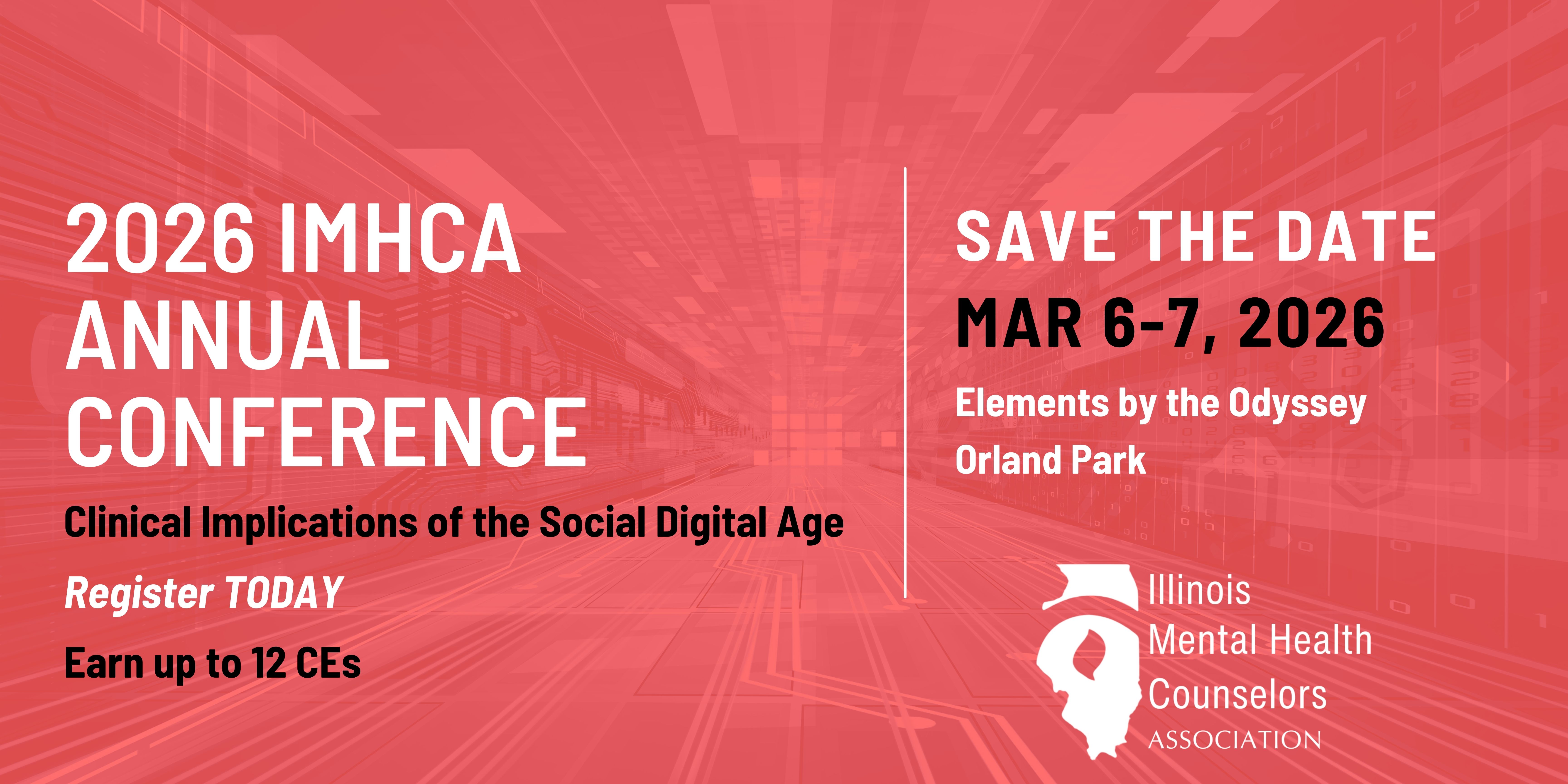
BEGIN:VCALENDAR
VERSION:2.0
CALSCALE:GREGORIAN
METHOD:PUBLISH
PRODID://IMHC//491001
BEGIN:VEVENT
DTSTAMP:20260422T135719
VTIMEZONE:America/Chicago
DTSTART:20260306T150000Z
DTEND:20260307T220000Z
UID:491001
SUMMARY:IMHCA 2026 Annual Conference
LOCATION:Elements by the Odyssey and Homewood Suites by Hilton Hotel, 16235 South La Grange Rd, Orland Park, IL, 60467
DESCRIPTION:IMHCA 2026 Annual Conference\n\n03/06/26 09:00 AM CST\n - 03/07/26 04:00 PM CST\Description:\n\n \n\nWe have a room block reserved at Homewood Suites by Hilton Orland Park for March 5, 2026 through March 9, 2026 for $149/night.\n\n\nPlease be sure to book before February 6, 2026.\n\n \n\nCLICK HERE TO BOOK\n\n\nRegistration Pricing: \n\n\n	Friday Only, Member Rate: $99\n	Friday Only, Non-Member Rate: $129\n	Saturday Only, Member Rate: $99\n	Saturday Only, Non-Member Rate: $129\n	2-day package, Member Rate: $184\n	2-day package, Non-Member Rate: $244\n\n\n*If you are a member and don't see an option for the member rate package, please contact our office by email at myimhca@gmail.com or by phone at 815-787-0515*\n\n\n \n\n\nPayment:\n\nPayPal is our payment platform for online payment. You can use an existing PayPal account, or pay as a guest\n\n\n\nusing your debit or credit card.\n\n\nIn order for payments to be processed via PayPal, cookies must be enabled on your browser.\n\n\n\n\nCEs are available for LPC/LCPC, LSW/LCSW, LMFT, and Psychologists\n\n \n\nFRIDAY KEYNOTE (March 6th)\n\nDigital Divides and Mental Health: Clinical Implications for Aging Clients in the Social Digital Age\n\nPresented By: Janelle L. Jones, PhD, LPC, NCC\nAs digital technology transforms how we connect, work, and access care, aging clients face unique mental health challenges from social isolation to online scams shaped by social determinants like income, education, and their built environments. This keynote examines how the digital divide exacerbates anxiety, depression, and financial vulnerability in aging populations, while offering clinicians practical strategies to address barriers such as low tech literacy and limited internet access. Through research and case studies, counselors will learn to navigate the intersection of aging and digital equity. Together we will help clients harness technology’s benefits while mitigating risks like doomscrolling or exploitation, ensuring no one is left behind in an increasingly connected world.\n\n\nBy the end of this keynote session, attendees will be able to:ï»¿\n\n1.Identify how social determinants of mental health impact aging adults’ access to and use of digital tools\n\n2.Recognize the psychological effects of social media, scams, and digital exclusion on aging clients (e.g., anxiety, depression, isolation)\n\n3.Develop clinical strategies to assess and address digital literacy gaps in therapy\n\n4.Explore practical ways to integrate (or limit) technology in client treatment plans\n \n\n\nSATURDAY KEYNOTE (March 7th)\n\nTraining the Next Generation: Ecological & Trauma-Informed Approaches to Clinician Development in the Social Digital Age\nPresented By: Claudia Pitts, PhD, Judith Kent, PhD, Suzette Fromm Reed, PhD, Wytress Richardson, EdD\n\nIn this interactive session, presenters will guide participants in a discovery of the interplay between clinical and community psychology as it applies to clinical supervision in the digital age:\n\n\n	Presenters will first provide an overview of pertinent community psychology principles.\n	Presenters will discuss ecological and trauma-informed frameworks as applied to clinician development both online and in-person.\n	Participants will analyze applicable key digital key digital influences across ecological systems.\n	Participants will explore supervision strategies to enhance hybrid clinical environments.\n	Participants will examine ethical and developmental challenges that arise for supervisees and clients in digital settings.\n	Presenters and participants will collectively create list of strategies to implement in the varied types of practice and supervision.\n\n\nBy the end of this presentation, participants will be able to:\n\n\n	Apply ecological and trauma-informed frameworks to conceptualize clinician development in the context of the social digital age.\n	Identify key digital influences across ecological systems (e.g., microsystem to macrosystem) that shape developmental experiences and trauma exposure for clients and supervisees.\n	Implement supervision strategies that foster digital literacy, boundary-setting, and reflective practice in trainees navigating online and hybrid clinical environments.\n	Evaluate ethical and developmental considerations related to supervisees’ and clients’ experiences in digital spaces, including issues of access, identity, and online trauma.\n\n\n\n\n \n\nBREAKOUT PRESENTERS \n\n \nDigital Sexual Abuse & Recovery (Friday, March 6th)\n\nPresenter: Sarah J. Rohret, MS Clinical Mental Health Counseling 2026\n\nDescription: Artificial Intelligence has reached the capability of creating realistic, but fake, photos and videos of victims.   Women of all ages, but young women in particular, are being targeted by classmates and acquaintances with blackmail and visual sexual abuse. Therapists need to understand how this happens, the harm it causes and how to stand beside victims.  While many of us have training in counseling someone who has experienced physical sexual abuse, digital sexual abuse has both similarities and important differences.  The primary difference is that physical sexual abuse ends, and digital abuse can continue on with evidence of it on the internet for the entirety of one's life.\n\n\nConnection Conferences: Making Meaningful Connections in a Digital World (Friday, March 6th)\n\nPresenter: Theo Stripling, LCPC\nDescription: Personal connections are important to maintain, and counselors can help! An increasingly digital world has a mixed impact on interpersonal interactions. This workshop builds knowledge and skills to help adolescents and adults increase interpersonal connections. In the literature section, we will explore recent literature. This information will help counselors build knowledge and educate clients on the benefits of connecting with others. In the practice section, we will engage in an interactive activity to foster meaningful connections. The goal of the activity is to practice making connections and offer skills for use with groups to build better connections. Make space to learn, then get up and connect with others in this interactive workshop. \n\n\n\nThe Desire for More: Clinical Implications of Internet and Social Media Use in Process Addictions in Adolescents and Adults (Saturday, March 7th)\n\nPresenter: Kimberly Cho, LPC, MS\n\nDescription: This presentation examines how digital platforms contribute to compulsive behaviors across process addictions, including gaming, gambling, pornography, and social media use. Through a trauma-informed lens, it explores the neurobiological and psychological mechanisms behind digital compulsivity and offers practical interventions grounded in CBT, DBT, motivational interviewing, and harm reduction. Attendees will gain tools for assessment, treatment planning, and ethical navigation of tech-related clinical challenges.\n\n\nPreserving and Strengthening Cognitive Health in the Digital Age (Friday, March 6th)\n\nPresenter: Elisa Woodruff, PhD, LCPC, NPT-C, EMDR-PT-II, ADHD-PT\n\nDescription: A plethora of recent research and popular non-fiction has addressed the impact of technology on our cognitive health. These sources have described impacts to attention span, emotional regulation, sleepless, and memory, as well as a host of social and physical implications, but many counselors do not know how to apply these ideas to skills that can be used in therapeutic practice.\n\n\n\nThe Digital Age Impact: A Polyvagal-Informed Approach to Supporting Clients (Saturday, March 7th)\n\nPresenter: Rita Romero, LCPC, EMDR Consultant & Therapist, CADC\n\nDescription: This workshop offers clinicians a Polyvagal-Informed framework to understand and treat the effects of digital age. We will examine how the constant cascade of notifications and social media engagement alters a client's "neuroception"—their nervous system's unconscious assessment of safety.\n\n\n"There's an app for that!" -- Enhancing Client Care via Technology (Friday, March 6th)\n\nPresenter: Marcia Suelzer, LPC, JD\n\nDescription: There are over 22,000 mental health apps currently available. These range from those that support wellness, via mindfulness and meditation, to FDA-approved apps with demonstrated clinical efficacy in the treatment of specific mental disorders. This workshop will provide an overview of various categories of applications, explore key apps within those categories, and provide guidance for integrating apps into clinical practice. Participants will be encouraged to explore applications on their own smart devices.\n\n\nNavigating Online Dating for Autistic Individuals: Benefits, Challenges, and Safety Consideration (Saturday, March 7th)\n\nPresenter: Jaime Langosch, LPC, MA\nDescription: This interactive workshop explores the benefits, challenges, and safety considerations of online dating for autistic individuals. Drawing from current literature, we’ll examine how digital platforms can offer structured communication, reduced social pressure, and greater autonomy in social interactions. We’ll also address common challenges, including interpreting social cues, navigating dating norms, and vulnerability to exploitation. Participants will engage with clinical case vignettes to practice applying strategies that promote safety and empowerment in online dating. Emphasis will be placed on neurodivergent-friendly approaches and the role of mental health professionals in supporting healthy, authentic connection.\n\n\nBeyond the Couch: Expanding Your Impact and Income in the Digital Age (Saturday, March 7th)\n\nPresenters: Christine Barker, LCPC and Carmel Brown, LCPC\n\nDescription: In today’s rapidly evolving mental health landscape, therapists are being called to expand beyond the traditional 1:1 therapy model and reimagine how their expertise can create impact — and income — in new ways. Beyond the Couch: Expanding Your Impact and Income in the Digital Age invites mental health professionals to explore ethical, creative, and sustainable avenues for professional growth in the social digital era.\n\n\nThis engaging, practical seminar helps participants identify their transferable skills, understand the growing opportunities for digital visibility, and design additional income streams aligned with their clinical values. From consultation and workshops to digital courses, writing, and brand partnerships, therapists will leave with actionable strategies to diversify their income while maintaining professional ethics and personal well-being.\n\n\nWhether you’re a private practice owner seeking sustainability or a clinician curious about expanding your professional footprint, this workshop offers both inspiration and structure for building a thriving, modern therapeutic career.\n\n\nVirtual Reality Therapy for Anxiety and Depression: Innovations, Applications, and Future Directions (Friday, March 6th)\n\nPresenter: Krista Jackson, LCPC\n\nDescription: This interactive workshop, led by Krista A. M. Jackson, L.C.P.C., explores the transformative use of Virtual Reality (VR) technology in treating anxiety, depression, and related mental health conditions. Participants will gain a comprehensive understanding of VR applications such as Virtual Reality Exposure Therapy (VRET) and VR-enhanced Cognitive Behavioral Therapy (CBT), including how immersive simulations create safe, controlled, and highly personalized therapeutic environments.\n\n\nThe workshop will cover the scientific foundations of VR in clinical settings, demonstrate real-time monitoring techniques to tailor treatments, and highlight the latest research findings on effectiveness and future trends. Attendees will learn strategies to integrate VR into therapeutic practice to enhance patient engagement, support behavioral change, and improve outcomes. This session is ideal for mental health professionals seeking to expand their therapeutic toolkit with innovative, evidence-based VR interventions.\n\n\nStill watching?: The intersection between loneliness and binge-watching behavior in young adults (Friday, March 6th)\n\nPresenter: Dawn Livorsi, DSW, LCSW\n\nDescription: A 2025 report from the World Health Organization (WHO) Commission on Social Connection named loneliness as a global health issue that negatively affects 1 in 6 individuals. Loneliness, a negative, subjective emotional state resulting from a discrepancy between one’s desired and actual experiences of connection, is linked to a number of physical, psychological, and cognitive concerns, including heart disease, depression, and reduced memory function (Berg, 2023).  Young adults report the second highest rates of loneliness (17.4%), following Adolescents (20.9%) (WHO, 2025). For a variety of reasons including separation from established social networks like family or school (Shah & Househ, 2023), feeling “overworked” / “too busy” to engage with friends, and technology use (MCC, 2024), young adults often find themselves feeling socially disconnected. \n\nAt the same time, they have witnessed incredible growth in web streaming and on-demand viewing platforms such as Netflix, Hulu, and Amazon Prime Video, which provide opportunities for constant and continuous viewing. Binge-watching, or watching multiple episodes of a television show in one session, has become such a widespread practice among young adults that it has received empirical study (Alimoradi et al, 2022). Notably, binge-watching has been linked to increased feelings of loneliness (Gabbiadini et al., 2021), while “coping with loneliness” is considered a significant factor in problematic binge-watching (Starosta & Izydorczyk, 2020).\n\nDespite being associated with undesired outcomes such as reduced social life (De Feijter et al., 2016) and poorer sleep quality (Exelmans and Van den Buick, 2017), binge-watching is commonplace. Nearly 70% of adults report having engaged in binge-watching (Cha & Chan-Olmsted, 2025), with many young adults reporting they use it as a coping strategy to tolerate negative emotions (Gabbiadini et al, 2021). The proposed presentation will explore the interplay between loneliness and binge-watching, while providing clinically applicable concepts to implement with young adult clients.\n\n\n \n \n\n \n \n\n\n\n\n\n\n \n\Location:\nElements by the Odyssey and Homewood Suites by Hilton Hotel\n16235 South La Grange Rd\nOrland Park, IL 60467
X-ALT-DESC;FMTTYPE=text/html:IMHCA 2026 Annual Conference<br /><br />03/06/26 09:00 AM CST - 03/07/26 04:00 PM CST<br />Description:<br /><div><img alt="" src="https://imhca.org/photos/Copy_of_Copy_of_2026_IMHCA_Annual_Conference_Breakout_Presenters_01082026161252.JPG" style="width:1080px" /></div>
&nbsp;

<p><span style="font-size:16px"><span style="font-family:arial,helvetica,sans-serif">We have a room block reserved at Homewood Suites by Hilton Orland Park for March 5, 2026 through March 9, 2026 for<strong> $149/night.</strong></span></span></p>

<p><br />
<span style="font-size:16px"><span style="font-family:arial,helvetica,sans-serif"><em><strong>Please be sure to book </strong></em><u><em><strong>before</strong></em></u><em><strong> February 6, 2026.</strong></em></span></span></p>

<h4>&nbsp;</h4>

<h4><span style="font-size:16px"><span style="font-family:arial,helvetica,sans-serif"><a href="https://www.hilton.com/en/attend-my-event/imhca-2026-conference/" target="_blank"><em><strong>CLICK HERE TO BOOK</strong></em></a></span></span></h4>

<p><br />
<strong><span style="font-size:16px"><span style="font-family:arial,helvetica,sans-serif">Registration&nbsp;Pricing:&nbsp;</span></span></strong></p>

<ul>
	<li><span style="font-size:14px">Friday Only, Member Rate: <strong>$99</strong></span></li>
	<li><span style="font-size:14px">Friday Only, Non-Member Rate: <strong>$129</strong></span></li>
	<li><span style="font-size:14px">Saturday Only, Member Rate: <strong>$99</strong></span></li>
	<li><span style="font-size:14px">Saturday Only, Non-Member Rate: <strong>$129</strong></span></li>
	<li><span style="font-size:14px">2-day package, Member Rate: <strong>$184</strong></span></li>
	<li><span style="font-size:14px">2-day package, Non-Member Rate: <strong>$244</strong></span></li>
</ul>
<br />
<span style="font-size:14px"><strong>*If you are a member and don't see an option for the member rate package, please contact our office by email at myimhca@gmail.com or by phone at 815-787-0515*</strong></span>

<hr />
<h3>&nbsp;</h3>

<div class="gmail_default" style="font-family:georgia,serif">
<h4><span style="font-family:arial,helvetica,sans-serif"><strong>Payment:</strong></span></h4>

<h4><span style="font-family:arial,helvetica,sans-serif"><strong>PayPal is our payment platform for online payment. You can use an existing PayPal account, or pay as a guest</strong></span></h4>
</div>

<div class="gmail_default" style="font-family:georgia,serif">
<h4><span style="font-family:arial,helvetica,sans-serif"><strong>using your debit or credit card.<br />
<br />
<br />
In order for payments to be processed via PayPal, cookies must be enabled on your browser.</strong></span></h4>

<hr /></div>

<h2><br />
<span style="font-size:14px"><strong>CEs are available for LPC/LCPC, LSW/LCSW, LMFT, and Psychologists</strong></span></h2>

<h2>&nbsp;</h2>

<h2><strong>FRIDAY KEYNOTE (March 6th)</strong></h2>

<h3>Digital Divides and Mental Health: Clinical Implications for Aging Clients in the Social Digital Age</h3>

<h3><em style="color:rgb(0, 0, 0); font-size:15px; font-style:italic">Presented By: Janelle L. Jones, PhD, LPC, NCC</em></h3>
<span style="color:rgb(0, 0, 0); font-size:15px">As digital technology transforms how we connect, work, and access care, aging clients face unique mental health challenges from social isolation to online scams shaped by social determinants like income, education, and their built environments. This keynote examines how the digital divide exacerbates anxiety, depression, and financial vulnerability in aging populations, while offering clinicians practical strategies to address barriers such as low tech literacy and limited internet access. Through research and case studies, counselors will learn to navigate the intersection of aging and digital equity. Together we will help clients harness technology&rsquo;s benefits while mitigating risks like doomscrolling or exploitation, ensuring no one is left behind in an increasingly connected world.</span>

<p><br />
<strong style="color:rgb(0, 0, 0); font-size:15px; font-weight:bold">By the end of this keynote session, attendees will be able to:</strong><strong style="color:rgb(0, 0, 0); font-size:15px; font-weight:bold">ï»¿</strong></p>

<p><span style="color:rgb(0, 0, 0); font-size:15px">1.Identify how social determinants of mental health impact aging adults&rsquo; access to and use of digital tools</span></p>

<p><span style="color:rgb(0, 0, 0); font-size:15px">2.Recognize the psychological effects of social media, scams, and digital exclusion on aging clients (e.g., anxiety, depression, isolation)</span></p>

<p><span style="color:rgb(0, 0, 0); font-size:15px">3.Develop clinical strategies to assess and address digital literacy gaps in therapy</span></p>

<p><span style="color:rgb(0, 0, 0); font-size:15px">4.Explore practical ways to integrate (or limit) technology in client treatment plans</span><br />
&nbsp;</p>

<h2><br />
<strong>SATURDAY KEYNOTE (March 7th)</strong></h2>

<h3>Training the Next Generation: Ecological &amp; Trauma-Informed Approaches to Clinician Development in the Social Digital Age</h3>
<em style="color:rgb(0, 0, 0); font-size:15px; font-style:italic; font-weight:normal">Presented By: Claudia Pitts, PhD, Judith Kent, PhD, Suzette Fromm Reed, PhD, Wytress Richardson, EdD</em>

<p><strong style="color:rgb(0, 0, 0); font-size:15px; font-weight:bold">In this interactive session, presenters will guide participants in a discovery of the&nbsp;</strong><strong style="color:rgb(0, 0, 0); font-size:15px; font-weight:bold">interplay between clinical and community psychology as it applies to clinical&nbsp;</strong><strong style="color:rgb(0, 0, 0); font-size:15px; font-weight:bold">supervision in the digital age:</strong></p>

<ul>
	<li style="font-size: 15px; color: rgb(0, 0, 0);"><span style="color:rgb(0, 0, 0); font-size:15px">Presenters will first provide an overview of pertinent community psychology principles.</span></li>
	<li style="font-size: 15px; color: rgb(0, 0, 0);"><span style="color:rgb(0, 0, 0); font-size:15px">Presenters will discuss ecological and trauma-informed frameworks as applied to clinician development both online and in-person.</span></li>
	<li style="font-size: 15px; color: rgb(0, 0, 0);"><span style="color:rgb(0, 0, 0); font-size:15px">Participants will analyze applicable key digital key digital influences across ecological systems.</span></li>
	<li style="font-size: 15px; color: rgb(0, 0, 0);"><span style="color:rgb(0, 0, 0); font-size:15px">Participants will explore supervision strategies to enhance hybrid clinical environments.</span></li>
	<li style="font-size: 15px; color: rgb(0, 0, 0);"><span style="color:rgb(0, 0, 0); font-size:15px">Participants will examine ethical and developmental challenges that arise for supervisees and clients in digital settings.</span></li>
	<li style="font-size: 15px; color: rgb(0, 0, 0);"><span style="color:rgb(0, 0, 0); font-size:15px">Presenters and participants will collectively create list of strategies to implement in the varied types of practice and supervision.</span></li>
</ul>

<p><strong style="color:rgb(0, 0, 0); font-size:15px; font-weight:bold">By the end of this presentation, participants will be able to:</strong></p>

<ul>
	<li style="font-size: 15px; color: rgb(0, 0, 0);"><span style="color:rgb(0, 0, 0); font-size:15px">Apply ecological and trauma-informed frameworks to conceptualize clinician development in the context of the social digital age.</span></li>
	<li style="font-size: 15px; color: rgb(0, 0, 0);"><span style="color:rgb(0, 0, 0); font-size:15px">Identify key digital influences across ecological systems (e.g., microsystem to macrosystem) that shape developmental experiences and trauma exposure for clients and supervisees.</span></li>
	<li style="font-size: 15px; color: rgb(0, 0, 0);"><span style="color:rgb(0, 0, 0); font-size:15px">Implement supervision strategies that foster digital literacy, boundary-setting, and reflective practice in trainees navigating online and hybrid clinical environments.</span></li>
	<li style="font-size: 15px; color: rgb(0, 0, 0);"><span style="color:rgb(0, 0, 0); font-size:15px">Evaluate ethical and developmental considerations related to supervisees&rsquo; and clients&rsquo; experiences in digital spaces, including issues of access, identity, and online trauma.</span></li>
</ul>

<div style="font-size: 15px; color: rgb(0, 0, 0);">
<h2><br />
&nbsp;</h2>

<h2><strong>BREAKOUT PRESENTERS&nbsp;</strong></h2>

<hr />&nbsp;
<p><strong>Digital Sexual Abuse &amp; Recovery (Friday, March 6th)</strong></p>

<p><strong>Presenter: </strong>Sarah J. Rohret,&nbsp;MS Clinical Mental Health Counseling 2026</p>

<p><strong>Description:</strong> Artificial Intelligence has reached the capability of creating realistic, but fake, photos and videos of victims.&nbsp;&nbsp; Women of all ages, but young women in particular, are being targeted by classmates and acquaintances with blackmail and visual sexual abuse. Therapists need to understand how this happens, the harm it causes and how to stand beside victims.&nbsp; While many of us have training in counseling someone who has experienced physical sexual abuse, digital sexual abuse has both similarities and important differences.&nbsp; The primary difference is that physical sexual abuse ends, and digital abuse can continue on with evidence of it on the internet for the entirety of one's life.</p>

<hr />
<p><strong>Connection Conferences: Making Meaningful Connections in a Digital World (Friday, March 6th)</strong></p>

<p><strong>Presenter:</strong> Theo Stripling, LCPC</p>
<strong>Description:</strong> Personal connections are important to maintain, and counselors can help! An increasingly digital world has a mixed impact on interpersonal interactions. This workshop builds knowledge and skills to help adolescents and adults increase interpersonal connections. In the literature section, we will explore recent literature. This information will help counselors build knowledge and educate clients on the benefits of connecting with others. In the practice section, we will engage in an interactive activity to foster meaningful connections. The goal of the activity is to practice making connections and offer skills for use with groups to build better connections. Make space to learn, then get up and connect with others in this interactive workshop.&nbsp;

<hr />
<p><br />
<strong>The Desire for More: Clinical Implications of Internet and Social Media Use in Process Addictions in Adolescents and Adults (Saturday, March 7th)</strong></p>

<p><strong>Presenter: </strong>Kimberly Cho,&nbsp;LPC, MS</p>

<p><strong>Description:&nbsp;</strong>This presentation examines how digital platforms contribute to compulsive behaviors across process addictions, including gaming, gambling, pornography, and social media use. Through a trauma-informed lens, it explores the neurobiological and psychological mechanisms behind digital compulsivity and offers practical interventions grounded in CBT, DBT, motivational interviewing, and harm reduction. Attendees will gain tools for assessment, treatment planning, and ethical navigation of tech-related clinical challenges.</p>

<hr />
<p><strong>Preserving and Strengthening Cognitive Health in the Digital Age (Friday, March 6th)</strong></p>

<p><strong>Presenter:</strong> Elisa Woodruff,&nbsp;PhD, LCPC, NPT-C, EMDR-PT-II, ADHD-PT</p>

<p><strong>Description:</strong>&nbsp;A plethora of recent research and popular non-fiction has addressed the impact of technology on our cognitive health. These sources have described impacts to attention span, emotional regulation, sleepless, and memory, as well as a host of social and physical implications, but many counselors do not know how to apply these ideas to skills that can be used in therapeutic practice.</p>

<hr />
<p><br />
<strong>The Digital Age Impact: A Polyvagal-Informed Approach to Supporting Clients (Saturday, March 7th)</strong></p>

<p><strong>Presenter: </strong>Rita Romero,&nbsp;LCPC, EMDR Consultant &amp; Therapist, CADC</p>

<p><strong>Description:&nbsp;</strong>This workshop offers clinicians a Polyvagal-Informed framework to understand and treat the effects of digital age. We will examine how the constant cascade of notifications and social media engagement alters a client's &quot;neuroception&quot;&mdash;their nervous system's unconscious assessment of safety.</p>

<hr /><br />
<strong>&quot;There's an app for that!&quot; -- Enhancing Client Care via Technology (Friday, March 6th)</strong>

<p><strong>Presenter: </strong>Marcia Suelzer,&nbsp;LPC, JD</p>

<p><strong>Description:&nbsp;</strong>There are over 22,000 mental health apps currently available. These range from those that support wellness, via mindfulness and meditation, to FDA-approved apps with demonstrated clinical efficacy in the treatment of specific mental disorders. This workshop will provide an overview of various categories of applications, explore key apps within those categories, and provide guidance for integrating apps into clinical practice. Participants will be encouraged to explore applications on their own smart devices.</p>

<hr />
<p><strong>Navigating Online Dating for Autistic Individuals: Benefits, Challenges, and Safety Consideration (Saturday, March 7th)</strong></p>

<p><strong>Presenter: </strong>Jaime Langosch,&nbsp;LPC, MA</p>
<strong>Description: </strong>This interactive workshop explores the benefits, challenges, and safety considerations of online dating for autistic individuals. Drawing from current literature, we&rsquo;ll examine how digital platforms can offer structured communication, reduced social pressure, and greater autonomy in social interactions. We&rsquo;ll also address common challenges, including interpreting social cues, navigating dating norms, and vulnerability to exploitation. Participants will engage with clinical case vignettes to practice applying strategies that promote safety and empowerment in online dating. Emphasis will be placed on neurodivergent-friendly approaches and the role of mental health professionals in supporting healthy, authentic connection.

<hr />
<p><strong>Beyond the Couch: Expanding Your Impact and Income in the Digital Age (Saturday, March 7th)</strong></p>

<p><strong>Presenters: </strong>Christine Barker, LCPC and Carmel Brown, LCPC</p>

<p><strong>Description:</strong>&nbsp;In today&rsquo;s rapidly evolving mental health landscape, therapists are being called to expand beyond the traditional 1:1 therapy model and reimagine how their expertise can create impact &mdash; and income &mdash; in new ways. Beyond the Couch: Expanding Your Impact and Income in the Digital Age invites mental health professionals to explore ethical, creative, and sustainable avenues for professional growth in the social digital era.</p>

<p><br />
This engaging, practical seminar helps participants identify their transferable skills, understand the growing opportunities for digital visibility, and design additional income streams aligned with their clinical values. From consultation and workshops to digital courses, writing, and brand partnerships, therapists will leave with actionable strategies to diversify their income while maintaining professional ethics and personal well-being.</p>

<p><br />
Whether you&rsquo;re a private practice owner seeking sustainability or a clinician curious about expanding your professional footprint, this workshop offers both inspiration and structure for building a thriving, modern therapeutic career.</p>

<hr />
<p><strong>Virtual Reality Therapy for Anxiety and Depression: Innovations, Applications, and Future Directions (Friday, March 6th)</strong></p>

<p><strong>Presenter:</strong> Krista Jackson, LCPC</p>

<p><strong>Description:&nbsp;</strong>This interactive workshop, led by Krista A. M. Jackson, L.C.P.C., explores the transformative use of Virtual Reality (VR) technology in treating anxiety, depression, and related mental health conditions. Participants will gain a comprehensive understanding of VR applications such as Virtual Reality Exposure Therapy (VRET) and VR-enhanced Cognitive Behavioral Therapy (CBT), including how immersive simulations create safe, controlled, and highly personalized therapeutic environments.</p>

<p><br />
The workshop will cover the scientific foundations of VR in clinical settings, demonstrate real-time monitoring techniques to tailor treatments, and highlight the latest research findings on effectiveness and future trends. Attendees will learn strategies to integrate VR into therapeutic practice to enhance patient engagement, support behavioral change, and improve outcomes. This session is ideal for mental health professionals seeking to expand their therapeutic toolkit with innovative, evidence-based VR interventions.</p>

<hr />
<p><strong>Still watching?: The intersection between loneliness and binge-watching behavior in young adults (Friday, March 6th)</strong></p>

<p><strong>Presenter:</strong> Dawn Livorsi,&nbsp;DSW, LCSW</p>

<p><strong>Description:</strong>&nbsp;A 2025 report from the World Health Organization (WHO) Commission on Social Connection named loneliness as a global health issue that negatively affects 1 in 6 individuals. Loneliness, a negative, subjective emotional state resulting from a discrepancy between one&rsquo;s desired and actual experiences of connection, is linked to a number of physical, psychological, and cognitive concerns, including heart disease, depression, and reduced memory function (Berg, 2023).&nbsp; Young adults report the second highest rates of loneliness (17.4%), following Adolescents (20.9%) (WHO, 2025). For a variety of reasons including separation from established social networks like family or school (Shah &amp; Househ, 2023), feeling &ldquo;overworked&rdquo; / &ldquo;too busy&rdquo; to engage with friends, and technology use (MCC, 2024), young adults often find themselves feeling socially disconnected.&nbsp;</p>

<p>At the same time, they have witnessed incredible growth in web streaming and on-demand viewing platforms such as Netflix, Hulu, and Amazon Prime Video, which provide opportunities for constant and continuous viewing. Binge-watching, or watching multiple episodes of a television show in one session, has become such a widespread practice among young adults that it has received empirical study (Alimoradi et al, 2022). Notably, binge-watching has been linked to increased feelings of loneliness (Gabbiadini et al., 2021), while &ldquo;coping with loneliness&rdquo; is considered a significant factor in problematic binge-watching (Starosta &amp; Izydorczyk, 2020).</p>

<p>Despite being associated with undesired outcomes such as reduced social life (De Feijter et al., 2016) and poorer sleep quality (Exelmans and Van den Buick, 2017), binge-watching is commonplace. Nearly 70% of adults report having engaged in binge-watching (Cha &amp; Chan-Olmsted, 2025), with many young adults reporting they use it as a coping strategy to tolerate negative emotions (Gabbiadini et al, 2021). The proposed presentation will explore the interplay between loneliness and binge-watching, while providing clinically applicable concepts to implement with young adult clients.</p>
</div>

<div style="font-size: 15px; color: rgb(0, 0, 0);">&nbsp;</div>
&nbsp;

<p style="text-align: center;">&nbsp;</p>
&nbsp;

<h2><br />
<br />
<br />
<br />
<br />
&nbsp;</h2>
<br />Location:<br />Elements by the Odyssey and Homewood Suites by Hilton Hotel<br />16235 South La Grange Rd<br />Orland Park, IL 60467
PRIORITY:3
TRANSP:TRANSPARENT
BEGIN:VALARM
TRIGGER:-PT5M
ACTION:DISPLAY
DESCRIPTION:Reminder
END:VALARM
END:VEVENT
END:VCALENDAR
